Dua for New Clothes
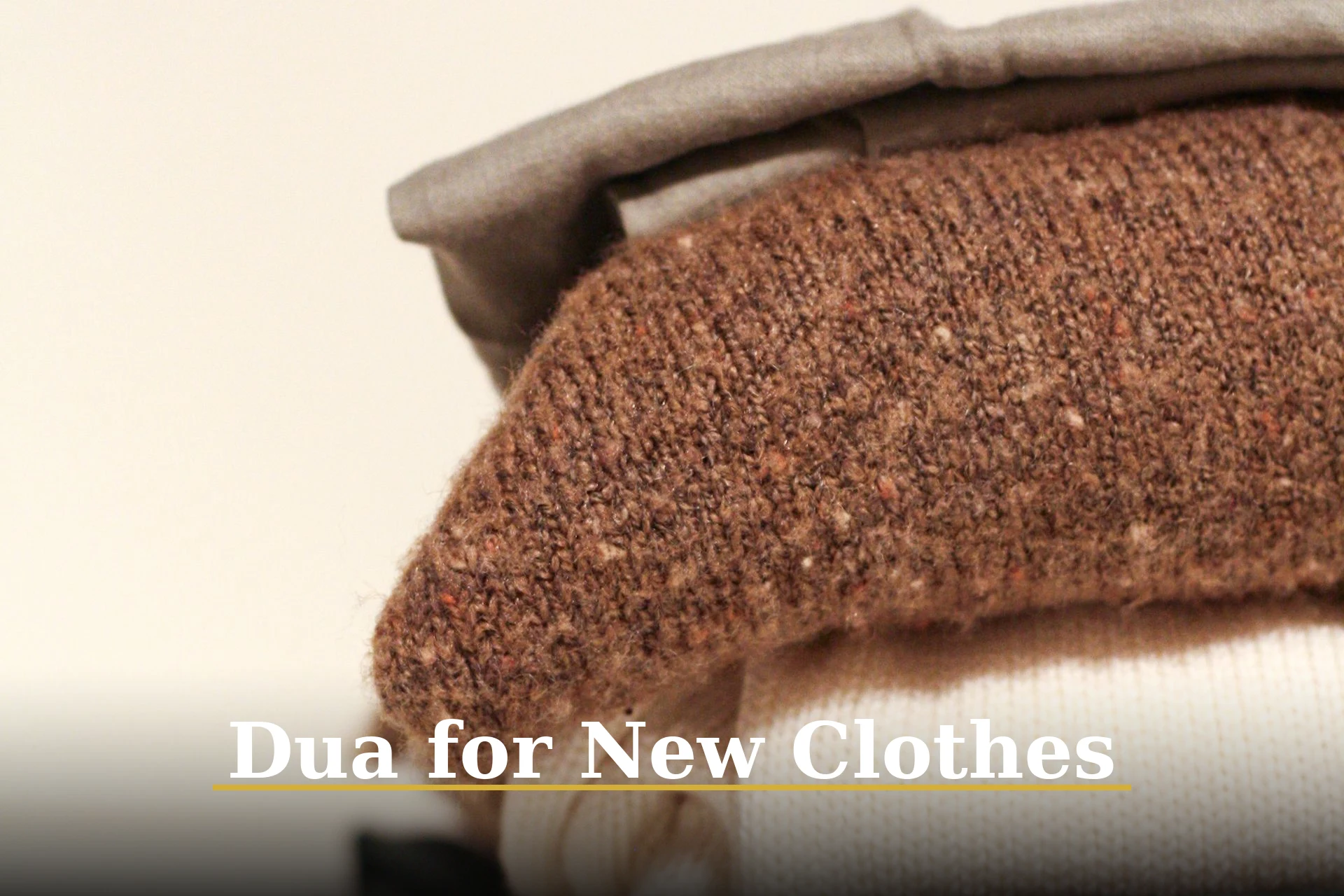
When you put on new clothes, the Prophet (SAW) taught a short dua to say: praise Allah, who clothed you, ask Him for the good of the garment, and seek His refuge from its evil. There is also a shorter dua of thanks for any garment. This post gives both duas with Arabic, transliteration and meaning, explains what clothing means in the Qur’an, and covers the Sunnah of starting with the right side.
What Does Clothing Mean in the Qur’an?
Allah says:
Qur’an 7:26 (full verse):
Arabic:
يَا بَنِي آدَمَ قَدْ أَنْزَلْنَا عَلَيْكُمْ لِبَاسًا يُوَارِي سَوْآتِكُمْ وَرِيشًا ۖ وَلِبَاسُ التَّقْوَىٰ ذَٰلِكَ خَيْرٌ ۚ ذَٰلِكَ مِنْ آيَاتِ اللَّهِ لَعَلَّهُمْ يَذَّكَّرُونَ
Transliteration: Yaa banee Aadama qad anzalnaa ‘alaykum libaasan yuwaaree saw’aatikum wa reeshan, wa libaasut-taqwaa dhaalika khayr, dhaalika min aayaatillaahi la’allahum yadh-dhakkaroon
Translation: “O children of Adam, We have bestowed upon you clothing to conceal your private parts and as adornment. But the clothing of righteousness — that is best. That is from the signs of Allah that perhaps they will remember.”
Clothing has three purposes in this verse: covering, adornment, and — above both — righteousness. A garment covers the body, it can look good, and it should never become a garment of arrogance. The best clothing, the verse says, is taqwa — the God-consciousness that no tailor can sew. Keep that order in mind when you dress: covered first, neat second, humble always.
What Is the Dua for New Clothes?
When the Prophet (SAW) put on a new garment, he would name it first — a turban, a shirt, a cloak — and then say the dua (Jami’ at-Tirmidhi 1767; also Sunan Abi Dawud 4020).
Dua for new clothes — Jami’ at-Tirmidhi 1767; also Sunan Abi Dawud 4020 (narrated by Abu Sa’id al-Khudri):
Arabic:
اللَّهُمَّ لَكَ الْحَمْدُ أَنْتَ كَسَوْتَنِيهِ أَسْأَلُكَ خَيْرَهُ وَخَيْرَ مَا صُنِعَ لَهُ وَأَعُوذُ بِكَ مِنْ شَرِّهِ وَشَرِّ مَا صُنِعَ لَهُ
Transliteration: Allaahumma lakal-hamdu, anta kasawtaneehi, as’aluka khayrahu wa khayra maa suni’a lahu, wa a’oodhu bika min sharrihi wa sharri maa suni’a lahu
Translation: “O Allah! For You is the praise, You have clothed me, I ask You for its good and the good for which it was made, and I seek refuge in You from its evil and the evil for which it was made.”
Say the name of your garment, then the dua: praise Allah because He clothed you, ask Him for the good of the garment and the good it was made for, and seek refuge with Him from its evil and the evil it was made for. The dua covers both sides of a blessing — gratitude for its good, and protection from its harm — because even a new garment can become a source of pride, waste or showing off.
Is There a Shorter Dua for Any Garment?
There is a shorter dua for any garment, new or not (Sunan Abi Dawud 4023).
Shorter garment dua — Sunan Abi Dawud 4023 (narrated by Mu’adh ibn Anas):
Arabic:
الْحَمْدُ لِلَّهِ الَّذِي كَسَانِي هَذَا الثَّوْبَ وَرَزَقَنِيهِ مِنْ غَيْرِ حَوْلٍ مِنِّي وَلَا قُوَّةٍ
Transliteration: Alhamdu lillaahil-ladhee kasaanee haadhath-thawba wa razaqaneehi min ghayri hawlin minnee wa laa quwwah
Translation: “All praise is for Allah, Who has clothed me with this garment and provided it for me, with no power or strength from myself.”
The hadith says that whoever says this will be forgiven his previous sins. Say only “previous sins” — the addition “and later sins” found in some translations is not established. This short dua is the easy one to make a habit: say it every time you dress, and the act of getting dressed becomes an act of thanks.
Should I Start Dressing from the Right Side?
The Prophet (SAW) liked to begin with the right in all good matters. For shoes he said: put the right shoe on first, and take the left one off first (Sahih al-Bukhari 5855; also Sahih Muslim 2097a).
Begin with the right — Sahih al-Bukhari 5855 (narrated by Abu Hurayrah):
Arabic:
إِذَا انْتَعَلَ أَحَدُكُمْ فَلْيَبْدَأْ بِالْيَمِينِ وَإِذَا نَزَعَ فَلْيَبْدَأْ بِالشِّمَالِ لِتَكُنِ الْيُمْنَى أَوَّلَهُمَا تُنْعَلُ وَآخِرَهُمَا تُنْزَعُ
Transliteration: Idhaa inta’ala ahadukum falyabda’ bilyameen, wa idhaa naza’a falyabda’ bish-shimaal, litakunil-yumnaa awwalahumaa tun’alu wa aakhirahumaa tunza’
Translation: “If you want to put on your shoes, put on the right shoe first; and if you want to take them off, take the left one first. Let the right shoe be the first to be put on and the last to be taken off.”
The same right-first practice applies when dressing generally — right arm in the sleeve first, right foot in first — following the Prophet’s habit of starting from the right in wudu, in combing his hair and in putting on his shoes (reported from ‘Aishah, Sahih al-Bukhari 5854 / Sahih Muslim 268). It is a small Sunnah, but it turns an ordinary act into one done the Prophet’s way.
How Should I Wear New Clothes?
New clothes are a blessing, and blessings are thanked for, not shown off. Wear them neatly and modestly, keep them within what the Shariah allows for men and women, and remember the verse: the clothing of righteousness is best. A new garment is a good moment to say the dua — and a good moment to remember who gave it.
Key Points
- Clothing is a blessing from Allah — covering, adornment, and above all the clothing of righteousness (Qur’an 7:26).
- The new-garment dua is Jami’ at-Tirmidhi 1767 / Sunan Abi Dawud 4020 — name the garment, then say it.
- The shorter garment dua is Sunan Abi Dawud 4023 (NOT 4020) — it promises forgiveness of previous sins only.
- Begin with the right side when dressing and putting on shoes (Sahih al-Bukhari 5855; Sahih Muslim 2097a).
- New clothes are thanked for, not shown off.
Frequently Asked Questions
What is the dua for new clothes?
When the Prophet (SAW) put on a new garment, he would name it first, a turban, a shirt, a cloak, and then say: ‘O Allah! For You is the praise, You have clothed me, I ask You for its good and the good for which it was made, and I seek refuge in You from its evil and the evil for which it was made.’ (Jami’ at-Tirmidhi 1767; also Sunan Abi Dawud 4020.)
Is there a shorter dua for wearing clothes?
Yes. The shorter dua for any garment, new or not, is: ‘All praise is for Allah, Who has clothed me with this garment and provided it for me, with no power or strength from myself.’ (Sunan Abi Dawud 4023.) Say it every time you dress.
What is the reward for saying the garment dua?
The hadith (Sunan Abi Dawud 4023) says that whoever says the shorter garment dua will be forgiven his previous sins. Say only previous sins: the addition ‘and later sins’ found in some translations is not established.
Should I start dressing from the right side?
Yes. The Prophet (SAW) said to put the right shoe on first and take the left one off first (Sahih al-Bukhari 5855; also Sahih Muslim 2097a), and he liked to start from the right in wudu, in combing his hair and in putting on his shoes.
What does the Qur’an say about clothing?
Qur’an 7:26 says: ‘O children of Adam, We have bestowed upon you clothing to conceal your private parts and as adornment. But the clothing of righteousness, that is best.’ Clothing is for covering and adornment, and taqwa, God-consciousness, is the best clothing.
Can I say the dua for clothes that are not new?
Yes. The shorter dua (Sunan Abi Dawud 4023) is for any garment, new or not, and saying it every time you dress turns getting dressed into an act of thanks. The longer dua is the one the Prophet (SAW) said when putting on a new garment, naming it first.
Related Duas: Dua Before and After Wudu | Dua for Entering and Leaving Masjid | Dua for Newly Married Couple | Dua for Sleeping and for Waking Up | Dua for Parents | Dua for Shifa for Health Improvement
Sources: The Holy Qur’an (Surah al-A’raf 7); Jami’ at-Tirmidhi; Sunan Abi Dawud; Sahih al-Bukhari; Sahih Muslim.