Dua-e-Noor (Sagheer & Kabeera): Arabic, Meaning, History & Authenticity
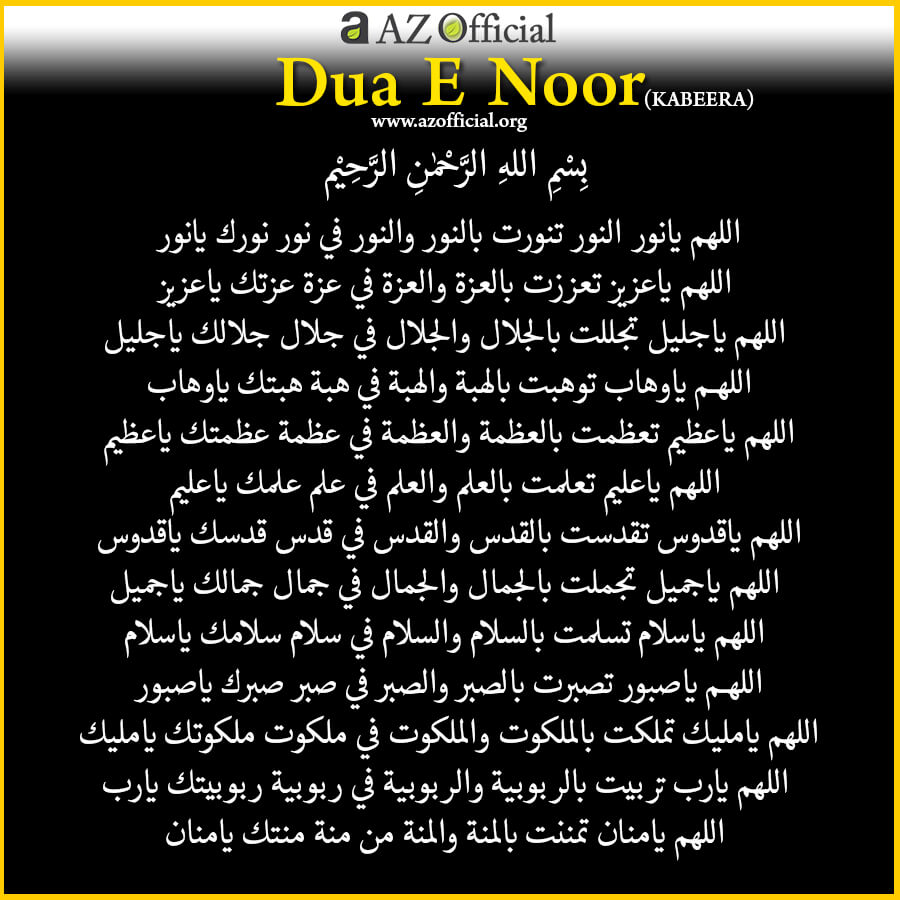
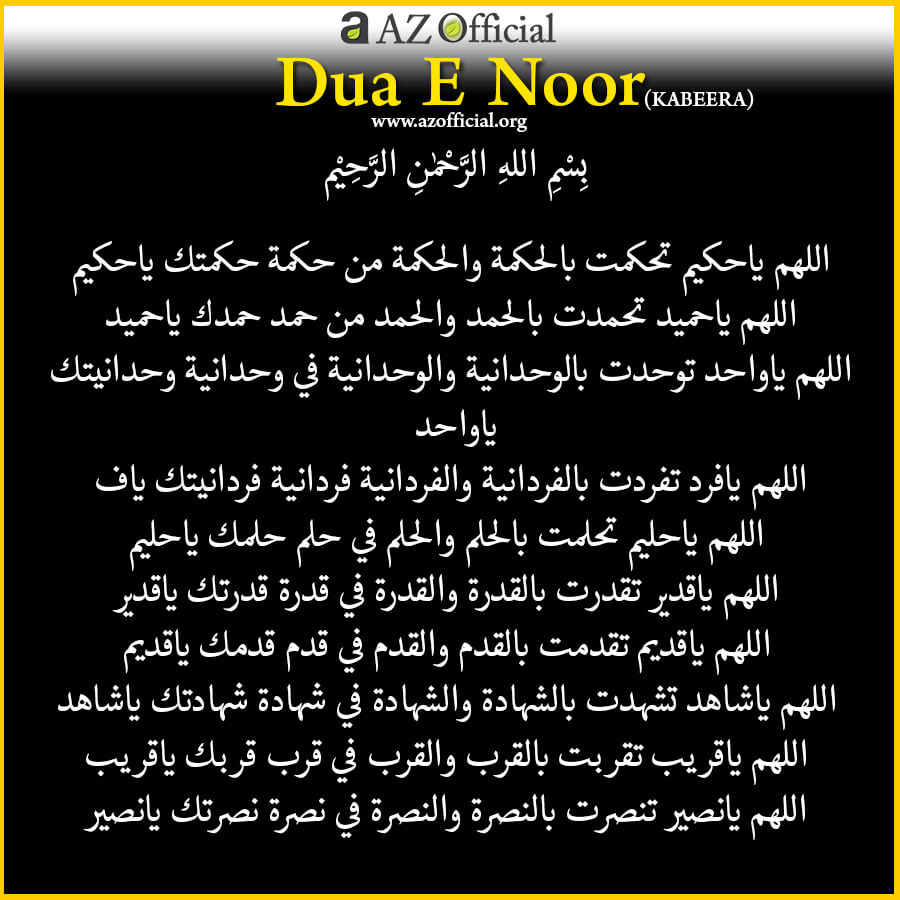
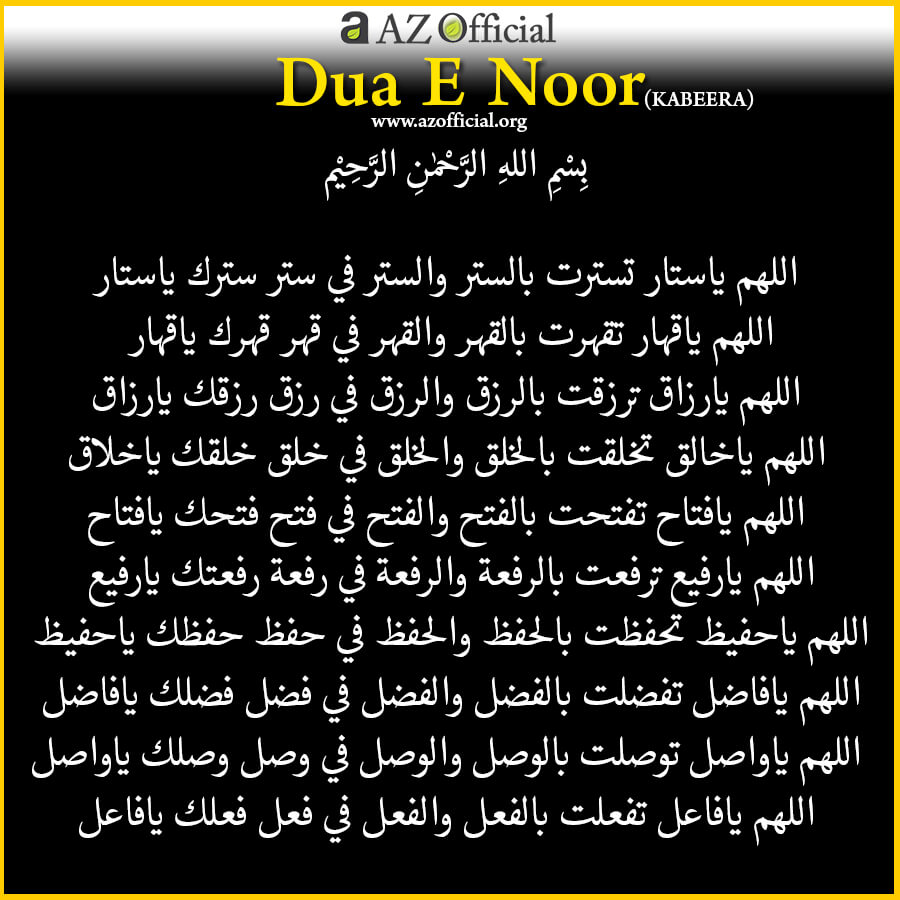
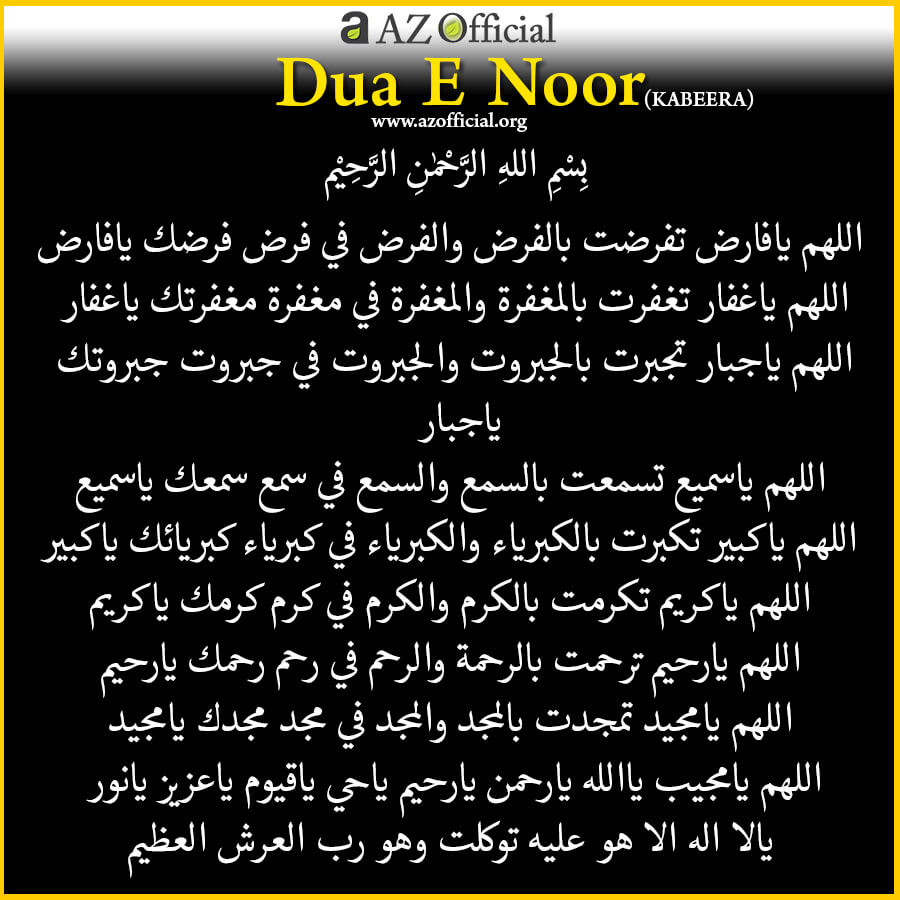
Dua-e-Noor is a well-known supplication that is widely shared in many Muslim communities, especially in South Asia. Many people search for Dua-e-Noor Sagheer and Dua-e-Noor Kabeera to read it for remembrance of Allah and personal supplication.
However, because there are many versions of Dua-e-Noor online, it is important to understand its history, authenticity, and Islamic perspective. Muslims should always distinguish between authentic Qur’anic and Prophetic supplications and later devotional prayers.
The word “Noor” means light. Dua-e-Noor is commonly described as a supplication that praises Allah using His beautiful names and attributes.
There are two versions commonly circulated:
- Dua-e-Noor (Sagheer) – the shorter version.
- Dua-e-Noor (Kabeera) – the longer version.
Both are popular in many Muslim communities, although their wording varies between different books and publications.
History of Dua-e-Noor
Dua-e-Noor is found in some later devotional literature and is widely circulated in South Asia and among different Muslim communities.
Some publications attribute it to works such as Muhaj al-Da’awat by Sayyid Ibn Tawus. However, the commonly circulated versions are not established through authentic narrations in the major Sunni hadith collections.
For this reason, Muslims should be careful not to present Dua-e-Noor as an authentic Prophetic supplication unless supported by reliable evidence.
Is Dua-e-Noor Authentic?
This is one of the most frequently asked questions.
The commonly shared texts of Dua-e-Noor (Sagheer and Kabeera) are not found with authentic chains of narration in the major hadith collections such as:
- Sahih al-Bukhari
- Sahih Muslim
- Sunan Abi Dawud
- Jami’ at-Tirmidhi
- Sunan an-Nasa’i
- Sunan Ibn Majah
Because of this, scholars advise Muslims not to attribute these supplications directly to the Prophet Muhammad ﷺ without reliable evidence.
This does not necessarily mean that every word within the dua is incorrect, but authenticity should always be distinguished from popularity.
Muslims should verify narrations using reliable sources such as Sunnah.com and authentic books of hadith before attributing any supplication to the Prophet Muhammad ﷺ.
Dua-e-Noor (Sagheer)
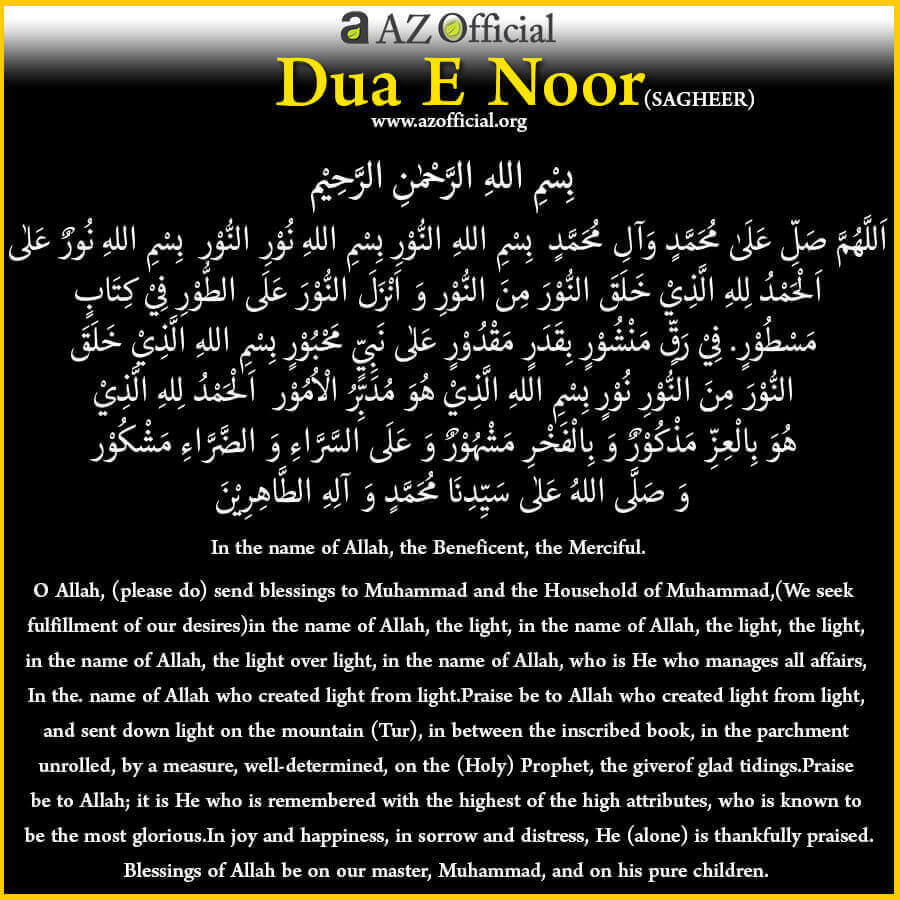
Dua-e-Noor (Kabeera)
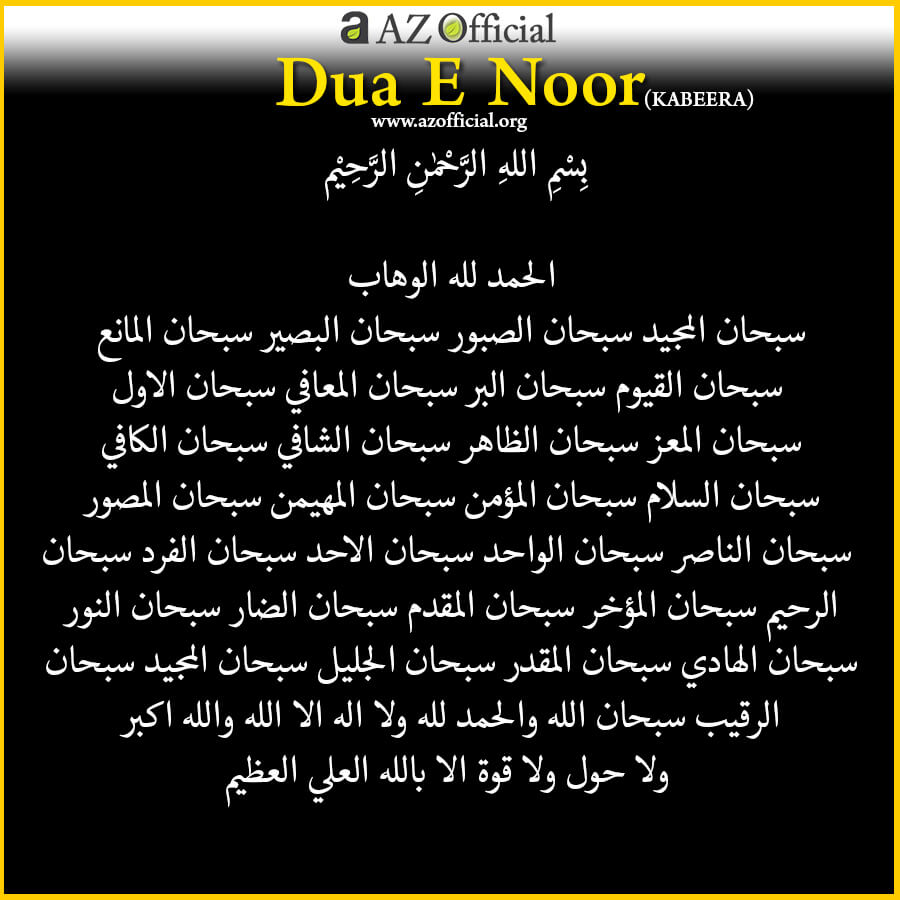
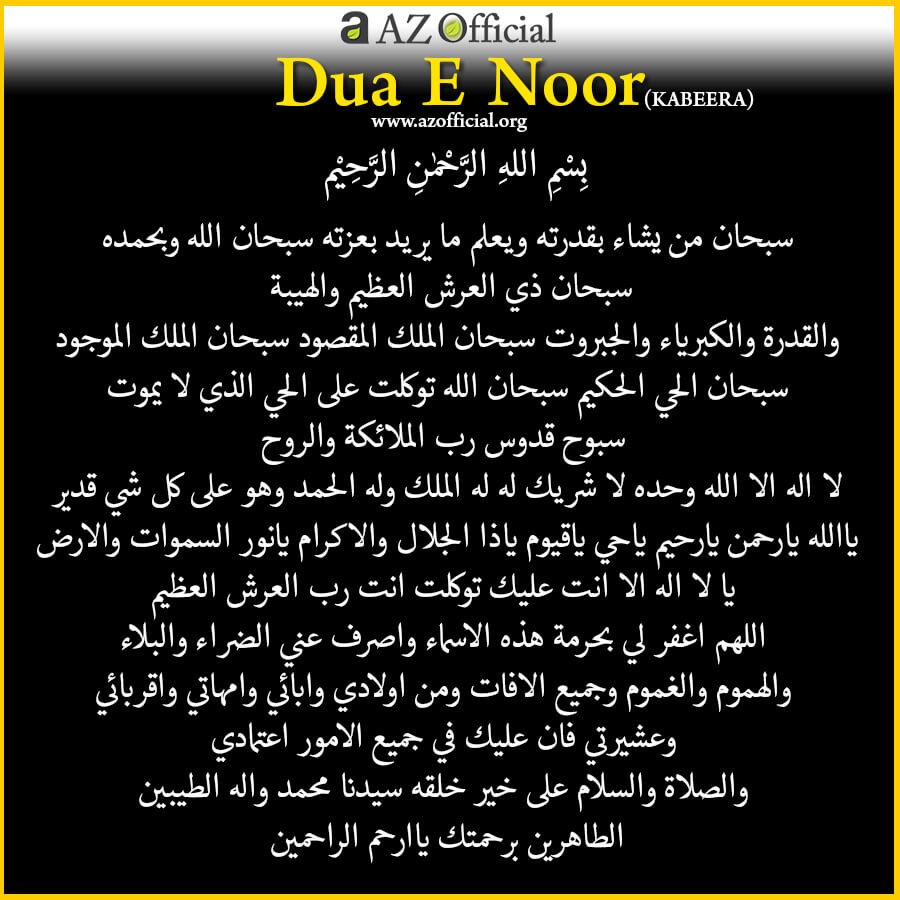
Can Muslims Read Dua-e-Noor?
Yes.
A Muslim may recite permissible words of remembrance and supplication.
However, when a dua is attributed to the Prophet ﷺ, it should only be described as a Prophetic supplication if reliable evidence exists.
Whenever possible, Muslims are encouraged to give priority to authentic duas from the Qur’an and Sunnah. Dua Yunus – The supplication of Prophet Yunus (Qur’an 21:87–88)
If you are looking for authentic supplications, these are excellent choices:
- Dua Yunus – The supplication of Prophet Yunus (Qur’an 21:87–88)
- Rabbana Atina fid-Dunya Hasanah (Qur’an 2:201)
- Rabbana Hablana min Azwajina (Qur’an 25:74)
- Morning and Evening Adhkar reported in authentic hadith
You may also like:
Frequently Asked Questions
What is Dua-e-Noor?
Dua-e-Noor is a well-known supplication that is commonly circulated in many Muslim communities. It exists in both Sagheer and Kabeera versions.
Is Dua-e-Noor mentioned in the Quran?
No. The commonly circulated Dua-e-Noor is not a Qur’anic verse.
Is Dua-e-Noor an authentic Hadith?
The commonly shared versions are not established through authentic narrations in the major hadith collections.
Can I read Dua-e-Noor daily?
A Muslim may make personal supplications to Allah using permissible words. However, it should not be claimed that Dua-e-Noor is an authenticated Prophetic dua without reliable evidence.
What is the difference between Dua-e-Noor Sagheer and Kabeera?
Sagheer is the shorter version, while Kabeera is a longer version. Their wording may differ between publications.
Conclusion
Dua-e-Noor remains a well-known supplication in many Muslim communities, especially in South Asia. However, Muslims should distinguish between popular devotional supplications and authentic duas established through the Qur’an and Sunnah.
Whenever making dua, sincerity, humility, and reliance upon Allah are the most important qualities. Alongside personal supplications, Muslims are encouraged to regularly recite the authentic duas taught in the Qur’an and by Prophet Muhammad ﷺ.
May Allah accept our prayers, guide us to authentic knowledge, and grant us His mercy and forgiveness. Ameen.