Chehlum of Imam Hussain (AS): Date & History
Chehlum of Imam Hussain (AS) is the 40th day after Ashura, observed on 20 Safar. Also called Arbaeen, it marks the visit of the survivors of Karbala, led by Lady Zainab (AS), to the grave of Imam Hussain (RA) — and it is the occasion of the largest peaceful gathering in the world, the Arbaeen pilgrimage to Karbala in Iraq. This guide explains what Chehlum is, its history, the pilgrimage, and how it is observed around the world. The next Chehlum (20 Safar 1449) is expected on Saturday 24 July 2027, though the exact date depends on the sighting of the moon.
Key Points
- Chehlum = 40 days after Ashura, on 20 Safar.
- It marks the survivors’ return to Karbala.
- The Arbaeen pilgrimage was inscribed by UNESCO in 2019.
- The Najaf–Karbala walk is about 80 km.
- It is a public holiday in Iraq and Iran.
What Is Chehlum (Arbaeen)?
Chehlum is a Persian word meaning ‘fortieth’. It is the 40th day after Ashura (10 Muharram), and it falls on 20 Safar. In Arabic it is called Arbaeen, which also means ‘forty’. The day commemorates the return of the survivors of Karbala to the grave of Imam Hussain (RA), forty days after the battle.
According to the traditional narrative, after the battle of Karbala, the survivors — the women and children of Hussain’s (RA) family, led by his sister Lady Zainab (AS) — were taken to Damascus and then allowed to return. On the 40th day, they reached Karbala and visited Hussain’s (RA) grave. This account is given in the historical sources, and it is the story that Chehlum remembers. For the full account of the battle itself, see our history of the Battle of Karbala, and for the days that led to it, see the 7th of Muharram. The same observance is also described in our post on the 20th of Safar (Chehlam) of Imam Hussain (AS).
Why Is Chehlum Significant?
Chehlum is significant for two reasons: the return to Karbala, and the gathering it draws. The return of the survivors to Hussain’s (RA) grave is the heart of the day — it is a renewal of the message of Karbala, and a moment of mourning and remembrance.
The gathering is the other reason. The Arbaeen pilgrimage to Karbala is the largest peaceful gathering in the world. Iraqi officials have reported more than 20 million pilgrims in recent years; the Imam Hussain Shrine authority counted more than 22 million visitors (22,354,578) for Arbaeen in 2025, and some estimates go higher. In 2019, the Arbaeen pilgrimage was inscribed on UNESCO’s Representative List of the Intangible Cultural Heritage of Humanity.
The Arbaeen Pilgrimage to Karbala
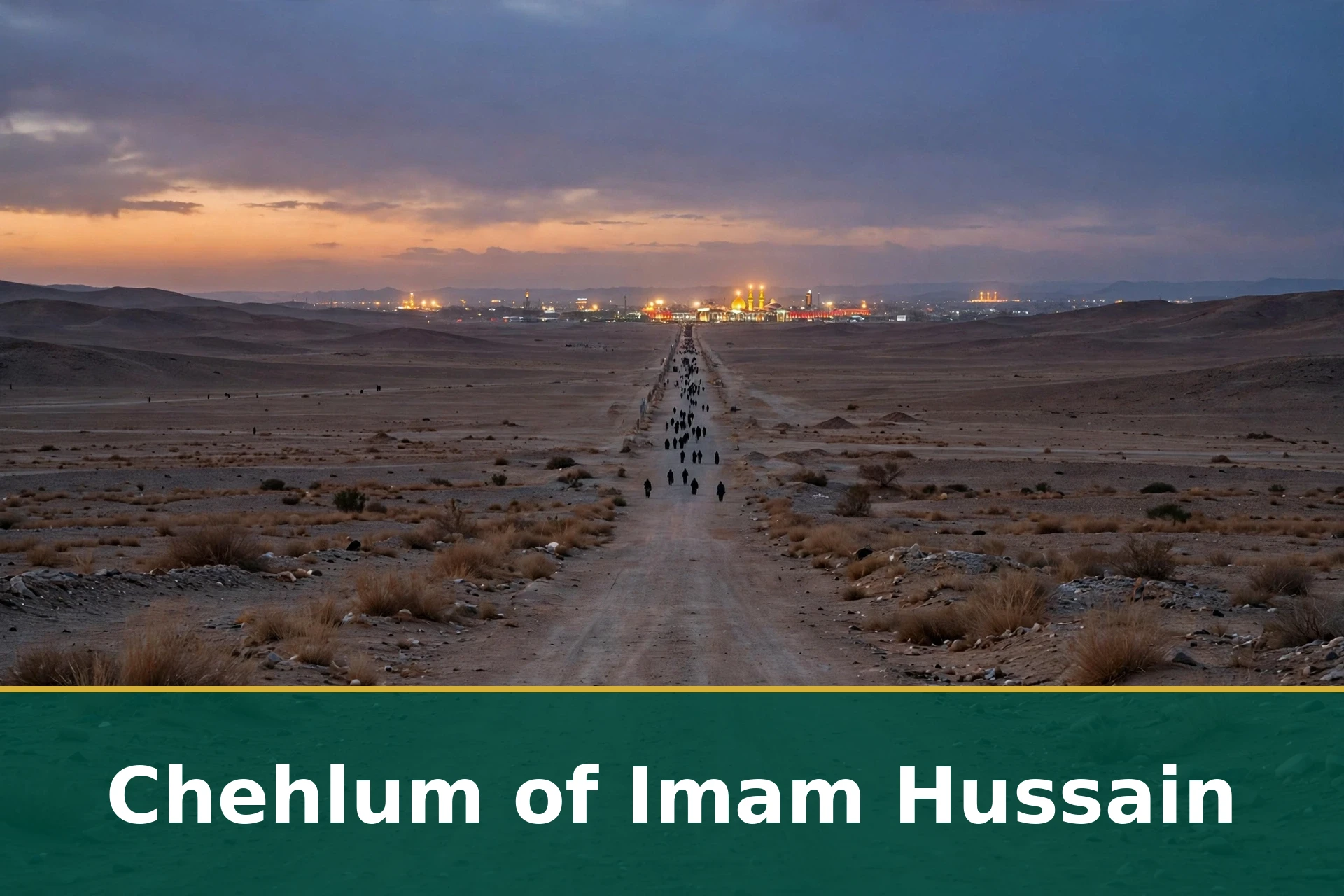
The centrepiece of Chehlum is the walk. Millions of pilgrims walk from Najaf to Karbala — a journey of about 80 km (50 miles) — to reach the shrine of Imam Hussain (RA) by 20 Safar. The walk takes two or three days, and along the route volunteers (Mawakib) provide free food, water, rest and lodging to the pilgrims.
The walk is open to all. Pilgrims come from Iraq, Iran, Pakistan, India and many other countries, and the gathering includes Shia and Sunni Muslims, Christians and people of other faiths. It is a peaceful gathering, and it is known for the generosity of the volunteers who serve the pilgrims. To learn more about the events of Karbala itself, see 10 things every Muslim needs to know about the Battle of Karbala and our guide to Ashura.
When the pilgrims reach Karbala, they visit the shrine of Imam Hussain (RA) and the shrine of his brother Abbas (AS), pray, and join the mourning gatherings. The city fills with pilgrims, and the shrines stay open around the clock. For many, the walk itself is an act of devotion — a way of sharing, in a small way, in the hardship of the family of the Prophet (SAW).
How Chehlum Is Observed Worldwide
In Iraq and Iran, Chehlum is a public holiday, and the day is marked by mourning gatherings (majalis), processions and the recitation of elegies (nohas and latmiyas). In Pakistan, India and other countries with large Shia communities, the day is observed in mosques and imambargahs with majalis, matam (chest-beating in mourning) and processions.
Charity is a large part of the observance. Niyaz (free meals) are distributed in mosques and homes, and many people donate blood in Hussain’s (RA) name. The emphasis is on remembering the suffering of the family of the Prophet (SAW) and on serving others. In many cities, the day is also marked by blood donation drives and free medical camps, organised in Hussain’s (RA) name.
Is Chehlum a Public Holiday?
Arbaeen is a public holiday in Iraq and Iran. In Pakistan, 20 Safar is not a general public holiday — only the 9th and 10th of Muharram are public holidays there — and it is not a public holiday in India either. Check your local announcements for the arrangements in your area.
Chehlum in 2027
The next Chehlum (20 Safar 1449) is expected on Saturday 24 July 2027. This date is expected and depends on the sighting of the moon; local sighting may shift it by a day. The Arbaeen pilgrimage to Karbala will take place in the days leading up to it, with the main gathering on 20 Safar.
Frequently Asked Questions
What is Chehlum (Arbaeen)?
Chehlum, also called Arbaeen, is the 40th day after Ashura, observed on 20 Safar. It marks the visit of the survivors of Karbala, led by Lady Zainab (AS), to the grave of Imam Hussain (RA), and it is the occasion of the Arbaeen pilgrimage to Karbala.
When is Chehlum in 2027?
Chehlum (20 Safar 1449) is expected on Saturday 24 July 2027. The date is expected and depends on the sighting of the moon; local sighting may shift it by a day.
Why is Chehlum observed 40 days after Ashura?
In the Islamic tradition, the 40th day after a death is a day of remembrance. Chehlum marks forty days after the martyrdom of Imam Hussain (RA) on Ashura, and the traditional account says the survivors returned to his grave on that day.
How many pilgrims attend Arbaeen?
Iraqi officials have reported more than 20 million pilgrims in recent years. The Imam Hussain Shrine authority counted more than 22 million visitors (22,354,578) for Arbaeen in 2025, and some estimates go higher.
Is Chehlum a public holiday?
Yes, in Iraq and Iran. In Pakistan, 20 Safar is not a general public holiday (only 9–10 Muharram are), and it is not a public holiday in India. Check your local announcements.
Can non-Muslims attend Arbaeen?
Yes. Arbaeen welcomes people of all faiths, and the pilgrimage includes Shia and Sunni Muslims, Christians and others. The gathering is peaceful, and the volunteers serve every pilgrim.
Sources
Sources: UNESCO; Encyclopaedia Britannica; BBC; al-Tabari, Tarikh al-Tabari