5 Powerful Duas for Depression, Stress & Difficulty
Duas for depression are short prayers you can turn to when life feels heavy: words taught by the Qur’an and the Prophet (SAW) for distress, sadness and difficulty. This post brings together five powerful duas — the dua of Yunus (AS), a dua for refuge from hardships, the call of ‘Ya Hayyu Ya Qayyum’, a dua for ease in difficulty, and the Prophet’s dua against anxiety and sorrow — each with its Arabic text, transliteration and meaning, so you can learn them and say them with understanding. Dua brings comfort and patience, and it goes together with professional help and support, never instead of it. If anxiety is your main struggle, our duas for anxiety may also help.
Key Points
- The dua of Yunus (AS) is Qur’an 21:87.
- The Prophet’s dua against anxiety and sorrow is Sahih al-Bukhari 6369.
- ‘Ya Hayyu Ya Qayyum, by Your mercy I seek help’ is from Jami’ at-Tirmidhi 3524.
- With hardship comes ease (Qur’an 94:5–6).
- Dua goes WITH professional help and support, never instead of it.
When You Feel Low
Depression is not just feeling sad for a day. It can mean weeks of low mood, no energy, broken sleep and losing interest in the things you used to enjoy. It is a real difficulty, and it is nothing to be ashamed of. The duas below are a way to turn to Allah in those hard times, and they can bring comfort and patience. But dua is not a treatment on its own. If you are struggling, speak to a trusted person, a doctor or a mental-health professional. If you feel unsafe, seek help immediately — tell someone close to you, or go to your nearest doctor or hospital. Getting help is a strength, not a weakness.
The Five Duas
Each dua below is shown on its card, followed by its Arabic text, transliteration and meaning. Learn one at a time and repeat it often.
1. The Dua of Yunus (AS)

Arabic:
لَّا إِلَٰهَ إِلَّا أَنتَ سُبْحَانَكَ إِنِّي كُنتُ مِنَ الظَّالِمِينَ
Transliteration: Laa ilaaha illaa Anta subhaanaka innee kuntu minaz-zaalimeen
Translation: “There is no god but You; exalted are You. Indeed, I have been of the wrongdoers.” (Qur’an 21:87)
Yunus (AS) called on Allah from the belly of the whale, in the darkness of the sea. His dua is the most widely taught dua for distress, and Allah answered it. Say it when you feel trapped by your problems and cannot see a way out.
2. A Dua for Refuge from Hardships
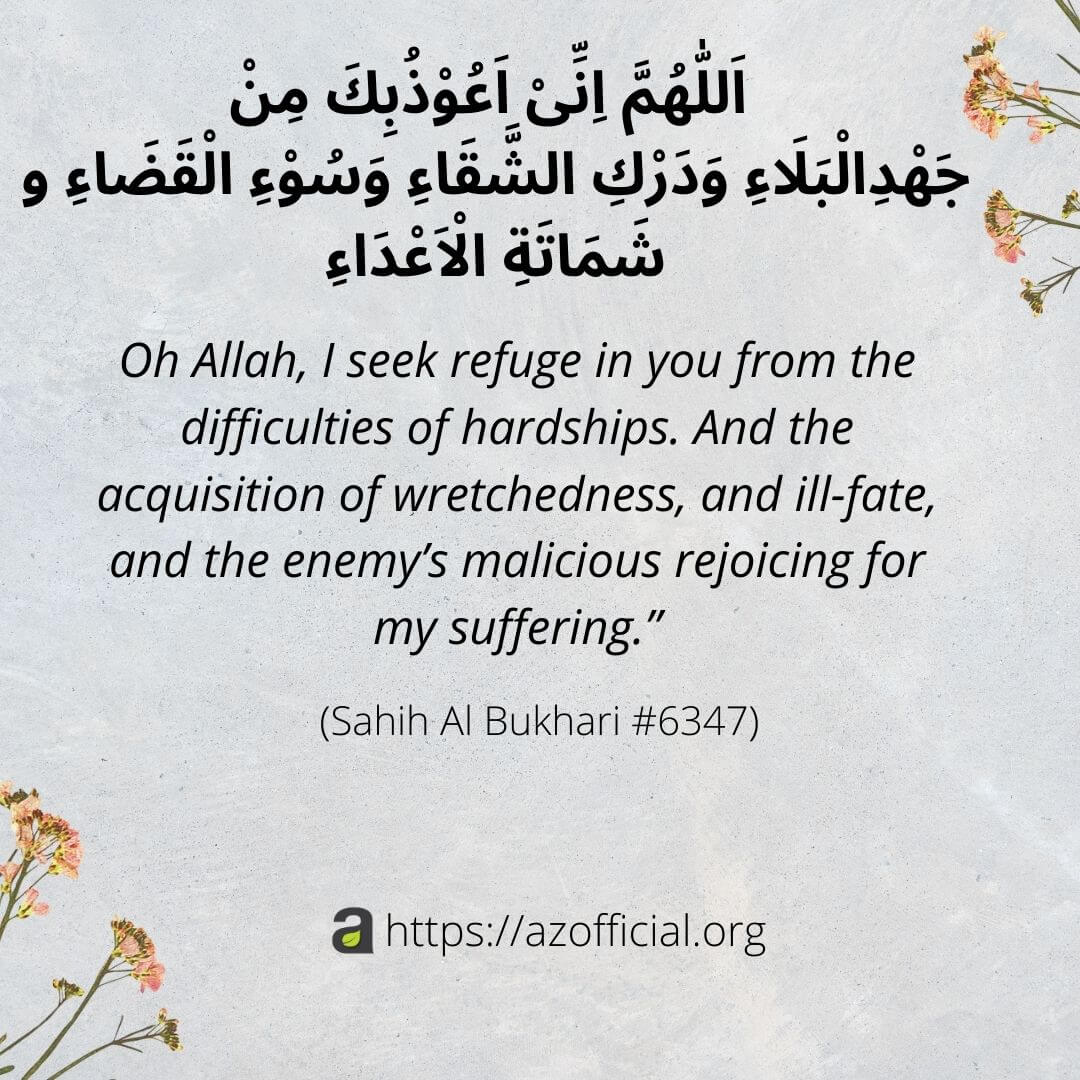
Arabic:
اللَّهُمَّ إِنِّي أَعُوذُ بِكَ مِنْ جَهْدِ الْبَلَاءِ وَدَرَكِ الشَّقَاءِ وَسُوءِ الْقَضَاءِ وَشَمَاتَةِ الْأَعْدَاءِ
Transliteration: Allaahumma innee a’oodhu bika min jahdil-balaa’i wa darakish-shaqaa’i wa soo’il-qadaa’i wa shamaatatil-a’daa’
Translation: “O Allah, I seek refuge in You from the difficulties of hardships, the reaching of wretchedness, ill fate, and the enemy’s malicious rejoicing at my suffering.” (Sahih al-Bukhari 6347)
This dua asks Allah for refuge from the difficulties of hardship, from reaching a state of wretchedness, from ill fate, and from enemies rejoicing at your suffering. It is a dua for the times when life feels hard from every side.
3. Ya Hayyu Ya Qayyum
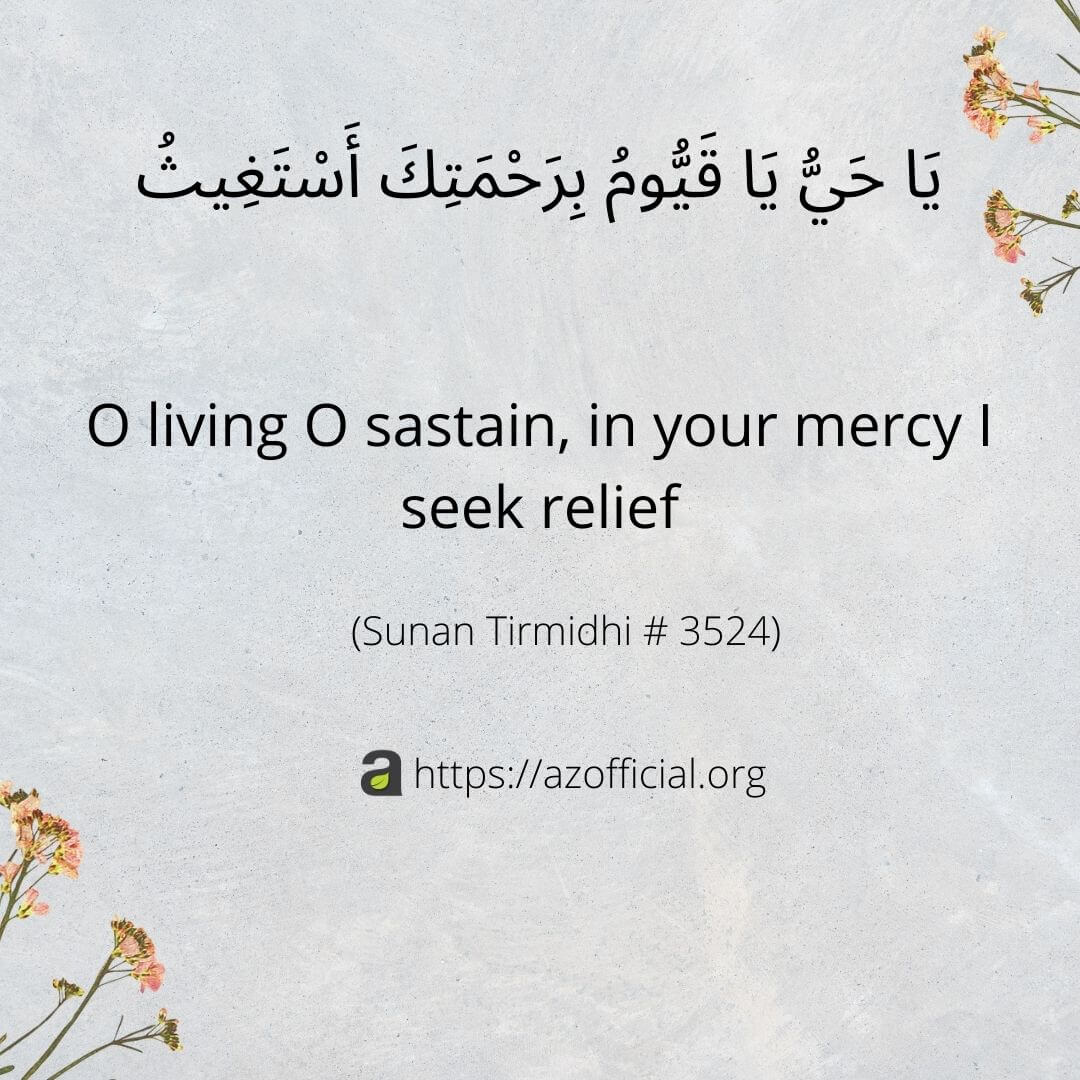
Arabic:
يَا حَيُّ يَا قَيُّومُ بِرَحْمَتِكَ أَسْتَغِيثُ، أَصْلِحْ لِي شَأْنِي كُلَّهُ، وَلَا تَكِلْنِي إِلَى نَفْسِي طَرْفَةَ عَيْنٍ
Transliteration: Yaa Hayyu yaa Qayyoom, bi rahmatika astagheeth, aslih lee sha’nee kullahu, wa laa takilnee ilaa nafsee tarfata ‘ayn
Translation: “O Ever-Living, O Sustainer, by Your mercy I seek help; set right all my affairs, and do not leave me to myself even for the blink of an eye.” (Jami’ at-Tirmidhi 3524, graded hasan)
This is a short dua you can say at any time. The Prophet (SAW) used to call on Allah by these two names — the Ever-Living, the Sustainer of all things — and ask for His mercy to set all his affairs right. The card above shows the opening words of this dua; the full dua is written out in the box above.
4. A Dua for Ease in Difficulty
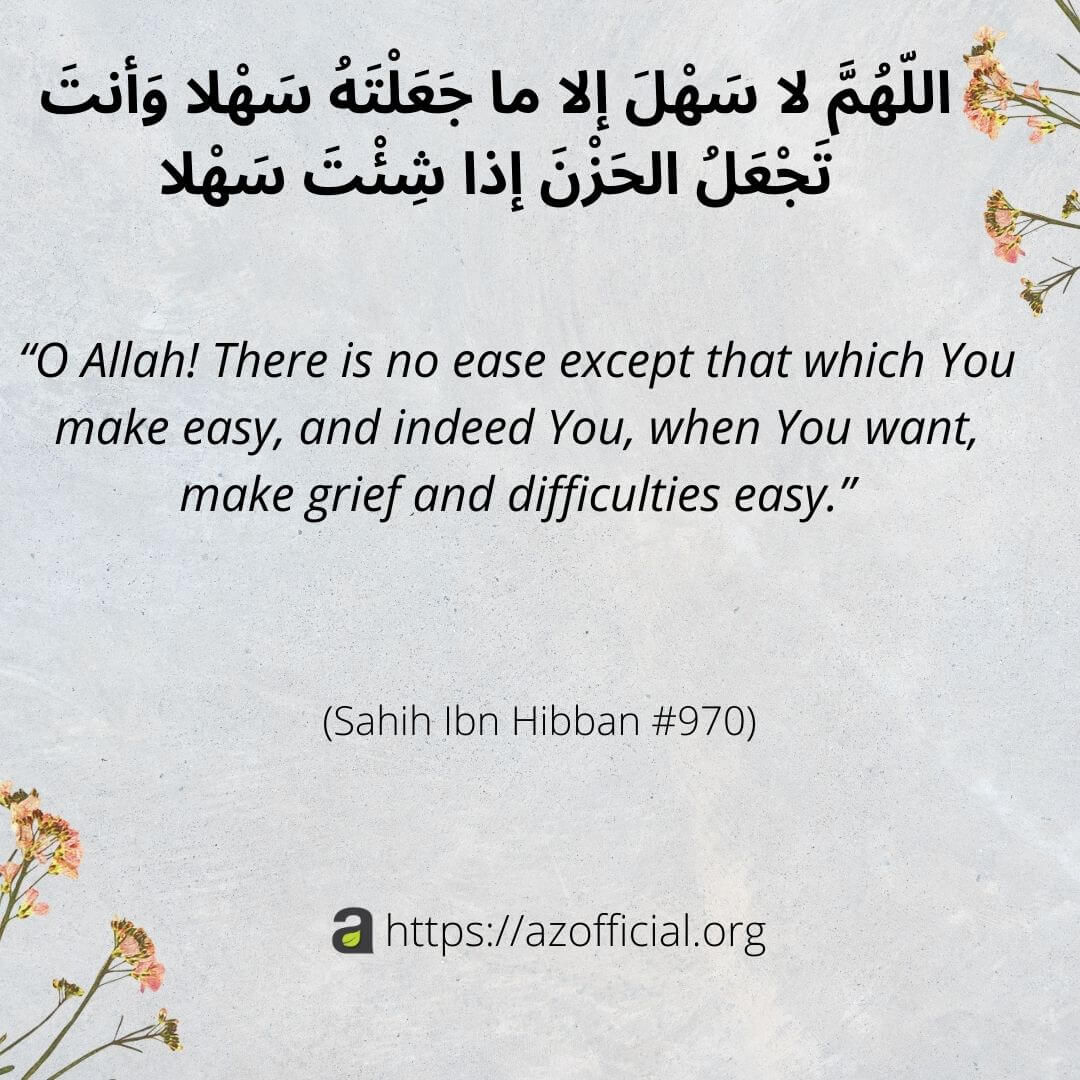
Arabic:
اللَّهُمَّ لَا سَهْلَ إِلَّا مَا جَعَلْتَهُ سَهْلًا وَأَنْتَ تَجْعَلُ الْحَزْنَ إِذَا شِئْتَ سَهْلًا
Transliteration: Allaahumma laa sahla illaa maa ja’altahu sahlan wa Anta taj’alul-hazna idhaa shi’ta sahlaa
Translation: “O Allah, there is no ease except that which You make easy, and You, when You will, make grief and difficulty easy.” (Sahih Ibn Hibban 970)
This short dua is for the moments when a task feels impossible. It reminds us that ease comes only from Allah, and that He can make even grief and difficulty easy when He wills.
5. The Prophet’s Dua Against Anxiety and Sorrow
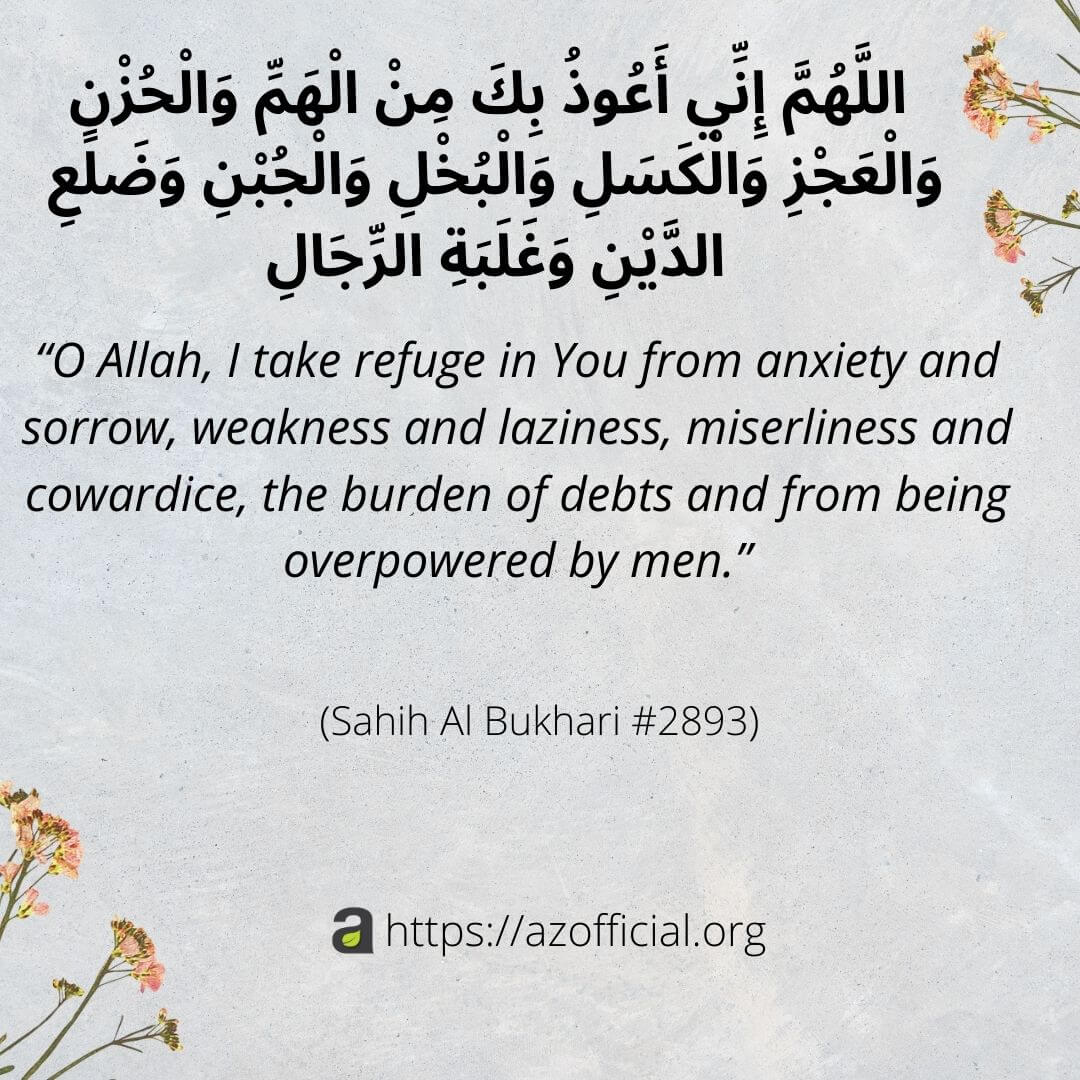
Arabic:
اللَّهُمَّ إِنِّي أَعُوذُ بِكَ مِنَ الْهَمِّ وَالْحَزَنِ، وَأَعُوذُ بِكَ مِنَ الْعَجْزِ وَالْكَسَلِ، وَأَعُوذُ بِكَ مِنَ الْجُبْنِ وَالْبُخْلِ، وَأَعُوذُ بِكَ مِنْ غَلَبَةِ الدَّيْنِ وَقَهْرِ الرِّجَالِ
Transliteration: Allaahumma innee a’oodhu bika minal-hammi wal-hazani, wa a’oodhu bika minal-‘ajzi wal-kasali, wa a’oodhu bika minal-jubni wal-bukhli, wa a’oodhu bika min ghalabatid-dayni wa qahrir-rijaal
Translation: “O Allah, I seek refuge in You from anxiety and sorrow, weakness and laziness, miserliness and cowardice, the burden of debts and from being overpowered by men.” (Sahih al-Bukhari 6369)
This is the dua the Prophet (SAW) taught for anxiety and sorrow, weakness and laziness, miserliness and cowardice, the burden of debts and being overpowered by others. The card above gives this dua in a shorter narration; the full wording is written out in the box above.
With Hardship Comes Ease
Allah promises twice in one verse that with hardship comes ease. Hold on to this promise in the hard days:
Arabic:
فَإِنَّ مَعَ الْعُسْرِ يُسْرًا، إِنَّ مَعَ الْعُسْرِ يُسْرًا
Transliteration: Fa inna ma’al-‘usri yusraa, inna ma’al-‘usri yusraa
Translation: “For indeed, with hardship [will be] ease. Indeed, with hardship [will be] ease.” (Qur’an 94:5–6)
Dua and Professional Help
Dua and worship bring comfort, patience and hope, and they belong alongside treatment and support — not instead of them. If you are feeling low for more than a couple of weeks, or if it is affecting your sleep, appetite, work or relationships, speak to your doctor or a mental-health professional. When illness or pain adds to the strain, the dua for pain and the dua for healing may also bring comfort, and if you are a student under pressure, the dua for exams may help too. The five duas for depression in this post are a starting point, not a treatment plan — use them, and get the help you need.
Frequently Asked Questions
What is the best dua for depression?
The best-known dua for depression and distress is the dua of Yunus (AS), Qur’an 21:87: ‘Laa ilaaha illaa Anta subhaanaka innee kuntu minaz-zaalimeen.’ It is the dua of a prophet in the darkest of places, and Allah answered it. The other four duas in this post are also taught for distress, so learn the ones that speak to you and repeat them often.
What did the Prophet (SAW) say when he felt anxious or sad?
He taught the dua in this post from Sahih al-Bukhari 6369, seeking refuge from anxiety and sorrow, weakness and laziness, miserliness and cowardice, the burden of debts and being overpowered by men. He also taught the dua ‘Ya Hayyu Ya Qayyum, by Your mercy I seek help’ (Jami’ at-Tirmidhi 3524).
Does dua replace professional help for depression?
No. Dua brings comfort, patience and hope, and it goes together with professional help and support — never instead of it. If you are struggling, speak to a trusted person, a doctor or a mental-health professional, and if you feel unsafe, seek help immediately.
Can I recite these duas for someone else?
Yes. You can recite these duas for a family member or a friend who is struggling, and you can also make dua for them in your own words. There is no rule that limits these duas to yourself.
What is the dua of Yunus (AS)?
It is Qur’an 21:87: ‘Laa ilaaha illaa Anta subhaanaka innee kuntu minaz-zaalimeen’ — ‘There is no god but You; exalted are You. Indeed, I have been of the wrongdoers.’ Yunus (AS) said it from the belly of the whale, and Allah saved him.
How often should I recite these duas?
As often as you like. Many people say these duas for depression after the five daily prayers, in the morning and evening, and whenever they feel low. There is no fixed number — what matters is saying them with sincerity and understanding.
Sources
Sources: The Holy Qur’an (Surah al-Anbiya 21; Surah ash-Sharh 94); Sahih al-Bukhari; Jami’ at-Tirmidhi; Sahih Ibn Hibban