
Islam’s early history was marked by pivotal battles that determined the survival of the Muslim community. These battle tours (Ghazwat) were not mere wars—they were divinely sanctioned struggles for justice, freedom, and the establishment of truth.
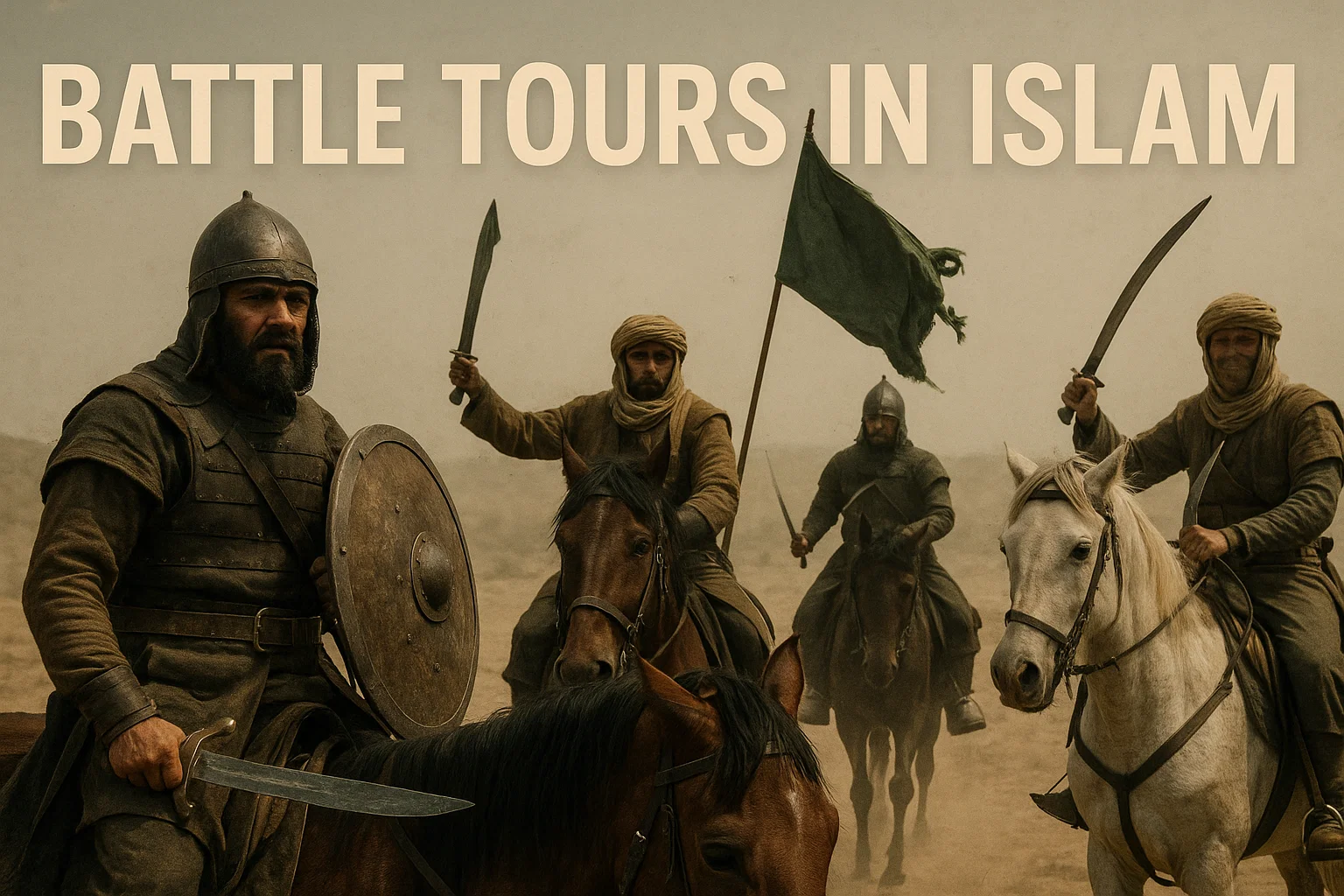
In this deep dive, we explore:
✔ The most famous Islamic battles & their Quranic justifications
✔ Miracles and strategies that led to victory
✔ Ethical rules of war in Islam
✔ Why these battles matter today
Table of Contents
1. What Were Battle Tours (Ghazwat) in Islam?
The term Ghazwa (plural: Ghazwat) refers to military expeditions led by Prophet Muhammad (PBUH). Unlike modern warfare, these battles followed strict Islamic principles:
- Only fought in self-defense or to stop oppression (Quran 22:39)
- No harm to non-combatants (women, children, monks, farmers)
- Clear rules against treachery, torture, or destroying crops
“Fight in the way of Allah those who fight you but do not transgress. Indeed, Allah does not like transgressors.” (Quran 2:190)
2. The 5 Most Decisive Battles in Islamic History
1. Battle of Badr (624 CE) – The Miracle of Divine Help
- 313 Muslims vs. 1,000 Meccan warriors
- Angels fought alongside Muslims (Quran 3:123-125)
- Key Lesson: True victory comes from Allah, not numbers.
2. Battle of Uhud (625 CE) – A Test of Discipline
- Muslims lost due to archers abandoning posts
- Prophet Muhammad (PBUH) was injured
- Key Lesson: Obedience to leadership is crucial.
3. Battle of the Trench (627 CE) – The Power of Strategy
- Salman al-Farsi’s idea of digging a trench saved Medina
- Allah sent a storm to defeat the enemies
- Key Lesson: Smart planning + trust in Allah = success.
4. Treaty of Hudaybiyyah (628 CE) – Victory Without Fighting
- A 10-year peace treaty that later favored Muslims
- Key Lesson: Patience and diplomacy win wars.
5. Conquest of Mecca (630 CE) – The Ultimate Forgiveness
- Prophet Muhammad (PBUH) pardoned his worst enemies
- Key Lesson: Mercy is greater than revenge.
3. Islamic Rules of War vs. Modern Warfare
Islam’s warfare ethics were centuries ahead of their time:
| Islamic Rule | Modern Comparison |
|---|---|
| No killing of civilians | Geneva Convention (1949) |
| No destruction of farms/environment | War crime under ICC |
| Prisoners must be fed & treated well | Human rights laws |
Did you know? The Prophet (PBUH) forbade burning enemies alive, a practice still used in some wars today.
4. Why These Battles Matter for Muslims Today
- Not calls to violence, but lessons in courage & justice
- Inspiration for overcoming challenges (personal or communal)
- Reminder that Allah helps those who stand for truth
FAQ: Battle Tours in Islam
Q: Were Islamic battles only about spreading religion?
A: No—they were defensive or to stop persecution (e.g., Muslims were tortured in Mecca before Badr).
Q: Can we visit these battle sites today?
A: Yes! Badr, Uhud, and Medina’s Trench site are visited for historical reflection.
Q: Does Islam promote war?
A: Islam allows only defensive war—peace is always preferred (Quran 8:61).
Conclusion: The Real Legacy of Islamic Battles
These battles were not about conquest—they were about survival, justice, and divine truth. For Muslims today, they teach:
✔ Stand firm against oppression
✔ Trust Allah in difficult times
✔ Never compromise on ethics, even in war
📢 Your Turn: Which Islamic battle inspires you most? Comment below!