Is Alcohol Haram or Halal in Islam? Quran & Hadith Explained
Is alcohol haram or halal in Islam? Alcohol and other intoxicants are haram (forbidden) in Islam. The prohibition is established in the Qur’an, particularly in Surah Al-Ma’idah 5:90–91, where believers are commanded to avoid intoxicants. The Prophet Muhammad ﷺ also taught that intoxicants are forbidden.
In simple terms, Muslims are prohibited from drinking intoxicating alcoholic beverages. The Qur’an and Sunnah provide the primary evidence for this ruling. Questions involving medicines, ingredients, trace amounts, or genuine medical necessity can involve additional details that should be referred to qualified Islamic scholars.
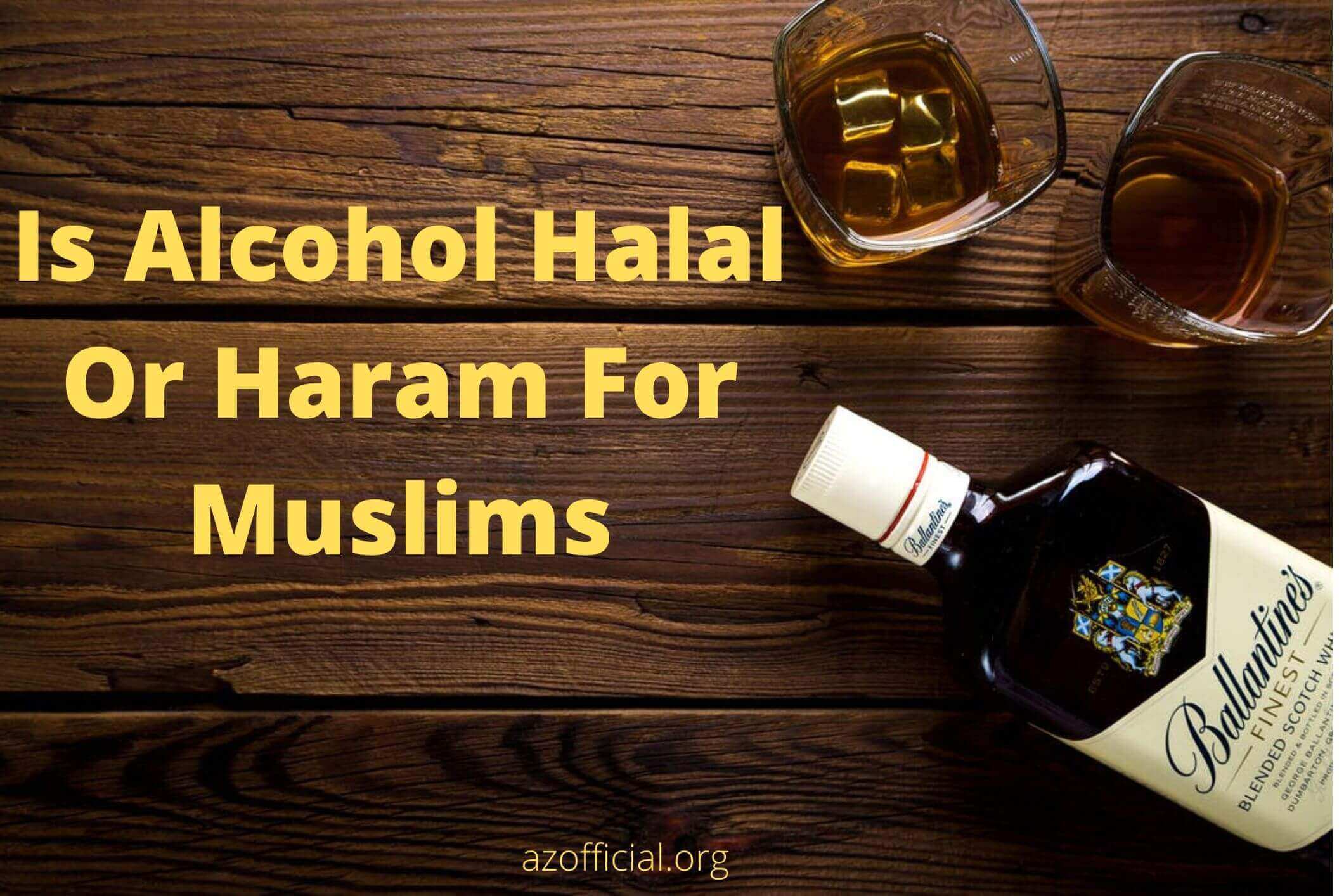
Is Alcohol Haram or Halal in Islam?
Alcohol is haram in Islam. The prohibition of intoxicants is established through the Qur’an and Sunnah.
Allah says:
“O believers! Intoxicants, gambling, idols, and drawing lots for decisions are all evil of Satan’s handiwork. So shun them so you may be successful.”
Qur’an 5:90
Therefore, drinking intoxicating alcoholic beverages is prohibited in Islam.
What Does Islam Say About Alcohol?
The Islamic ruling on alcohol was revealed through the Qur’an in stages.
1. Surah Al-Baqarah 2:219
Allah says:
“They ask you about wine and gambling. Say, ‘There is great sin in both, as well as some benefits for people. But their sin outweighs their benefits.’”
Qur’an 2:219
Read Qur’an 2:219 on Quran.com
This verse establishes an important principle concerning the harmful nature of wine and gambling.
2. Surah An-Nisa 4:43
Allah says:
“O believers! Do not approach prayer while you are intoxicated until you are aware of what you say…”
Qur’an 4:43
This verse prohibited Muslims from praying while intoxicated.
3. Surah Al-Ma’idah 5:90–91
The final and clearest command concerning intoxicants appears in Surah Al-Ma’idah:
“O believers! Intoxicants, gambling, idols, and drawing lots for decisions are all evil of Satan’s handiwork. So shun them so you may be successful.”
Allah then explains that Satan uses intoxicants and gambling to create hostility and prevent people from remembering Allah and performing prayer.
Qur’an 5:90–91
Read Qur’an 5:90–91 on Quran.com
This is the primary Qur’anic basis for the prohibition of intoxicants.
What Does Khamr Mean in Islam?
The Arabic term khamr (خمر) is commonly used in Islamic sources in connection with intoxicating substances.
The Prophet Muhammad ﷺ said:
“Every intoxicant is khamr and every intoxicant is unlawful.”
Sahih Muslim 2003a
This hadith is important because the Islamic prohibition is not limited to one particular type or brand of alcoholic drink.
The principle concerns intoxication.
Hadith About Alcohol Being Haram
The Sunnah contains several teachings concerning intoxicants.
The Prophet Muhammad ﷺ said:
“Every intoxicant is khamr and every intoxicant is unlawful.”
Sahih Muslim 2003a
Another well-known hadith states:
“Whatever intoxicates in large quantities, a small quantity of it is unlawful.”
Sunan Abi Dawud 3681; Jami` at-Tirmidhi 1865
These narrations reinforce the prohibition of intoxicating substances.
Why Is Alcohol Haram in Islam?
Islam prohibits alcohol and intoxicants for several important reasons.
1. Alcohol Is Explicitly Prohibited
The strongest reason is that Allah commanded believers to avoid intoxicants in Qur’an 5:90.
For a Muslim, obedience to Allah’s command is itself sufficient reason to avoid what He has prohibited.
2. Alcohol Can Affect the Mind
Intoxication can impair judgment and reduce a person’s ability to think and act responsibly.
Islam places great importance on protecting the mind and maintaining sound judgment.
3. Alcohol Can Lead to Harmful Behavior
Allah explains in Qur’an 5:91 that Satan seeks to create hostility and hatred between people through intoxicants and gambling.
The verse also warns that intoxicants can prevent people from remembering Allah and from prayer.
4. Alcohol Can Harm Individuals and Society
Alcohol consumption can be associated with serious health, social, family, and safety problems.
However, these potential harms are additional wisdoms and consequences, rather than the sole basis of the Islamic ruling. The primary religious basis is Allah’s prohibition in the Qur’an and the teachings of the Prophet ﷺ.
Is Drinking Alcohol a Major Sin in Islam?
Yes. Drinking intoxicants is considered a major sin in Islam.
The Qur’an does not merely describe intoxicants as disliked. In Surah Al-Ma’idah 5:90, believers are commanded to shun them.
A Muslim who has fallen into drinking alcohol should not assume that repentance is impossible.
Allah says:
“Do not lose hope in Allah’s mercy, for Allah certainly forgives all sins.”
Qur’an 39:53
Read Qur’an 39:53 on Quran.com
Sincere repentance (tawbah) involves turning away from the sin, regretting it, seeking Allah’s forgiveness, and sincerely intending not to return to it.
Is Non-Alcoholic Beer Halal?
The answer depends on the actual ingredients, alcohol content, production process, and whether the product is intoxicating.
The label “non-alcoholic” by itself does not provide enough information to make a universal ruling for every product.
For a particular product, Muslims should check its ingredients and production details and, when necessary, consult a qualified scholar or a trusted halal-certification authority.
Is Alcohol in Food Haram?
This question requires distinction.
If a food or drink contains an amount of an intoxicating substance that makes the product intoxicating, it falls under the prohibition of intoxicants.
However, questions about tiny residual amounts, naturally occurring alcohol, cooking processes, flavorings, extracts, or manufacturing ingredients can involve different scholarly discussions.
Therefore, it is not accurate to declare every product containing the word “alcohol” automatically haram without examining the substance and context.
For a specific food or ingredient, consult a qualified Islamic scholar or reliable halal-certification authority.
Is Alcohol in Medicine Haram?
Islam recognizes the principle of necessity (darurah) in situations where a person faces genuine hardship or danger.
However, this does not mean that every medicine containing alcohol automatically becomes permissible.
The ruling can depend on:
- The type of alcohol or ingredient
- Its amount
- Whether it is intoxicating
- How it is used
- Whether a suitable alternative exists
- Whether there is a genuine medical necessity
Therefore, someone facing a medical situation should consult a qualified Islamic scholar together with an appropriate medical professional rather than applying a blanket ruling.
Is Alcohol Used for Cleaning or Sanitization Haram?
Alcohol used in cleaning, disinfecting, or sanitizing products is a different question from drinking intoxicating beverages.
Islamic scholars have discussed different types and uses of alcohol-containing substances, and there are differences in scholarly treatment of some applications.
Therefore, a person should not automatically assume that every product containing the word “alcohol” has exactly the same ruling as drinking alcohol.
For a specific product or situation, consult a qualified scholar.
Is Selling Alcohol Haram in Islam?
Islamic sources contain strong warnings concerning involvement with intoxicating wine.
The Prophet ﷺ said:
“Allah has cursed wine, the one who drinks it, the one who serves it, the one who sells it, the one who buys it, the one who squeezes it, the one for whom it is squeezed, the one who carries it, and the one to whom it is carried.”
Sunan Abi Dawud 3674
This hadith demonstrates the seriousness of participating in the trade and distribution of wine.
Is Alcohol Haram for Muslims Even in Small Amounts?
The Prophet ﷺ said:
“Whatever intoxicates in large quantities, a small quantity of it is unlawful.”
Sunan Abi Dawud 3681
This hadith is commonly used by Islamic scholars when explaining that deliberately consuming a small amount of an intoxicating drink does not become permissible simply because the amount is too small to cause immediate intoxication.
Questions involving trace or naturally occurring amounts that are not consumed as intoxicants are a separate matter and should not automatically be treated the same way.
Is Drinking Alcohol Haram Even If You Do Not Get Drunk?
Yes, deliberately drinking an alcoholic beverage that falls under the prohibition of intoxicants does not become permissible simply because a person claims that they will not become drunk.
The hadith states:
“Whatever intoxicates in large quantities, a small quantity of it is unlawful.”
Sunan Abi Dawud 3681
The ruling therefore concerns the prohibited intoxicating substance, not merely whether a person personally becomes intoxicated on a particular occasion.
What If a Muslim Has Already Drunk Alcohol?
A Muslim who has committed this sin should repent to Allah and not give up hope in His mercy.
Allah says:
“Do not lose hope in Allah’s mercy.”
Qur’an 39:53
Sincere repentance includes:
- Stopping the sinful action.
- Feeling genuine regret.
- Seeking Allah’s forgiveness.
- Having a sincere intention not to return to the sin.
If alcohol dependence is involved, seeking appropriate professional help can also be an important part of overcoming the problem.
Is Alcohol Haram in Islam Today?
Yes. The prohibition of intoxicants remains applicable today.
Modern products may have different names and formulations, but the Islamic ruling is based on the nature and use of the substance rather than simply its brand name.
Therefore, Muslims should avoid intoxicating alcoholic drinks and seek reliable Islamic guidance when dealing with unusual ingredients or circumstances.
Alcohol and Islam: The Simple Answer
If you are looking for the short answer:
Is alcohol haram in Islam?
Yes. Drinking intoxicating alcoholic beverages is haram (forbidden) in Islam.
The primary evidence is:
- Qur’an 5:90–91 — believers are commanded to avoid intoxicants.
- Sahih Muslim 2003a — every intoxicant is unlawful.
- Sunan Abi Dawud 3681 — whatever intoxicates in large quantities, a small quantity is unlawful.
- Sunan Abi Dawud 3674 — strong warning concerning involvement with wine.
Questions about medicines, food ingredients, sanitizers, non-alcoholic drinks, and trace amounts may require additional details and should not automatically be given the same ruling as drinking intoxicating alcohol.
Frequently Asked Questions
Is alcohol haram or halal in Islam?
Alcohol and intoxicating alcoholic drinks are haram in Islam. The clearest Qur’anic evidence is Surah Al-Ma’idah 5:90–91.
Which Quran verse says alcohol is haram?
Surah Al-Ma’idah 5:90–91 provides the clearest Qur’anic command to avoid intoxicants.
Is a small amount of alcohol haram?
The Prophet ﷺ said that whatever intoxicates in large quantities, a small quantity of it is unlawful (Sunan Abi Dawud 3681). However, questions about trace or naturally occurring amounts require separate consideration.
What is the hadith about alcohol?
The Prophet ﷺ said:
“Every intoxicant is khamr and every intoxicant is unlawful.”
Sahih Muslim 2003a
Can Muslims drink non-alcoholic beer?
It depends on the product, its ingredients, alcohol content, and production process. A product should not be declared halal solely because it is labeled “non-alcoholic.”
Is alcohol in medicine haram?
Not every medicine containing alcohol has the same ruling. The specific substance, amount, purpose, necessity, and availability of alternatives can matter. A qualified scholar should be consulted for a specific case.
Is selling alcohol haram?
Islamic sources contain strong warnings against selling and participating in the trade of wine. See Sunan Abi Dawud 3674.
What should a Muslim do after drinking alcohol?
A Muslim should sincerely repent to Allah, stop the sinful behavior, seek forgiveness, and make a genuine effort not to return to it. Allah’s mercy remains open to those who sincerely repent.
Final Answer: Is Alcohol Haram or Halal in Islam?
Alcohol is haram in Islam when referring to intoxicating alcoholic drinks. This ruling is established by the Qur’an and Sunnah.
Allah commands believers to avoid intoxicants in Surah Al-Ma’idah 5:90, and the Prophet Muhammad ﷺ said:
“Every intoxicant is khamr and every intoxicant is unlawful.”
Sahih Muslim 2003a
Islam’s prohibition of alcohol is therefore not based only on modern health research. Its primary basis is revelation: the Qur’an and authentic Sunnah.
At the same time, not every product that contains the word “alcohol” should automatically be treated as identical to an alcoholic beverage. Food ingredients, medicines, sanitizers, trace amounts, and non-alcoholic products can involve different circumstances and scholarly discussions.
For specific cases, Muslims should seek guidance from a qualified and trustworthy Islamic scholar.
Allah knows best.
Sources & References
- Qur’an 2:219 — Quran.com
- Qur’an 4:43 — Quran.com
- Qur’an 5:90–91 — Quran.com
- Qur’an 39:53 — Quran.com
- Sahih Muslim 2003a — Sunnah.com
- Sunan Abi Dawud 3674 — Sunnah.com
- Sunan Abi Dawud 3681 — Sunnah.com