10 Things Muslims Think Are Haram, But Aren’t
Many Muslims worry that everyday things are haram. Some are forbidden, some are only disliked (makruh), and some are not forbidden at all. The difference matters: calling something haram when it is not is itself a serious matter, and so is treating something haram as if it were allowed.
This list looks at ten things Muslims think are haram, but aren’t — or are not haram in the way people assume — and explains what scholars actually say, with the evidence. Where scholars differ, the article says so. For a personal ruling, ask a qualified scholar.
Key Points
- Haram, makruh (disliked) and permissible are different categories — not everything disliked is haram.
- Keeping pets, talking during wudu, and eating or touching things before ghusl are not haram.
- Eating with the left hand, swearing and slaughtering in front of another animal are disliked, not haram — with exceptions.
- Proposing to an engaged woman is forbidden while the engagement stands (Sahih al-Bukhari 5142)
- Smoking is haram according to the majority of contemporary scholars because of proven harm — the old “merely disliked” view is corrected in this article.
- Divorce is permitted but disliked, and a last resort.
1. Keeping Pets
Keeping pets is generally allowed in Islam. Muslims have kept cats, birds and other animals as pets throughout history, and there is no prohibition on it. The exception is dogs: keeping a dog purely as a pet is not permitted, though dogs are allowed for hunting, guarding and herding (Sahih al-Bukhari 2322). Harmful animals, such as snakes and scorpions, should not be kept either, because they endanger people. Cats, birds, rabbits, guinea pigs and hamsters are all fine as pets, provided they are looked after properly. For the full ruling on dogs, see our guide to keeping dogs as pets in Islam.
2. Swearing
Swearing and foul language are condemned in Islam, but they are not usually placed in the category of haram. The Prophet (peace and blessings be upon him) said: “A believer is not a slanderer, one who curses, one who speaks obscene words, or one who is foul-mouthed.” (Jami’ at-Tirmidhi 1977). Scholars class swearing as disliked (makruh) — and a serious flaw in a believer’s character — rather than as a haram act on the level of the major sins. A Muslim should work to clean up their speech, but a person who slips into swearing has not committed something haram in the strict sense.

3. Eating with the Left Hand
Eating with the right hand is the Sunnah. The Prophet (peace and blessings be upon him) said: “When one of you eats, let him eat with his right hand, and when he drinks, let him drink with his right hand.” (Sahih Muslim 2020). Eating with the left hand is disliked (makruh) — it is not haram. A person who has a genuine reason, such as a disability or being left-handed and unable to manage with the right hand, is excused. The Sunnah is clear, but the ruling is dislike, not prohibition.
4. Proposing to an Engaged Woman
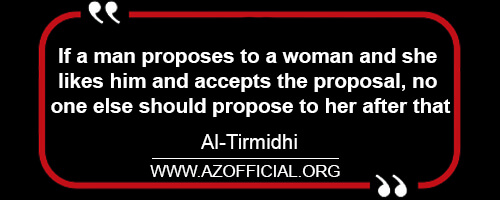
Proposing to a woman who is already engaged is forbidden while the engagement stands. The Prophet (peace and blessings be upon him) said: “A man should not propose to a woman while his brother has already proposed to her, until the first suitor gives up his proposal or gives him permission.” (Sahih al-Bukhari 5142; Sahih Muslim 1412). The prohibition protects trust between Muslims and prevents harm to the first engagement. If the engagement ends, or the first suitor gives his permission, a proposal is allowed. The rule is about the proposal while another engagement is in place — not about the woman herself being off-limits forever.
5. Smoking
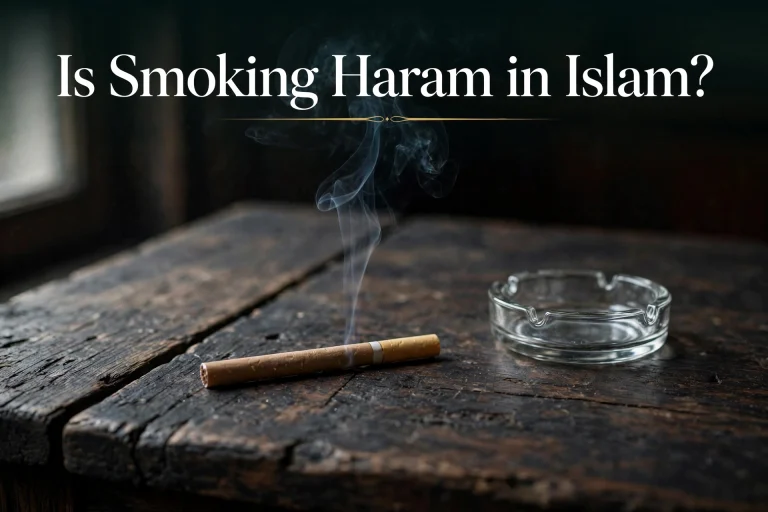
Smoking is haram according to the majority of contemporary scholars. An older view held that it was merely disliked (makruh), but that view predates the medical evidence of the harm smoking causes. Allah says: “And do not throw [yourselves] with your [own] hands into destruction.” (Qur’an 2:195) and “Do not kill yourselves.” (Qur’an 4:29). Because smoking is proven to destroy health and to harm those around the smoker, the majority view today is that it is forbidden. Our full guide explains whether smoking is haram in detail.
6. Eating or Touching Things Before Ghusl
Eating, drinking or touching things before taking ghusl (the ritual bath after sexual relations) is not haram. A Muslim does not become ritually impure in the sense of spreading impurity: Abu Hurayrah (may Allah be pleased with him) reported that the Prophet (peace and blessings be upon him) met him while he was in a state of janabah, and said: “A Muslim does not become ritually impure.” (Sahih al-Bukhari 283). Washing the hands and making wudu before eating in that state is recommended, and ghusl itself should not be delayed without need — but eating before ghusl is permitted.
7. Slaughtering an Animal in Front of Another
Slaughtering an animal in front of another animal is disliked (makruh), not haram. Scholars say so out of kindness to animals: the animal being slaughtered should not be caused unnecessary fear or distress, and the Prophet (peace and blessings be upon him) taught that animals should be treated kindly and the blade sharpened so the slaughter is quick. The meat of an animal slaughtered in this way remains lawful — the dislike is about the manner, not the permissibility of the meat.
8. Talking During Wudu
Talking during wudu is not forbidden. Imam an-Nawawi, in al-Majmu’ (1/490-491), lists among the recommended acts of wudu that a person should not speak during it without need, and he quotes Qadi Iyad reporting that scholars deemed speaking during wudu and ghusl reprehensible — but Nawawi’s own conclusion is that there is no clear prohibition on speaking during wudu, so the ruling is that leaving it is preferable, rather than makruh in the strict sense. The dislike is about losing focus and wasting water, not about the wudu becoming invalid. A brief word during wudu — such as answering a question — is fine. For the full guide to wudu, see our post on the dua before and after wudu.
9. Marital Intimacy
Intimacy between a husband and wife is lawful in Islam — it is not haram. The Qur’an describes spouses as garments for one another (Qur’an 2:187), and kindness and gentleness in married life are part of the Sunnah: the Prophet (peace and blessings be upon him) said: “The best of you are the best to their wives.” (Jami’ at-Tirmidhi 3895). Modesty is still a virtue: spouses should keep their private matters private, and the only limits are the clear prohibitions — intercourse during menstruation and anal intercourse — which scholars explain in detail. Outside those limits, marital intimacy is permitted and even rewarded.
10. Divorce
Divorce is permitted in Islam when a marriage has broken down, though it is disliked and should be a last resort. The Qur’an gives detailed guidance on divorce in Surah Al-Baqarah (2:229–232), and the Prophet (peace and blessings be upon him) treated it as a lawful but unwanted step. Couples should first try reconciliation, mediation through family, and every other way to save the marriage. When all of that fails and the marriage cannot continue, divorce is allowed — and remarriage afterwards is also permitted. The narration that divorce is “the most hated of lawful things to Allah” is reported in Sunan Abi Dawud (2178) but is classed weak by scholars, so it should not be quoted as an established hadith.
The lesson of this list is that “haram” needs evidence. Not every disliked thing is haram, and not every common practice is permitted — smoking is a reminder of that. For foods that are actually haram, see our guide to 9 haram foods in Islam that children need to know. And for any personal question, ask a qualified scholar rather than relying on what people commonly say.
Frequently Asked Questions
What is the difference between haram and makruh?
Haram means forbidden — doing it is sinful. Makruh means disliked — it is better to avoid it, but doing it is not a sin. Scholars keep the two categories separate, and this list shows why that distinction matters.
Is smoking haram?
The majority of contemporary scholars hold that smoking is haram because it is proven to destroy health and harm others, which the Qur’an forbids (2:195; 4:29). An older view classed it as merely disliked, but that view predates the medical evidence.
Is keeping a dog as a pet haram?
Keeping a dog purely as a pet is not permitted, though dogs are allowed for hunting, guarding and herding (Sahih al-Bukhari 2322). Other pets, such as cats and birds, are generally allowed.
Is divorce haram?
No. Divorce is permitted when a marriage has broken down, though it is disliked and a last resort. Couples should first try reconciliation and mediation.
Are all the things on this list agreed upon by scholars?
No. Scholars differ on some items, such as the details of eating with the left hand. This article gives the majority view and notes differences; ask a qualified scholar for a personal ruling.
Is talking during wudu haram?
No. Talking during wudu is not forbidden and does not affect the validity of wudu. Imam an-Nawawi (al-Majmu’ 1/490-491) lists not speaking unnecessarily among the recommended acts of wudu, and scholars describe unnecessary talking as something better left aside — the point is focus and not wasting water, not a prohibition.
Sources: The Holy Qur’an; Sahih al-Bukhari; Sahih Muslim; Jami’ at-Tirmidhi; Sunan Abi Dawud; Imam an-Nawawi.