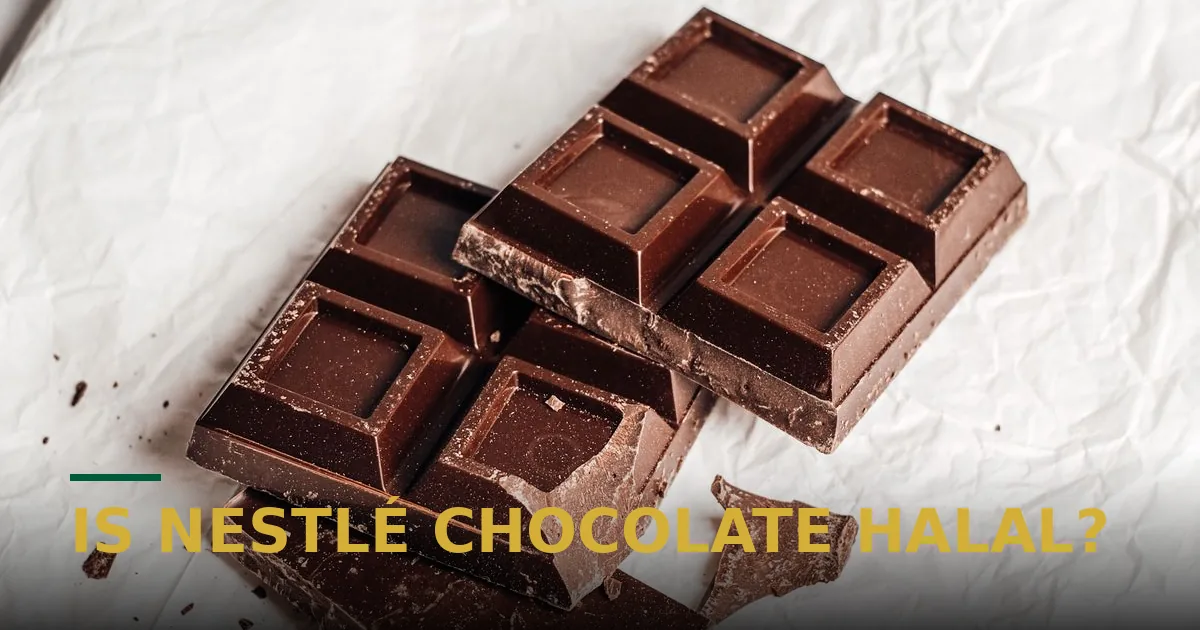
Is Nestlé Chocolate Halal? Exploring the Halal Status of Nestlé Chocolate Products
Is Nestlé chocolate halal? Not automatically — it depends on the product and where you buy it. Nestlé has obtained halal certification for certain chocolate products in some regions, but not every Nestlé chocolate is halal-certified. The reliable check is the pack itself: look for a recognised halal certification logo and read the ingredients list. This guide explains which Nestlé chocolates are halal, why certification varies by region, and how to check a product before you buy it.
Key Points
- Nestlé chocolate is not automatically halal; it depends on the product, the factory, and the country.
- In Malaysia, all Nestlé products sold by Nestlé Malaysia are JAKIM halal-certified, including KitKat.
- In Indonesia, Nestlé products are certified by MUI; Gulf markets have their own local certification.
- UK and US KitKat do not carry halal certification — and US KitKat is made by Hershey, not Nestlé.
- The pack is the check: a recognised halal logo, the country of manufacture, and the ingredients list.
- Watch for gelatin, emulsifiers from unclear sources, and alcohol-based flavourings.
- When in doubt, choose a product that carries a halal logo you recognise, or ask a qualified scholar.
What Does Halal Mean for Chocolate?
Halal means permissible, and for food it covers the ingredients and the way they were made. Allah says:
Arabic:
يَا أَيُّهَا النَّاسُ كُلُوا مِمَّا فِي الْأَرْضِ حَلَالًا طَيِّبًا وَلَا تَتَّبِعُوا خُطُوَاتِ الشَّيْطَانِ ۚ إِنَّهُ لَكُمْ عَدُوٌّ مُبِينٌ
Transliteration: Yaa ayyuhan-naasu kuloo mimmaa fil-ardi halaalAn tayyiban wa laa tattabi’oo khutuwaatish-shaytaan, innahu lakum ‘aduwwun mubeen.
Translation: O mankind, eat from whatever is on earth [that is] lawful and good and do not follow the footsteps of Satan. Indeed, he is to you a clear enemy. (Qur’an 2:168, full verse, Saheeh International.)
And the Qur’an lists what is forbidden as food, beginning with these words:
Arabic:
حُرِّمَتْ عَلَيْكُمُ الْمَيْتَةُ وَالدَّمُ وَلَحْمُ الْخِنْزِيرِ
Transliteration: Hurrimat ‘alaykumul-maytatu wad-damu wa lahmul-khinzeer.
Translation: Prohibited to you are dead animals, blood, the flesh of swine… (Qur’an 5:3, opening phrase only, labelled as such, Saheeh International.)
Chocolate is rarely about pork directly. The real questions are about the smaller ingredients: gelatin, which may come from pork or from non-halal-slaughtered animals; emulsifiers such as E471, whose source may be plant or animal; whey and milk powders; and flavourings that may use alcohol as a carrier. That is why a chocolate bar cannot be judged by its brand name alone. The Prophet (SAW) gave the principle for exactly this situation:
Arabic:
الْحَلَالُ بَيِّنٌ وَالْحَرَامُ بَيِّنٌ
Transliteration: Al-halaalu bayyinun wal-haraamu bayyinun.
Translation: That which is lawful is clear and that which is unlawful is clear. (Sahih al-Bukhari 52; also Sahih Muslim 1599a — this is the opening phrase only, labelled as such; the full hadith continues about doubtful matters between the two.)
When a product’s status is doubtful and cannot be checked, caution is the Islamic response.
Does Nestlé Have Halal Certification?
Yes — in some markets, for some products, from recognised certifiers. Nestlé is a global company with factories in many countries, and certification is granted factory by factory, product by product. It does not have one worldwide halal certificate that covers everything it makes. The clearest example is Malaysia. Nestlé Malaysia states that all products it manufactures, imports and distributes in Malaysia are certified halal by JAKIM (the Department of Islamic Development Malaysia), and that all confectionery it sells in Malaysia — including KitKat, Crunch, and Milo Nuggets — is produced in Malaysia and JAKIM-certified, with the halal symbol printed on the packaging. Indonesia is similar: Nestlé Indonesia is certified by MUI (the Indonesian Ulema Council). Factories in the Gulf operate under local halal certification. None of those certificates travels with the brand to other countries. A JAKIM certificate covers what Nestlé Malaysia makes and sells in Malaysia; it does not certify a bar made in a European factory and sold in London.
Which Nestlé Chocolates Are Halal?
The honest answer is: the ones that carry a halal certification logo for the market where you bought them. In Malaysia, that means Nestlé KitKat, Crunch, Milo Nuggets and other confectionery carrying the JAKIM logo. In Indonesia, it means products carrying the MUI logo. In Gulf countries, it means products carrying the local halal authority’s mark. In the UK, there is no blanket halal certification across Nestlé’s confectionery range, and UK KitKat packaging carries no recognised UK halal logo — so a UK KitKat cannot be confirmed halal from its pack, whatever its ingredients appear to be. In the United States, the position is different again: KitKat there is not made by Nestlé at all but by The Hershey Company under licence, and US Hershey KitKat carries no halal mark. Japanese KitKat, famous for its many regional flavours, is also not halal-certified. The pattern to remember is simple: the same brand name can be halal in one country and uncertified in another, because they are different products from different factories. For the KitKat question in detail, see our guide on whether KitKat is halal.
How to Identify Halal Nestlé Chocolate
Check the pack every time, even for a product you have bought before, because recipes and factories change. First, look for a halal certification logo — JAKIM, MUI, HMC, HFA, or a Gulf authority mark — printed on the packaging. Second, read the country of manufacture: a Malaysian-made KitKat with a JAKIM logo is a different product from a UK-made KitKat with no logo. Third, read the ingredients list for gelatin, whey, emulsifiers such as E471 and lecithin, and flavourings; if an emulsifier’s source is unclear, the logo matters more than guesswork. Fourth, check the certifier’s own directory where one exists — JAKIM runs a public halal portal for Malaysia — rather than trusting an import sticker or a social-media claim. Fifth, if there is no logo and the ingredients leave you unsure, choose a certified alternative. That is the practical meaning of avoiding doubtful matters. For gelatin specifically, see our guide on whether gelatin is halal.
What About KitKat, Aero, Smarties and Other Nestlé Sweets?
The same rule applies to every product in the range. KitKat is the most asked-about, and it is the best example of why the country matters: Malaysian KitKat is JAKIM-certified, Indonesian KitKat is MUI-certified, while UK and US KitKat carry no halal certification. Aero, Smarties, Quality Street, Milkybar, Polo, After Eight and Yorkie follow the same pattern — certified in some markets, uncertified in others, and the pack is the only reliable evidence for the bar in your hand. A vegetarian logo is not a halal logo: it tells you about animal ingredients in general, not about halal slaughter, certification, or alcohol-based flavourings. Similarly, a kosher mark is not a halal certificate. Do not transfer a certification from one country to another, and do not assume that because one Nestlé product is certified, the whole range is. For other drinks and foods, see whether Red Bull is halal and whether Chipotle is halal.
What Should You Do If You Are Unsure?
If the pack carries a recognised halal logo, you can buy with confidence. If it does not, and the ingredients list is unclear, the cautious choice is to leave it and pick a certified product — there are many halal-certified chocolates available in the UK, US, Canada and Australia. If you live in a Muslim-majority market, buy the locally certified version and check the certifier’s directory when you are unsure. If a shop imports a foreign bar with a sticker claiming halal status, check whether the sticker names the certifier and matches the product and factory. And if a specific product still leaves you uncertain, ask a qualified scholar with the actual pack in front of them. Chocolate is a small pleasure; it is not worth a doubtful bite. See also whether KFC is halal and whether calamari is halal.
Closing
Nestlé makes halal-certified chocolate in several markets, and it also sells chocolate with no halal certification in others. The brand name does not decide the question; the pack does. Check the logo, check the country, read the ingredients — and when in doubt, choose the certified bar.
Frequently Asked Questions
Is Nestlé chocolate halal?
Not automatically — it depends on the product and country; check the pack for a halal logo.
Is KitKat halal?
Malaysian KitKat is JAKIM-certified and Indonesian KitKat is MUI-certified; UK and US KitKat carry no halal certification, and US KitKat is made by Hershey, not Nestlé.
Is Nestlé chocolate halal in the UK?
There is no blanket UK halal certification; UK packs carry no recognised halal logo, so a UK bar cannot be confirmed halal from its pack.
Does Nestlé use halal gelatin?
It depends on the product and factory; certified products are audited for ingredients including gelatin, while uncertified products give no such assurance — read the ingredients list.
What is the halal logo to look for?
JAKIM in Malaysia, MUI in Indonesia, HMC or HFA in the UK, or the local halal authority’s mark in Gulf countries — printed on the pack itself.
Is a vegetarian logo the same as halal?
No — it says nothing about halal slaughter, certification, or alcohol-based flavourings; only a halal certification logo confirms halal status.
Sources and References
Sources: The Holy Qur’an; Sahih al-Bukhari; Sahih Muslim; Nestlé Malaysia; JAKIM