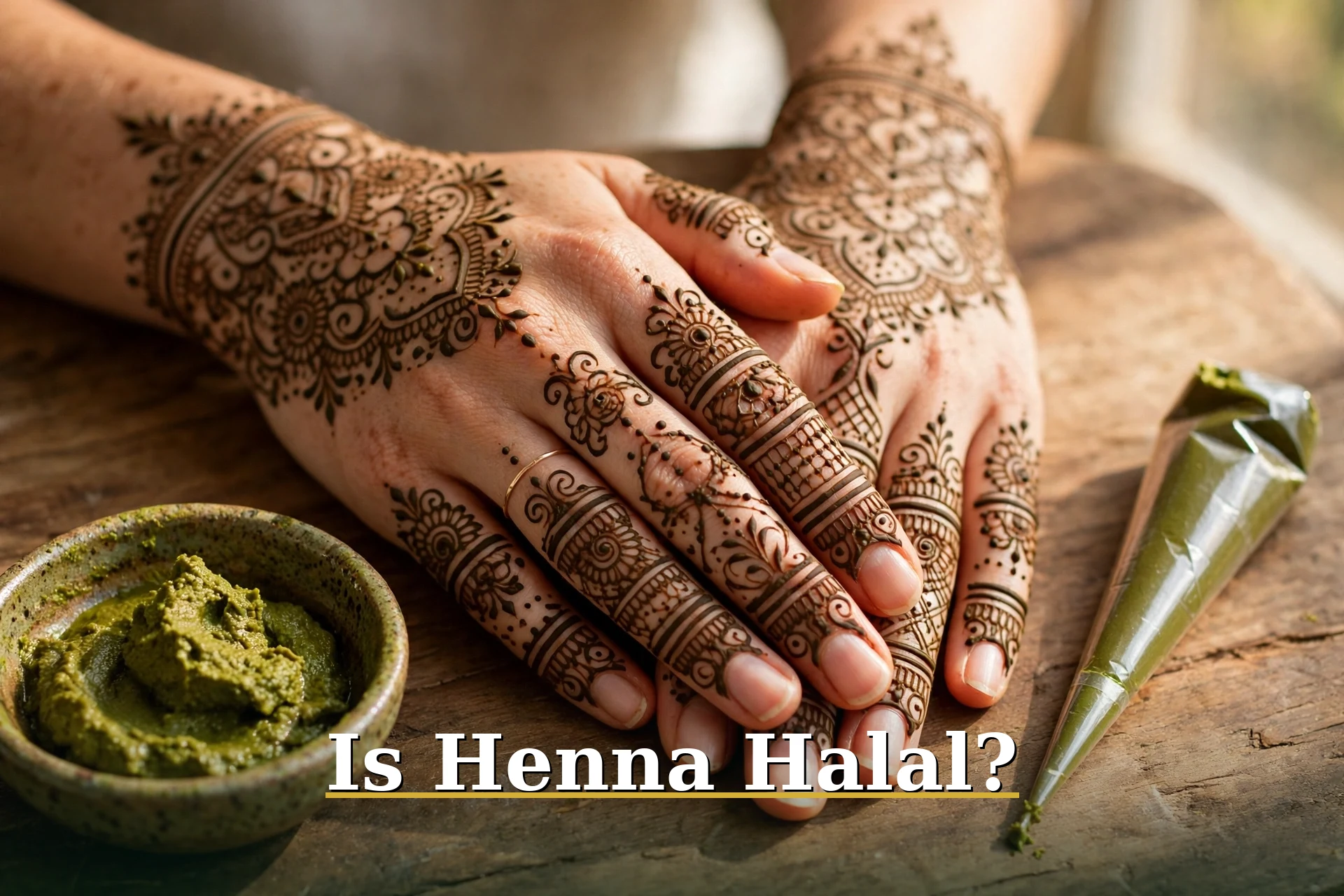
Is Henna Halal In Islam
Is henna halal in Islam? Yes — pure, natural henna is a permissible form of adornment, and the Prophet Muhammad (peace be upon him) recommended henna and katam as the best way to cover grey hair. Most of the questions people ask are not about henna itself, but about black henna, tattoos, wudu and fasting, and the answers depend on what is in the dye and how it is used.
Key Points
- Pure, natural henna is permissible for women and men.
- Henna and katam are the best dyes for grey hair (Jami’ at-Tirmidhi 1753).
- Dyeing grey hair pure black is prohibited by the majority of scholars (Sahih Muslim 2102).
- Natural henna stains the skin and does not block water, so wudu is valid over it.
- Chemical “black henna” often contains PPD, which can coat the skin and block water and is a known cause of severe allergic reactions and chemical burns, so it should be avoided.
- Henna is applied to the outside of the body and nothing enters it, so it does not break the fast.
What Is Henna?
Henna is a natural dye made from the dried and ground leaves of the Lawsonia inermis plant, a small shrub that grows in warm climates across the Middle East, North Africa and South Asia. When the powder is mixed with water it forms a paste, and the dye in the leaves, called lawsone, leaves a reddish-brown stain on skin, hair and nails. People have used henna for centuries to colour their hair and to decorate their hands and feet for weddings, Eid and other celebrations. In the time of the Prophet (peace be upon him), henna was already a familiar part of everyday life, and it has remained so for Muslim families ever since.
Is Henna Halal in Islam?
Yes, henna is halal. The Prophet (peace be upon him) spoke about henna directly, and he named it as the best way to change the colour of grey hair.
Arabic:
إِنَّ أَحْسَنَ مَا غُيِّرَ بِهِ الشَّيْبُ الْحِنَّاءُ وَالْكَتَمُ
Transliteration: Inna ahsana maa ghuyyira bihish-shaybi al-hinnaa’u wal-katam
Translation: “Indeed, the best of what grey hair is changed with is henna and katam.”
(Jami’ at-Tirmidhi 1753, narrated from Abu Dharr, graded Hasan Sahih)
Dyeing grey hair is a Sunnah, and henna is the dye the Prophet (peace be upon him) pointed to. For women, henna designs on the hands and feet are a well-known form of adornment, worn for weddings and Eid and in everyday life. Men may also use henna to dye their hair and beard. What matters is that the henna itself is pure and natural, and that it is used within the limits of modesty that Islam sets for men and women.
Dyeing Grey Hair: Henna, Katam and the Black Dye Rule
Katam is a plant-based dye that is often used together with henna. Mixed with henna, katam gives a dark reddish-black colour, and this combination is permitted. Katam on its own gives a coal-black colour and is not used alone, as Ibn Hajar explains in Fath al-Bari, as quoted in IslamQA answer 7227. The reason for the caution is that dyeing grey hair a pure, solid black is prohibited by the majority of scholars, and the Prophet (peace be upon him) said so plainly.
Arabic:
غَيِّرُوا هَذَا بِشَيْءٍ وَاجْتَنِبُوا السَّوَادَ
Transliteration: Ghayyiroo haadhaa bishay’in, wajtanibus-sawaad
Translation: “Change this with something, but avoid black.”
(Sahih Muslim 2102)
So the rule is simple: cover grey hair with henna, or with henna mixed with katam for a darker shade, and stay away from a pure black dye.
Is Black Henna Halal?
The words “black henna” can mean two very different things, and that is where the confusion comes from. On the one hand, henna mixed with katam can give a dark colour, and that is a natural dye. On the other hand, the cones and pastes sold as “black henna” are usually not henna at all. They are chemical dyes, and they often contain PPD, short for paraphenylenediamine, a chemical added to make the stain dark and fast.
Scholars point to two problems with chemical black henna. First, it can form a coating over the skin that stops water from reaching it, which matters for wudu. Second, PPD is a known cause of severe allergic reactions and chemical burns, and it has left many people with painful blisters and lasting scars. For these reasons, scholars advise Muslims to avoid chemical black henna. That is their advice about a harmful product, not a blanket ruling from this article that every dark henna stain is haram. Pure, natural henna stains the skin without forming a waterproof layer, and it remains permissible.
Does Henna Break Wudu?
No. Natural henna does not break wudu, because it only stains the skin. It does not form a waterproof barrier, so when you wash for wudu, the water reaches your skin just as it should, and your wudu is valid. This is true whether the henna is on your hands, your feet or your hair. If a product leaves a coating on the skin that water cannot pass through, that coating would need to be removed before wudu, which is one more reason to avoid chemical black henna. To learn the words of wudu, see our guide to the dua before and after wudu.
Henna Tattoos: Permissible or Not?
Temporary henna designs are a permissible form of adornment for women, as long as they are worn within the rules of modesty, for example shown only to the husband, to other women or to mahrams. The designs sit on the surface of the skin and fade away within days or weeks, so they are not a permanent change to the body. A permanent tattoo is a different matter altogether. It uses a needle to place ink under the skin for life, and the Prophet (peace be upon him) cursed those who practise tattooing and those who have themselves tattooed (Sahih al-Bukhari 5931). Read more in our article on the ruling on tattoos in Islam.
Does Henna Break the Fast?
No, henna does not break the fast. It is applied to the outside of the body, and nothing enters the stomach or the body through it, so it has no effect on the fast. This is the position of the scholars, and it applies during Ramadan and at any other time of the year. Women may apply henna while fasting without any concern, and the same applies to dyeing the hair with henna while fasting.
Can Men Use Henna?
Yes, men may use henna to dye their hair and beard, and dyeing grey hair with henna and katam is a Sunnah. The one limit is the same as for everyone else: grey hair should not be dyed a pure, solid black. Henna designs on the hands and feet, on the other hand, are women’s adornment, and they are not something men wear.
Is It Permissible to Work as a Henna Artist?
Yes, working as a henna artist is permissible work. It is a service of adornment for women, and there is nothing in it that Islam forbids in itself. The boundary scholars draw is one of modesty: a male artist applying henna to the hands of a non-mahram woman is not permissible, because it involves touching and close contact between a man and a woman who are not married and not related in a way that permits such contact. A woman applying henna to other women, or to her own family, faces no such issue.
Henna in the Time of the Prophet (Peace Be Upon Him)
Henna was known in the Prophet’s (peace be upon him) household and community. Salama, the freed slave of Umm Salama, narrated that no one complained to the Prophet (peace be upon him) of a pain in his legs but that he told him to dye them with henna (Sunan Abi Dawud 3858, graded Hasan). This narration is reported as something the Prophet (peace be upon him) said on that occasion. It is not a medical prescription, and anyone with a health concern should speak to a qualified doctor.
A Note on Health Claims
Henna has a long history of traditional use, and people often describe it as cooling or soothing on the skin. This article makes no treatment claims about henna. It is a dye and a form of adornment, not a medicine, and nothing here promises a cure or a guaranteed result for any condition. If you have a skin problem or any other health concern, please speak to a qualified doctor.
Related Reading
Frequently Asked Questions
Is henna halal in Islam?
Yes. Pure, natural henna is halal and permissible for both women and men. The Prophet (peace be upon him) recommended henna and katam for covering grey hair.
Does henna break wudu?
No. Natural henna only stains the skin and does not form a waterproof barrier, so water reaches the skin and wudu is valid. Chemical black henna that coats the skin is a different matter and should be avoided.
Is black henna halal?
Natural henna is halal, but chemical black henna usually contains PPD, a chemical that can coat the skin and block water and is a known cause of severe allergic reactions and chemical burns. Scholars advise avoiding it.
Can men use henna?
Yes. Men may dye their hair and beard with henna and katam, but they should avoid dyeing grey hair pure black, which the majority of scholars prohibit. Henna designs on the hands are women’s adornment.
Does henna break the fast?
No. Henna is applied to the outside of the body and nothing enters it, so it does not break the fast.
Is henna the same as a tattoo?
No. Henna is a temporary stain that fades in days or weeks, while a tattoo uses a needle to place ink permanently under the skin. Temporary henna designs are permissible adornment, while permanent tattooing is prohibited in Islam.
Sources: Jami’ at-Tirmidhi; Sahih Muslim; Sahih al-Bukhari; Sunan Abi Dawud; IslamQA.