What Is Namaz? And Its Importance
What is namaz? Namaz — also called salah — is the ritual prayer that Muslims perform five times a day: Fajr at dawn, Zuhr at midday, Asr in the afternoon, Maghrib just after sunset, and Isha at night. It is the second pillar of Islam, the first thing a person will be asked about on the Day of Judgement, and the daily meeting between a believer and Allah. This guide explains what namaz is, what the five prayers are and when they are prayed, how many rakats each one has, and why it matters so much.
The word “namaz” comes from Persian and is used across South Asia — Pakistan, India and Bangladesh — for what Arabic calls salah. They are the same prayer. Whether you say namaz or salah, the meaning is identical: standing before Allah, reciting His words, bowing and prostrating, five times a day, every day, for your whole life.
What Is Namaz?
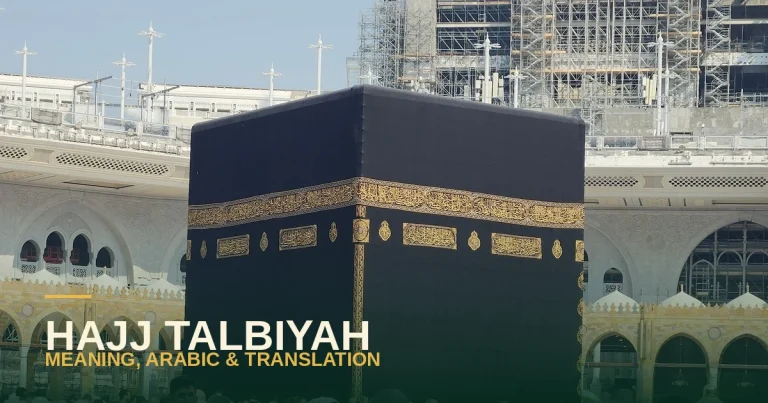
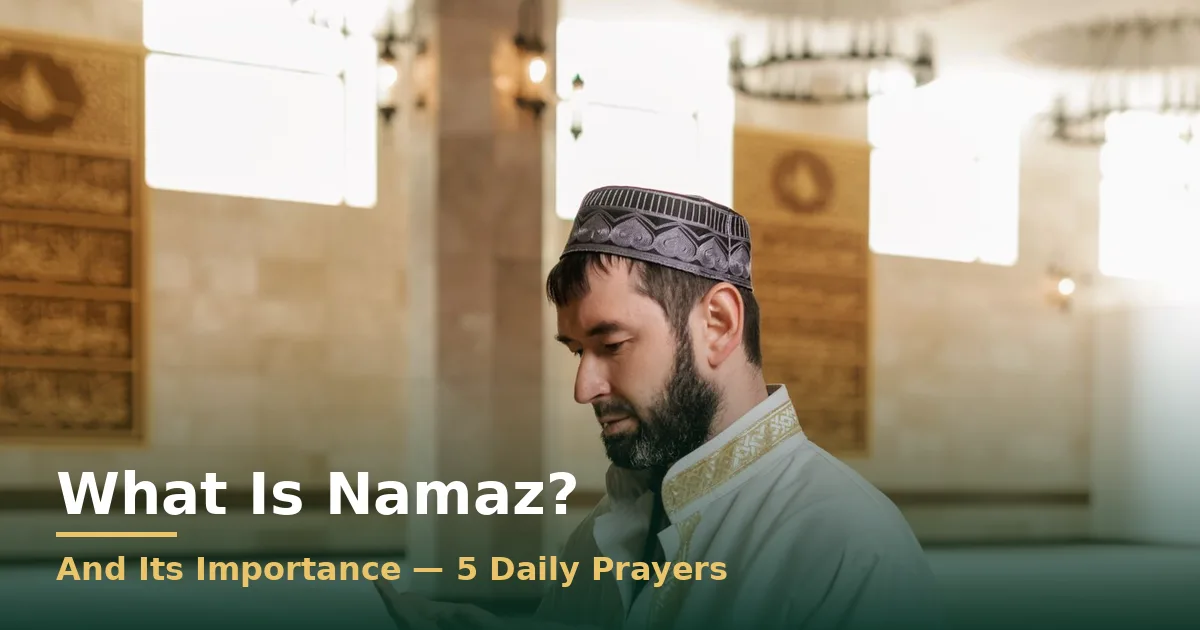
Namaz is the formal worship in which a Muslim stands facing the Ka’bah in Makkah, recites verses of the Qur’an, bows (ruku) and prostrates (sujood), and ends with the greeting of peace. It is performed in a state of wudu (ablution), in clean clothes and on a clean place. It is not a meditation you invent for yourself and it is not a prayer you say only when you feel like it — it has fixed times, fixed words and fixed movements, taught by the Prophet Muhammad (peace be upon him) himself.
The Qur’an commands it directly and repeatedly. Allah says, in the verse that also explains what prayer does to a person:
Arabic:
إِنَّ الصَّلَاةَ تَنْهَىٰ عَنِ الْفَحْشَاءِ وَالْمُنكَرِ
Transliteration: Inn as-salaata tanhaa ‘anil-fahshaa’i wal-munkar.
Translation: “Indeed, prayer prohibits immorality and wrongdoing.” (Qur’an 29:45, key clause, Saheeh International)
That is the purpose of namaz in one line. It is not only a ritual. It is a daily training that pulls a person away from what is shameful and wrong, five times a day, every day. A person who prays sincerely finds it harder to lie, to cheat and to harm others — because the prayer keeps putting them back in front of Allah.
What Are the Five Daily Prayers?
There are five obligatory prayers in a day, and each one has its own time and its own number of fard (obligatory) rakats — a rakat is one cycle of standing, bowing and prostrating.
| Prayer | When | Fard rakats |
|---|---|---|
| Fajr | Dawn, before sunrise | 2 |
| Zuhr | Just after midday, when the sun has passed its highest point | 4 |
| Asr | Afternoon, before sunset | 4 |
| Maghrib | Just after sunset | 3 |
| Isha | Night, after the twilight has gone | 4 |
That is 17 fard rakats in a day. Each prayer takes only a few minutes — Fajr about five minutes, the others a little longer — so the whole day’s obligatory prayer takes well under an hour in total, spread across the day. The Prophet (peace be upon him) also prayed voluntary (sunnah) rakats around the obligatory ones, and those are recommended but not obligatory. A beginner should start with the five fard prayers and add the sunnah prayers as the habit settles.
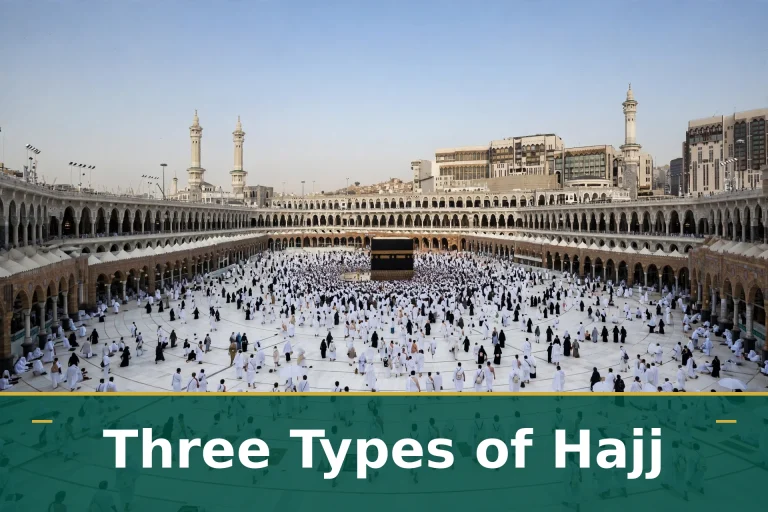
The direction of prayer is the qibla — the direction of the Ka’bah in Makkah. Muslims face it wherever they are in the world. The mosque is the best place to pray, especially in congregation, but namaz can be prayed anywhere clean: at home, at work, in a park, while travelling. The Prophet (peace be upon him) said the whole earth was made a place of prayer for him. What matters is cleanliness of the place, the clothes and the body — wudu before prayer is obligatory.
Why Is Namaz Important in Islam?
Namaz is the second pillar of Islam, after the declaration of faith (shahadah). The five pillars are: the shahadah, namaz, zakat (charity), fasting in Ramadan, and Hajj (pilgrimage). Of the five, namaz is the one that never leaves a Muslim’s day. Zakat is yearly, fasting is one month, Hajj is once in a lifetime if you are able — but namaz is five times every single day. It is the pillar that holds the others up.
Its importance is also a matter of the Hereafter. The Prophet (peace be upon him) said: “The first thing the servant will be asked about on the Day of Judgement is his prayer. If it is sound, the rest of his deeds will be sound, and if it is corrupt, the rest of his deeds will be corrupt” (Jami’ at-Tirmidhi 413, graded sahih by al-Albani). That is why scholars call namaz the key to the rest of a Muslim’s record. Get the prayer right, and everything else follows.
And namaz is the one deed that Allah commanded directly, without an intermediary. The five daily prayers were given to the Prophet (peace be upon him) during the Night Journey (Isra and Mi’raj), when he was taken to the heavens. Everything else in Islam came through revelation on earth; the prayer was given in heaven. That alone tells you what it means to Allah.
What Does Namaz Do for a Believer?
First, it keeps a person connected to Allah through the whole day. The gaps between prayers are short — a few hours at most — so a believer never goes long without turning back to their Lord. That is the point of five times rather than once: the connection is refreshed before it can go cold.
Second, it forgives sins. Allah says:
Arabic:
وَأَقِمِ الصَّلَاةَ طَرَفَيِ النَّهَارِ وَزُلَفًا مِّنَ اللَّيْلِ ۚ إِنَّ الْحَسَنَاتِ يُذْهِبْنَ السَّيِّئَاتِ
Transliteration: Wa aqimis-salaata tarafayin-nahaari wa zulafan minal-layl, innal-hasanaati yudh-hibnas-sayyi’aat.
Translation: “And establish prayer at the two ends of the day and at the approach of the night. Indeed, good deeds do away with misdeeds.” (Qur’an 11:114, Saheeh International)
The Prophet (peace be upon him) explained it with a simple picture: if there were a river at your door and you bathed in it five times a day, would any dirt remain on you? His companions said no. He said, “That is the example of the five daily prayers — Allah wipes away sins with them” (Sahih al-Bukhari 528; Sahih Muslim 667). The prayer does not only earn reward. It cleans.
Third, it brings peace. The Prophet (peace be upon him) used to say to Bilal (RA), “Give us comfort with it, O Bilal” — meaning, call the prayer, so we can rest in it (Sunan Abi Dawud 4985). For a believer under pressure, namaz is not another task on the list. It is the break from the list. If anxiety is weighing on you, our guide to the dua for anxiety sits beside this one, and the prayer itself is the first step.
How Do You Start Praying Namaz?
If you are new to namaz, start with the basics and build up. First, learn wudu — the ablution that must come before prayer. Second, learn the words of one rakat: the opening chapter, Surah Al-Fatiha, a short surah after it, and the words of bowing and prostration. Third, pray one prayer on time, even if you are reading the words from a card. Then add the next prayer, and the next, until all five are in place.
Do not wait until you are perfect to start. The Prophet (peace be upon him) taught the prayer step by step, and Allah accepts the prayer of a beginner who is trying. What matters is that you begin, that you pray on time, and that you keep going. The habit forms faster than you expect — most people who pray five times a day for a few weeks find that the day feels wrong without it.
For the duas that go with the prayer, see our guides to the dua after adhan and the dua before and after eating. For the prayer of need, when something weighs on you, see the dua for rizq and the dua for shifa.
What Happens If You Miss a Prayer?
A missed prayer should be made up as soon as you remember it. The Prophet (peace be upon him) said: “Whoever forgets a prayer or sleeps through it, its expiation is to pray it when he remembers it” (Sahih al-Bukhari 597; Sahih Muslim 684). There is no fine and no extra ritual — you pray it when you remember, and you try not to let it happen again. If you slept through Fajr, pray it when you wake. If work made you miss Zuhr, pray it when you can.
What you should not do is give up because you missed one. Missing a prayer is a mistake, not a reason to stop praying. The prayer that follows a missed prayer is the sign that the habit is alive. Keep the chain going, and ask Allah to make it easy — that is itself a dua He loves to answer.
Frequently Asked Questions
What is namaz?
Namaz — also called salah — is the ritual prayer Muslims perform five times a day: Fajr, Zuhr, Asr, Maghrib and Isha. It is the second pillar of Islam and involves standing, reciting Qur’an, bowing and prostrating while facing the Ka’bah.
What are the five prayers in Islam?
Fajr (2 fard rakats, at dawn), Zuhr (4, at midday), Asr (4, in the afternoon), Maghrib (3, just after sunset) and Isha (4, at night) — 17 fard rakats in total each day.
How many rakats are in each prayer?
Fajr has 2 fard rakats, Zuhr 4, Asr 4, Maghrib 3 and Isha 4. Voluntary sunnah rakats are prayed around them but are not obligatory.
Why is namaz important?
It is the second pillar of Islam, the first deed a person is asked about on the Day of Judgement (Jami’ at-Tirmidhi 413), and the Qur’an says prayer prohibits immorality and wrongdoing (29:45). It also wipes away sins, like bathing in a river five times a day.
Can I pray namaz at home?
Yes. The mosque is best, especially in congregation, but namaz can be prayed anywhere clean — at home, at work or while travelling — as long as you have wudu and face the qibla.
What should I do if I miss a prayer?
Pray it as soon as you remember. The Prophet (peace be upon him) said the expiation for a forgotten or slept-through prayer is to pray it when you remember it (Sahih al-Bukhari 597).
Key Points
- What is namaz? It is salah, the ritual prayer Muslims perform five times a day — Fajr, Zuhr, Asr, Maghrib and Isha.
- Namaz is the second pillar of Islam, after the declaration of faith.
- The five prayers have 17 fard rakats in total: Fajr 2, Zuhr 4, Asr 4, Maghrib 3, Isha 4.
- The Qur’an says prayer prohibits immorality and wrongdoing (29:45) and that good deeds do away with misdeeds (11:114).
- The Prophet (SAW) said prayer is the first deed a person is asked about on the Day of Judgement (Jami’ at-Tirmidhi 413).
- A missed prayer is made up as soon as you remember it (Sahih al-Bukhari 597) — missing one is not a reason to stop praying.
Sources: The Holy Qur’an; Sahih al-Bukhari; Sahih Muslim; Jami’ at-Tirmidhi; Sunan Abi Dawud