
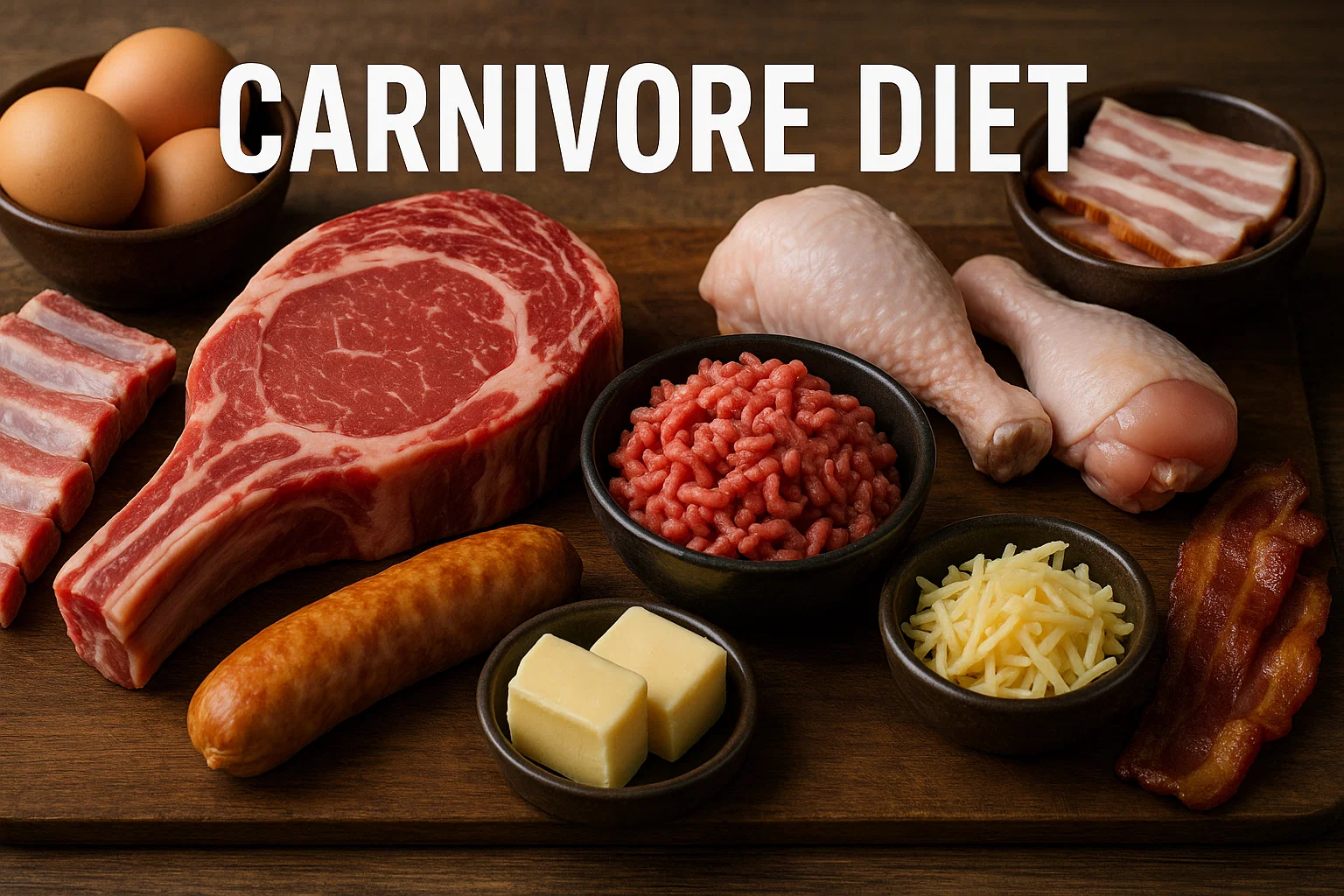
Among modern diets, few are as polarizing as the carnivore diet—a no-plants, all-animal approach to eating. Popularized by proponents like Dr. Shawn Baker, this nutritional strategy is said to support everything from weight loss to autoimmune relief.
In This Guide:
- What science actually says about eating only meat
- Who could benefit—and who should steer clear
- A realistic step-by-step plan to start safely
Table of Contents
What Exactly Is the Carnivore Diet?
A No-Carb Evolution of Keto
Unlike keto, which allows greens and avocados, carnivore excludes all:
- Vegetables & fruits
- Grains, legumes, lentils
- Nuts and seeds
- Processed foods of any kind
What Can You Eat?
Animal Proteins – beef, lamb, chicken, eggs, fish
Fats – tallow, lard, butter
Some Dairy – hard cheeses, heavy cream (if tolerated)
How It Works in Your Body
By cutting carbs entirely, you enter a state of ketosis—burning fat for fuel. According to NIH studies, this metabolic shift may lead to more consistent energy and faster fat burning.
Evidence-Based Benefits
- Weight Loss That Sticks
A 2021 study found that participants on ultra-low-carb diets lost fat nearly three times faster than those on low-fat diets. Plus, protein’s thermic effect helps burn 20–30% of its calories just through digestion, according to USDA data. - Reduced Inflammation
Eliminating plant compounds like oxalates and lectins might relieve autoimmune symptoms. Advocates such as Carnivore MD (Dr. Paul Saladino) report seeing improvements in rheumatoid arthritis. - Simpler Digestion
Roughly 72% of people on this diet report fewer digestive issues like IBS. Without fiber, FODMAPs, or irritating plant toxins, the gut seems to get a break.
Real Risks to Know
Missing Nutrients
Cutting out plants can lead to shortfalls in vitamin C, magnesium, and plant-based antioxidants. The Mayo Clinic notes that sustaining this diet long term may be challenging.
Heart Health Concerns
Because the diet is high in saturated fats, it may raise LDL cholesterol in some individuals. The American Heart Association advises limiting these types of fats to reduce cardiovascular risk.
How to Start the Right Way
Week-by-Week Game Plan
- Week 1: Cut out processed foods
- Week 2: Remove all plant-based items
- Week 3: Go full carnivore
Nutrient Strategy
- Include organ meats like liver 2x/week (rich in vitamin A)
- Track your intake with Cronometer
Stay Electrically Balanced
- Supplement magnesium and potassium if needed
- Bone broth helps support electrolyte levels
Monitor Your Progress
- Get bloodwork at 30, 60, and 90 days
- Watch out for fatigue, gut issues, or nutrient gaps
Is It Right for You?
Could Be a Fit For:
- Those with autoimmune diseases
- People needing fast, structured fat loss
- Individuals with severe food intolerances
Likely Not Ideal For:
- Those with kidney issues
- People with familial hypercholesterolemia
- Pregnant or nursing women
The Flexible Route
Many experts suggest using carnivore as a short-term “reset”—30 to 90 days—then slowly reintroducing select plant foods. Even Harvard Health recommends high-protein plans but urges balance and long-term sustainability.