The Story of Patched Robes Summary – Islamic Story
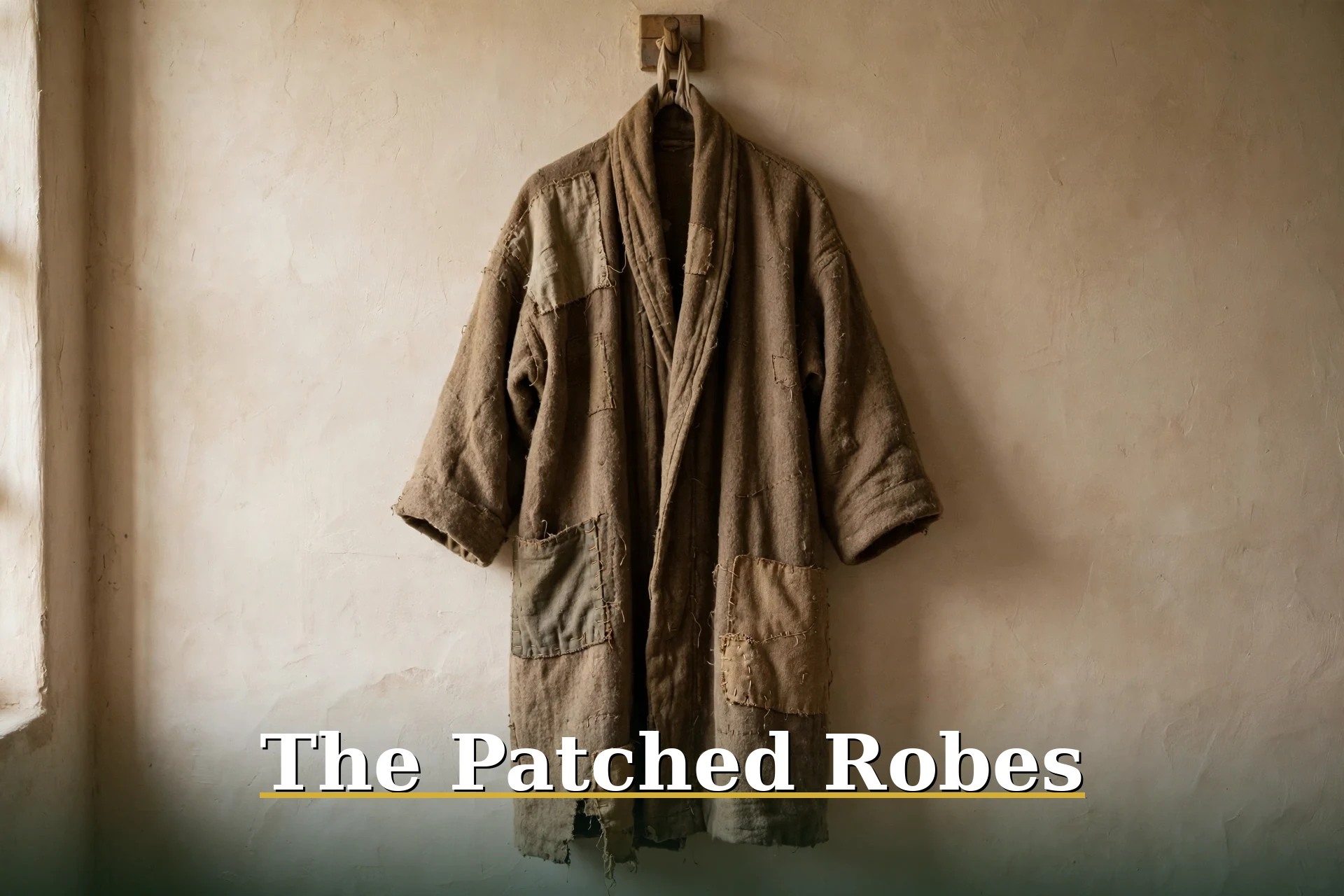
The story of patched robes tells of a traveller who read the name of the Prophet Muhammad (peace be upon him) in his scripture, journeyed to Madinah to meet him, and received one of the Prophet’s patched robes from Fatima (may Allah be pleased with her) after the Prophet’s passing. It is a popular story from Islamic story literature, not an authenticated hadith, but its lessons about love for the Prophet (peace be upon him) and the power of a single act of kindness have been retold for generations.
Key Points
- A traveller who had read of the Prophet (peace be upon him) in his scripture came to Madinah after the Prophet’s passing.
- Fatima (may Allah be pleased with her) sent him a patched robe of the Prophet (peace be upon him).
- He accepted Islam and died at the Prophet’s grave, per the tale.
- The story is popular Islamic literature, not an authenticated hadith.
- Its lessons are love for the Prophet (peace be upon him), generosity, and a good end.
A Note on the Story’s Authenticity
Before reading the story, it is important to be clear about what it is. The story of patched robes is a popular tale from Islamic story literature. It is not found in the six canonical hadith collections, and it must not be presented as an authenticated hadith. The details below, including the words attributed to Fatima (may Allah be pleased with her), belong to the tale itself; they are not verified Prophetic statements. The story is retold here for its lessons, and it is labelled as a traditional tale throughout.
The Story of the Patched Robes
Long ago, in Damascus, a Jewish man was reading his scripture when he came across the name of the Prophet Muhammad (peace be upon him). The name troubled him, and he erased it from the page. The next day he opened the book and found the name written there again. He erased it a second time, and on the third day it had returned once more. He began to think that this might be a sign that a true messenger had come, and he decided to travel to Madinah to see the Prophet for himself.
But when he arrived in Madinah, he found the city in mourning. The Prophet (peace be upon him) had passed away only a few days earlier, in 11 AH (632 CE), and Abu Bakr (may Allah be pleased with him) had become the first caliph. The traveller went to the mosque with Anas (may Allah be pleased with him), where he saw people grieving. Abu Bakr (may Allah be pleased with him) was sitting at the front of the gathering, and the traveller mistook him for the Prophet. He went up to him and said, “O Chosen Envoy of God, a lost old man has come to bring you peace.”
At the mention of the Prophet’s name, everyone in the room began to weep. The traveller did not understand why they were crying, and he asked whether he had said something wrong. Umar (may Allah be pleased with him) explained gently that they were not sad about anything he had done. The Prophet had only recently passed away, he said, and hearing his name again had broken their hearts.
Overcome with grief, the traveller tore his clothes and asked for one favour. If he could not meet the Prophet, could he at least have one of his robes? Umar (may Allah be pleased with him) told him that only Fatima (may Allah be pleased with her), the Prophet’s daughter, could give one of the Prophet’s robes. So the companions went to her house and knocked on the door, and they told her about the traveller and what he was asking for.
Fatima (may Allah be pleased with her) did not come out to meet the traveller, but she sent him a reply. In the tale, she told them that the Prophet had once said a traveller who loved him would come to the house after his passing, and that he would not be able to see him. So they should give him the Prophet’s patched robe and greet him kindly in her name. She also sent him a message through them: if he had come during the Prophet’s lifetime, the Prophet himself would have welcomed him, and they should tell him to come in and take his place as a guest.
The traveller took the patched robe and put it on. He accepted Islam there and then, and he asked to be taken to the Prophet’s grave. There, at the grave of the man he had travelled so far to meet, he passed away. According to the tale, his journey ended with a good end, and that is how the story is remembered.
Who Was Fatima (RA)?
Fatima (may Allah be pleased with her) was the daughter of the Prophet Muhammad (peace be upon him) and Khadijah (may Allah be pleased with her), the wife of Ali (may Allah be pleased with him), and the mother of Hasan and Hussain (may Allah be pleased with them). She was the youngest of the Prophet’s four daughters. Read more about the life and example of Fatima Zahra and the special qualities of Fatima (RA). Her sons Hasan and Hussain (may Allah be pleased with them) later stood at the centre of the Battle of Karbala, and the story of Fatima’s family runs through much of Islamic history. In this tale, it is her generosity that stands out: she gave away one of her father’s own robes to a stranger she had never met, because he loved her father.
Lessons from the Story
The story is short, but it carries lessons that have kept it alive for generations.
Love for the Prophet (Peace Be Upon Him)
The traveller crossed a great distance for one reason: he had read the Prophet’s name in his scripture, and he wanted to meet him. True faith means loving the Prophet (peace be upon him) above everyone else, as the Prophet himself said:
Arabic:
لَا يُؤْمِنُ أَحَدُكُمْ حَتَّى أَكُونَ أَحَبَّ إِلَيْهِ مِنْ وَالِدِهِ وَوَلَدِهِ وَالنَّاسِ أَجْمَعِينَ
Transliteration: Laa yu’minu ahadukum hattaa akoona ahabba ilayhi min waalidihi wa waladihi wan-naasi ajma’een
Translation: “None of you truly believes until I am more beloved to him than his father, his child, and all of mankind.”
(Sahih al-Bukhari 15)
Generosity
Fatima (may Allah be pleased with her) gave away something precious and personal: a robe that had belonged to her father. She did not meet the traveller or ask for anything in return. Giving to others, even when it costs us something we value, is one of the marks of a believer.
A Single Act of Kindness Can Open a Heart to Islam
The traveller came to Madinah looking for a man he had never met. What he found was a community that wept with him, comforted him, and shared with him what little they had. The robe was a gift, but the kindness around it was what carried him to Islam. A single act of kindness can open a heart that years of argument never could.
A Good End
The traveller’s journey ended at the Prophet’s grave, and the tale presents his passing there as a good end, or husn al-khatimah. Muslims pray for a good end to their own lives: to die upon faith, with the love of Allah and His Messenger in their hearts.
Related Reading
Frequently Asked Questions
What is the story of the patched robes?
It is a popular Islamic story about a traveller who read the Prophet’s name in his scripture, journeyed to Madinah after the Prophet’s passing, and received one of the Prophet’s patched robes from Fatima (may Allah be pleased with her). He accepted Islam and died at the Prophet’s grave, according to the tale.
Is the patched robes story authentic?
No, not as a hadith. The story is a popular traditional tale from Islamic story literature and is not found in the six canonical hadith collections, so it should not be presented as an authenticated hadith.
Who gave the traveller the robe?
Fatima (may Allah be pleased with her), the daughter of the Prophet (peace be upon him), sent the traveller one of the Prophet’s patched robes. She sent it through the companions without meeting the traveller herself.
Why did the traveller come to Madinah?
He had read the name of the Prophet Muhammad (peace be upon him) in his scripture, and after the name kept returning each time he erased it, he decided to travel to Madinah to meet the Prophet for himself.
What happened to the traveller at the Prophet’s grave?
According to the tale, after accepting Islam and putting on the robe, the traveller asked to be taken to the Prophet’s grave, and he passed away there. The story presents this as a good end.
What lessons can we learn from this story?
The story teaches love for the Prophet (peace be upon him), the generosity of Fatima (may Allah be pleased with her), how a single act of kindness can open a heart to Islam, and the hope of a good end.
Sources: Sahih al-Bukhari.