
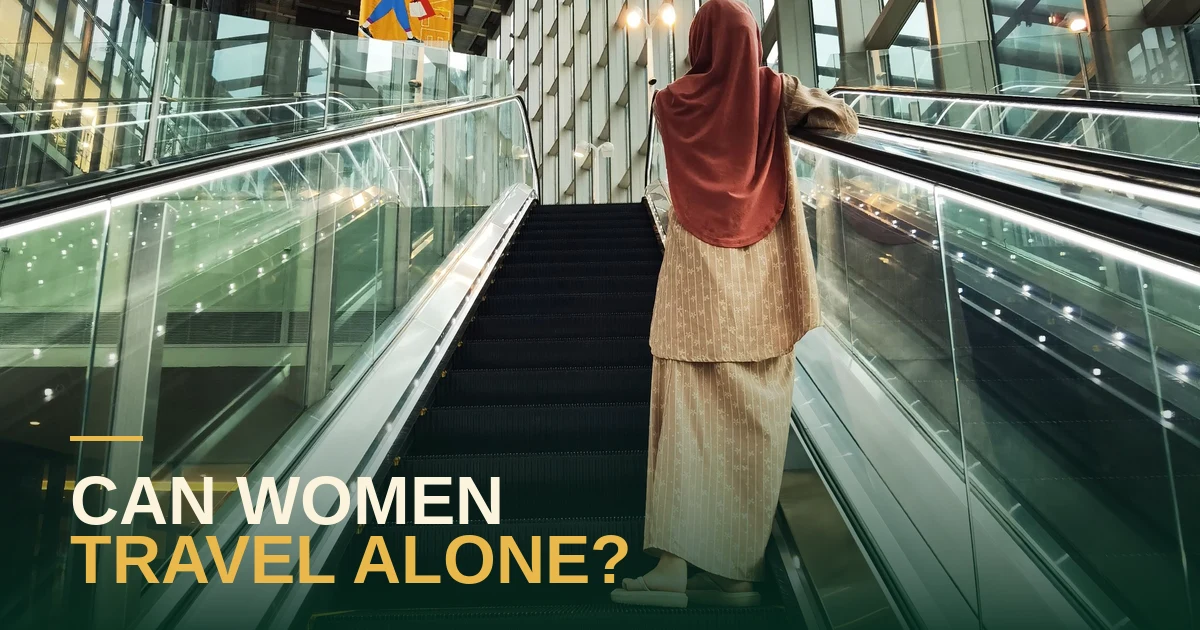
Is It Haram To Travel Alone As A Woman
Many Muslim women ask this question before a journey — for Hajj or Umrah, to visit family, or for work or study: is it haram to travel alone as a woman? The short answer given by the majority of scholars is that a woman should not travel without a mahram, and that answer rests on clear hadiths of the Prophet (peace and blessings be upon him). But the question has details that matter. Scholars have discussed what counts as travel, which journeys the hadiths cover, and whether there are exceptions — especially for the obligatory Hajj. This article sets out the hadiths, the scholars’ reasoning and the difference of opinion, with sources, so that readers can understand the issue. It is not a personal fatwa: for your own journey, ask a qualified scholar you trust.
Key Points
- The Prophet (peace and blessings be upon him) said a woman should not travel except with a mahram (Sahih al-Bukhari 1862).
- A woman who believes in Allah and the Last Day should not travel a day’s journey except with a mahram (Sahih Muslim 1339b).
- The majority position is that a woman does not travel without her husband or a mahram — Imam an-Nawawi summarised that everything counted as travel is covered by this ruling.
- The reason scholars give is the traveller’s protection and safety on the road, not any judgement about women’s ability.
- Scholars differ on the details: some, notably in the Shafi’i school, permit a woman to travel for the obligatory Hajj with a trustworthy group of women, and some permit travel when the journey is safe and the need is genuine.
- Because scholars differ, a woman should ask a qualified scholar about her own journey rather than relying on a general article.
What Did the Prophet Say About Women Travelling Alone?
Two hadiths are at the centre of this question. Both are reported in the most authentic collections, and scholars have built their rulings on them. Ibn Abbas (may Allah be pleased with him) reported that the Prophet (peace and blessings be upon him) said:
Arabic:
لَا تُسَافِرِ الْمَرْأَةُ إِلَّا مَعَ ذِي مَحْرَمٍ، وَلَا يَدْخُلُ عَلَيْهَا رَجُلٌ إِلَّا وَمَعَهَا مَحْرَمٌ
Transliteration: Laa tusaafiril-mar’atu illaa ma’a dhee mahram, wa laa yadkhulu ‘alayhaa rajulun illaa wa ma’ahaa mahram.
Translation: A woman should not travel except with a Dhu-Mahram (her husband or a man with whom that woman cannot marry at all according to the Islamic Jurisprudence), and no man may visit her except in the presence of a Dhu-Mahram. (The hadith continues with the Prophet (SAW) telling the man, Go along with her [to Hajj].)
A man said: “O Messenger of Allah, I intend to go out with such-and-such an army, and my wife wants to go for Hajj.” The Prophet (peace and blessings be upon him) said: “Go out with her.” (Sahih al-Bukhari 1862.)
Abu Hurayrah (may Allah be pleased with him) reported that the Prophet (peace and blessings be upon him) said:
Arabic:
لَا يَحِلُّ لِامْرَأَةٍ تُؤْمِنُ بِاللَّهِ وَالْيَوْمِ الْآخِرِ تُسَافِرُ مَسِيرَةَ يَوْمٍ إِلَّا مَعَ ذِي مَحْرَمٍ
Transliteration: Laa yahillu limra’atin tu’minu billaahi wal-yawmil-aakhiri tusaafiru maseerata yawmin illaa ma’a dhee mahram.
Translation: It is not lawful for a woman who believes in Allah and the Hereafter to undertake a day’s journey except in the company of a Mahram. (Book 15, Hadith 471.)
Other narrations of the same teaching mention a day and a night, and three days. Scholars discuss these wordings together: the point of all of them is travel itself, not a specific number of hours. What counts as travel is a question the scholars address when they apply these hadiths.
What Is a Mahram?
A mahram is a male relative whom a woman can never marry — her father, her brother, her son, her uncle or her nephew — or her husband. The mahram’s role on a journey, as scholars explain it, is to accompany and protect the woman on the road. A mahram is not a permission slip: he is the companion whose presence the hadiths require.
What Do the Scholars Say?
Imam an-Nawawi, commenting on these hadiths in his Sharh Sahih Muslim (9/103), summarised the scholars’ position: everything that is counted as travel is not permitted for a woman without her husband or a mahram. The hadiths, he explained, apply to all kinds of travel, not only to Hajj. Al-Hafiz Ibn Hajar, in Fath al-Bari (4/75-76, edition-dependent), records the scholars’ discussion of this issue and the exceptions they considered — including the obligatory Hajj. The reason scholars give for the ruling is the traveller’s protection and safety: journeys involve risk, and a companion guards against harm. It is not a judgement about women’s ability.
Do Scholars Differ on This Issue?
Yes. While the majority hold that a woman should not travel without a mahram, some scholars — notably in the Shafi’i school — permit a woman to travel for the obligatory Hajj with a trustworthy group of women. They point to the Prophet’s words about a future time of safety:
Arabic:
فَإِنْ طَالَتْ بِكَ حَيَاةٌ لَتَرَيَنَّ الظَّعِينَةَ تَرْتَحِلُ مِنَ الْحِيرَةِ، حَتَّى تَطُوفَ بِالْكَعْبَةِ، لَا تَخَافُ أَحَدًا إِلَّا اللَّهَ
Transliteration: Fa-in taalab bika hayaatun latarayannaz-za’eenata tartahilu minal-Heerah, hattaa tatoofa bil-Ka’bah, laa takhaafu ahadan illallaah.
Translation (key clause only): If you should live for a long time, you will certainly see that a lady in a Howdah traveling from Al-Hira will (safely reach Mecca and) perform the Tawaf of the Ka’ba, fearing none but Allah.
That report is a prophecy about a time when the roads would be safe — it describes a woman travelling from al-Hirah to Makkah fearing none but Allah — and scholars who cite it understand the hadiths about the mahram as being about safety on the road rather than an absolute ban in every case. Other contemporary scholars permit a woman to travel when the journey is safe, the company is trustworthy and there is a genuine need — while others maintain the prohibition in all cases. Because the scholars differ, this article does not give a personal ruling. A woman planning a journey should ask a qualified scholar she trusts, explain her situation, and follow the guidance she is given.
What About Hajj and Umrah?
The question comes up most often around Hajj, because Hajj is an obligation for those who are able, and many women wish to perform it. The majority position is that a woman needs a mahram for Hajj; the Shafi’i view permits the obligatory Hajj with a trustworthy group of women. Women planning Hajj or Umrah should check the position of the scholar they follow and the rules of their Hajj group or travel operator, and they should learn the best travel dua for a safe journey before they set out. For the rites themselves, our Hajj guide and Umrah guide explain the steps.
What Should a Woman Do Before Travelling?
Whatever the scholars say about a particular journey, some practical steps are the same for every traveller: ask a qualified scholar about your specific journey — its purpose, its length and who you will travel with — and follow the guidance you are given; travel with your husband or a mahram where that is the ruling you follow, or with the trustworthy group your scholar has approved; plan a safe route, travel in daylight where possible, and keep your family informed of your plans and your arrival; learn the duas for travelling before you set out, so the journey itself begins with the remembrance of Allah.
Frequently Asked Questions
Is it haram for a woman to travel alone?
The majority of scholars say a woman should not travel without a mahram, based on the hadiths of the Prophet (peace and blessings be upon him) in Sahih al-Bukhari 1862 and Sahih Muslim 1339b. The ruling rests on the traveller’s protection and safety, not on any judgement about women’s ability.
Can a woman travel alone for Hajj?
The majority position is that a woman needs a mahram for Hajj. Some scholars, notably in the Shafi’i school, permit a woman to travel for the obligatory Hajj with a trustworthy group of women.
What is a mahram?
A mahram is a male relative whom a woman can never marry – her father, her brother, her son, her uncle or her nephew – or her husband. His role on a journey is to accompany and protect the woman on the road.
Can a woman travel alone for work or study?
Scholars differ. The majority position is that a woman should not travel without a mahram, while some contemporary scholars permit travel when the journey is safe, the company is trustworthy and there is a genuine need. Ask a qualified scholar about your own journey.
Does the ruling apply to short trips?
The hadiths speak of travel itself, not a specific number of hours. Other narrations mention a day and a night, and three days. What counts as travel is a question the scholars address when they apply these hadiths.
What does the hadith about a woman travelling from al-Hirah mean?
It is a prophecy about a future time of safety, not a permission to travel alone. The Prophet (peace and blessings be upon him) said a lady in a howdah would travel from al-Hirah until she circumambulated the Ka’bah, fearing none but Allah (Sahih al-Bukhari 3595).
Sources
Sources: Sahih al-Bukhari; Sahih Muslim; Imam an-Nawawi, Sharh Sahih Muslim; Ibn Hajar, Fath al-Bari