
How to Spot a Narcissist: Signs, Traits, and What to Do
The term Narcissistic often thrown around casually — used to describe someone who seems vain, controlling, or emotionally detached. But true narcissism is far more complex than a love of the mirror. It refers to a deeply rooted personality style or disorder that can disrupt relationships, erode self-esteem, and cause lasting emotional harm.
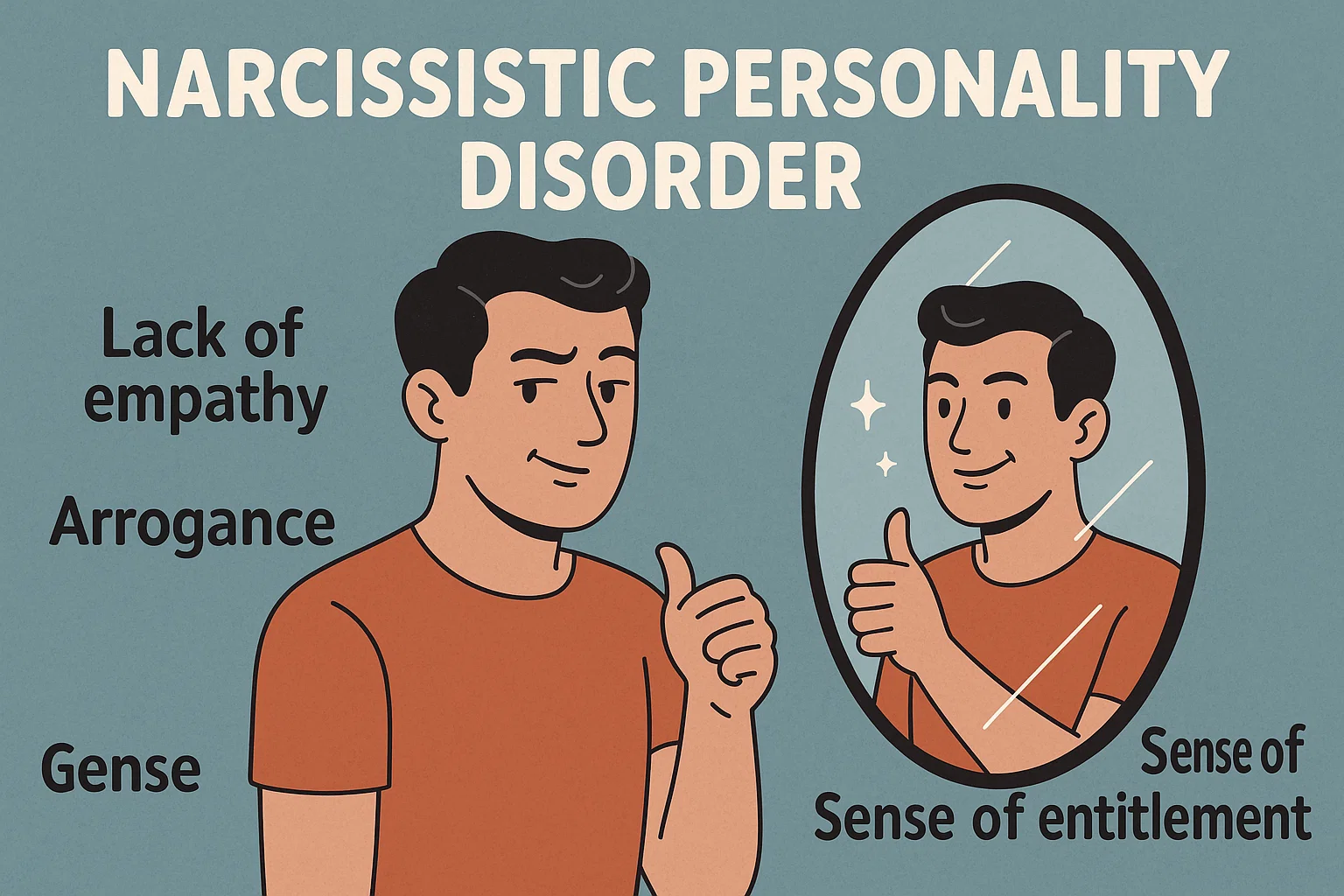
In this article, we’ll explore what narcissism really means, the most common traits, different subtypes, and how it impacts others.
Table of Contents
What Does It Mean to Be a Narcissist?
In psychology, a narcissist refers to someone who consistently demonstrates excessive self-focus, a craving for admiration, and little regard for others’ feelings. While most people display some self-centered behavior from time to time, individuals with strong narcissistic tendencies show these patterns consistently, often at the expense of those around them.
When these behaviors are severe and persistent, they may fall under Narcissistic Personality Disorder (NPD) — a diagnosable condition in the DSM-5.
Core Characteristics of Narcissistic Behavior
While no two people are exactly alike, many individuals with narcissistic traits exhibit the following behaviors:
- Inflated self-importance and superiority
- Lack of empathy toward others
- Constant need for admiration and validation
- Entitled expectations or demands
- Manipulation and control in personal or professional settings
- Arrogance and belittling of others
- Shallow relationships, often maintained for self-benefit
These patterns may initially be hidden behind charm or confidence but tend to surface over time.
Related reading: Mayo Clinic – Narcissistic Personality Disorder
Types of Narcissism
Narcissism is not one-size-fits-all. Psychologists generally divide it into two main subtypes, although overlap is common.
1. Grandiose Narcissism
This form is more overt. Individuals are outgoing, assertive, and openly obsessed with status, power, and recognition. They often dominate conversations and expect special treatment.
2. Vulnerable (Covert) Narcissism
More subtle and inward-facing, this type involves hypersensitivity, insecurity, and passive-aggressive tendencies. These individuals may present as introverted or self-effacing but still harbor a belief in their uniqueness or superiority.
🧠 Source: Psychology Today – Types of Narcissists
Some researchers also discuss a malignant subtype, which includes traits of manipulation, paranoia, and aggression — often harmful or even abusive in close relationships.
Impact on Relationships
Being in close proximity to a person with strong narcissistic tendencies can be mentally and emotionally exhausting. Such individuals often engage in:
- Gaslighting: Making others question their memory or perception
- Love-bombing followed by devaluation
- Blame-shifting and refusal to accept responsibility
- Control tactics that isolate or dominate others
Over time, loved ones may suffer from low self-worth, anxiety, or confusion due to the unpredictable emotional dynamics.
Learn more: National Domestic Violence Hotline – Emotional Abuse
Can a Narcissist Change?
While personality traits are generally stable over time, change is possible — but unlikely without deep, consistent effort. Therapy, especially psychodynamic or cognitive-behavioral approaches, may help some people gain insight into their patterns.
However, many individuals with high narcissistic traits lack the motivation to change, as they often view the problem as being with others, not themselves.
Resource: Cleveland Clinic – Narcissistic Personality Disorder
What Causes Narcissistic Traits?
The development of narcissism is thought to stem from a combination of environmental and genetic factors:
- Overvaluation or harsh criticism during childhood
- Emotional neglect or inconsistent parenting
- Trauma or instability in early relationships
- Societal emphasis on image, success, and competition
Brain imaging also shows differences in areas related to empathy and emotional regulation in people with high narcissistic traits.
Research source: NCBI – Developmental Origins of Narcissism
Final Thoughts
Understanding the narcissist in your life — or recognizing narcissistic tendencies within yourself — is the first step toward better boundaries and healthier interactions. While not every self-centered person qualifies for a diagnosis, consistent patterns of exploitation, manipulation, and emotional detachment should not be ignored.
Awareness leads to empowerment. Whether you’re navigating a challenging relationship or simply aiming to understand personality dynamics, knowing how narcissism works is a vital tool for emotional well-being.