
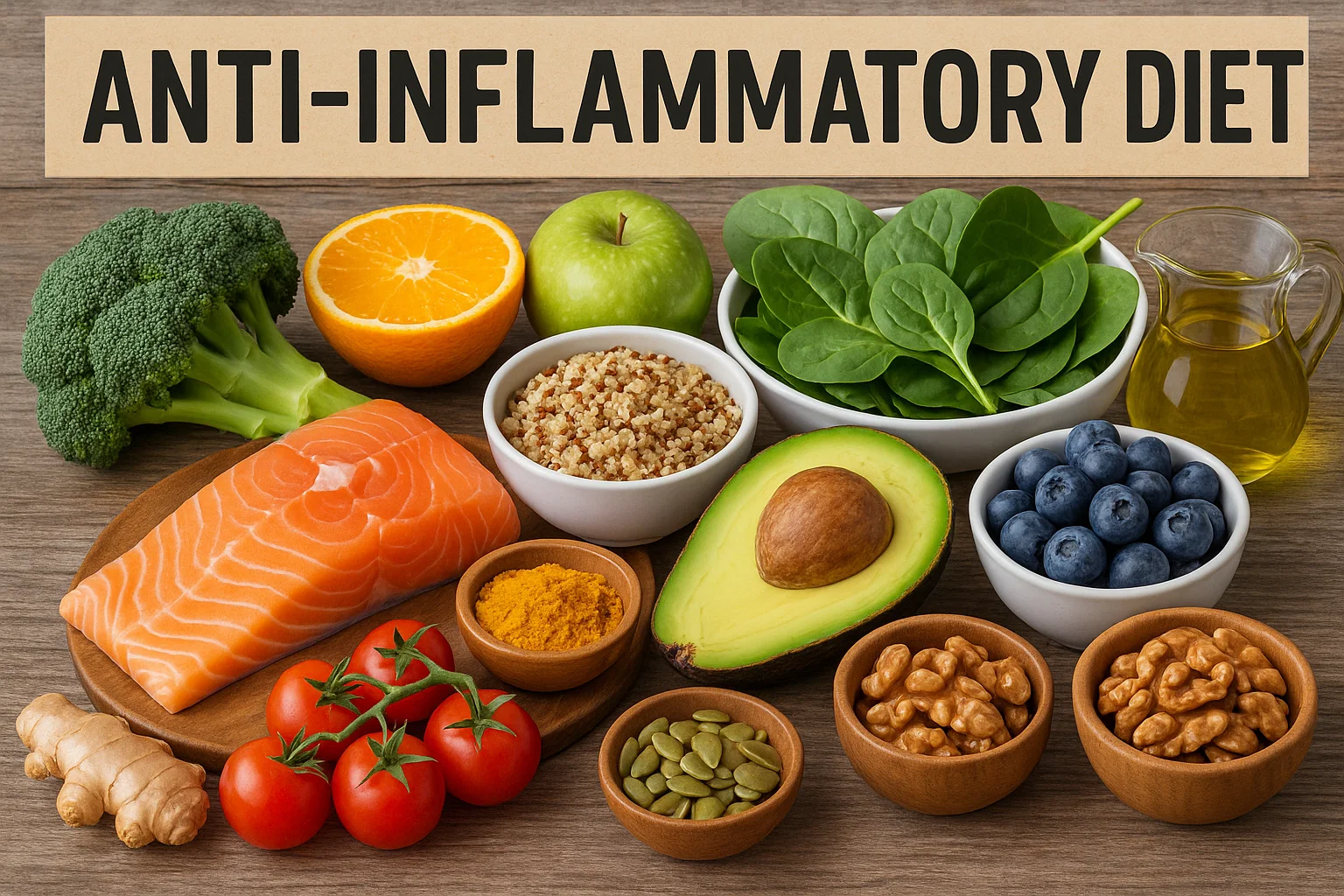
This way of eating centers on foods that help soothe chronic inflammation—a major player in conditions like diabetes, heart disease, arthritis, and certain cancers. The anti-inflammatory diet champions whole, nutrient-rich ingredients while steering clear of processed, inflammatory ones.
Harvard Health: Foods that fight inflammation
Table of Contents
Why Chronic Inflammation Matters
While inflammation is a normal immune response, it can turn harmful when it lingers. Long-term (chronic) inflammation slowly damages tissues and may raise disease risk. Eating anti-inflammatory foods can help dial down this silent stressor and protect long-term health.
Cleveland Clinic: What Is Inflammation?
Top Anti-Inflammatory Foods
Include these powerhouses in your meals:
Fatty Fish
(Salmon, mackerel, sardines) — A rich source of inflammation-fighting omega-3s.
NIH: Omega-3 Fatty Acids and Inflammation
Leafy Greens
(Spinach, kale, Swiss chard) — Packed with vitamin K and antioxidants.
Berries
(Strawberries, blueberries, raspberries) — Full of fiber and polyphenols.
Turmeric
Features curcumin, a potent anti-inflammatory agent.
PubMed: Curcumin and Inflammatory Diseases
Nuts & Seeds
(Walnuts, almonds, chia seeds) — Offer healthy fats and plant-based protein.
Olive Oil
Especially extra virgin, a Mediterranean diet staple.
Mayo Clinic: Olive Oil Benefits
Green Tea
Rich in catechins, which help reduce inflammation.
WebMD: Benefits of Green Tea
Foods to Cut Back
Limit these to reduce inflammation:
- White bread, pastries
- Processed meats like sausages
- Sugary drinks
- Fried foods, margarine (trans fats)
- Heavy alcohol intake
Johns Hopkins Medicine: Chronic Inflammation
Benefits of Eating This Way
Switching to an anti-inflammatory diet can bring real, noticeable changes:
- Lower heart disease risk
- Balanced blood sugar
- Better digestion
- Relief from joint pain
- Improved brain clarity
- Easier weight management
National Institute on Aging: Inflammation and Aging
Sample Anti-Inflammatory Day
Try this simple, nourishing plan:
Breakfast:
Oatmeal topped with chia seeds, blueberries, and walnuts
Lunch:
Grilled salmon with spinach salad, olive oil & lemon
Snack:
Carrot sticks and hummus
Dinner:
Quinoa bowl with sautéed kale, roasted sweet potatoes, and turmeric chickpeas
Drink:
Lemon water or green tea
Success Tips
- Plan your meals in advance to avoid impulsive eating
- Go for colorful plates—they often mean more antioxidants
- Cook at home to manage ingredients
- Drink plenty of water, and keep caffeine moderate
Final Thoughts
Choosing an anti-inflammatory diet is a gentle but powerful step toward better health. By focusing on vibrant, wholesome foods and skipping the processed stuff, you’re giving your body what it needs to stay balanced and resilient—one nourishing bite at a time.