ADIB Prices $500 Million Perpetual AT1 Sukuk at 7% as Orders Top $1.5 Billion
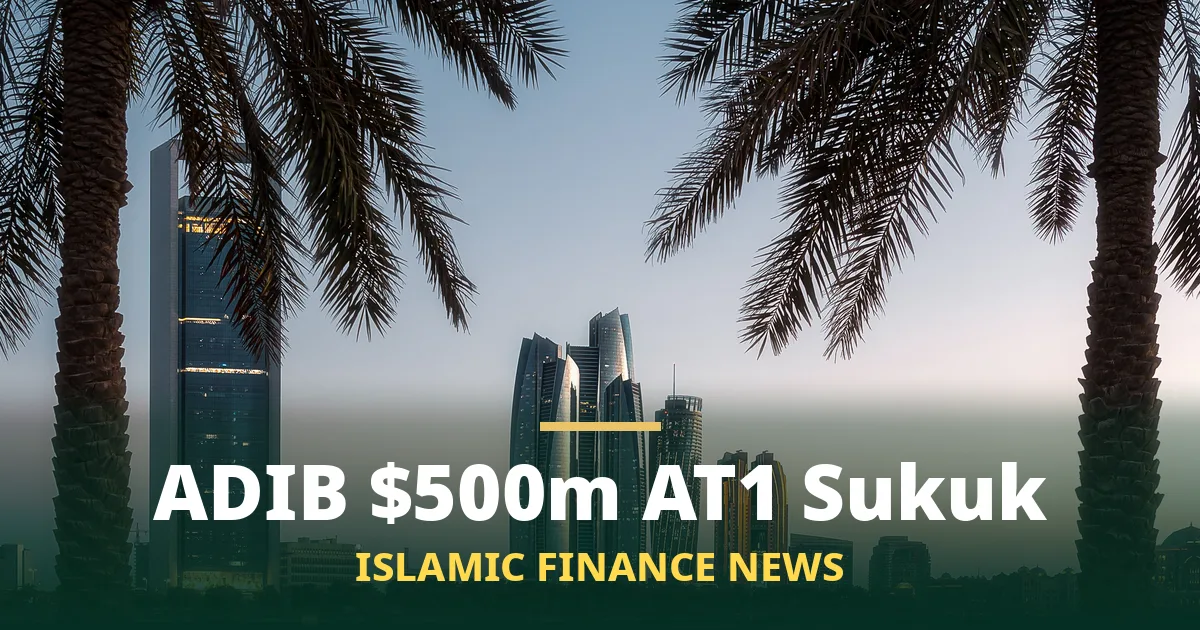
Abu Dhabi Islamic Bank (ADIB) has priced a US$500 million perpetual Additional Tier 1 (AT1) sukuk at a profit rate of 7 per cent per annum, drawing orders of more than US$1.5 billion from investors — over three times the amount on offer. The bank announced the pricing on Thursday, 26 November 2026, and the news was carried the same day by the Emirates News Agency (WAM), the Khaleej Times and The Edge.
The sukuk is perpetual, meaning it has no fixed maturity date, and carries a five-and-a-half-year non-call period, during which the bank is not due to redeem it early. The ADIB AT1 sukuk will be listed and traded on the London Stock Exchange.
What were the terms of the deal?
The US$500 million sukuk was priced at an annual profit rate of 7 per cent, payable semi-annually — in two instalments a year. The final order book exceeded US$1.5 billion, excluding interest from the joint lead managers, representing more than three times the issuance size. Strong demand from regional and international investors allowed the bank to tighten the final pricing by 37.5 to 50 basis points from its initial pricing thoughts — in other words, investors were willing to accept a lower return than the bank first offered, which is a sign of confidence.
ADIB itself is rated ‘A2’ by Moody’s and ‘A+’ by Fitch, both with a stable outlook, and reported total assets of AED318 billion as of 30 September 2026. ADIB, Barclays and Standard Chartered Bank acted as Joint Global Coordinators and Structurers, alongside Abu Dhabi Commercial Bank, Citibank, Emirates NBD Capital, First Abu Dhabi Bank, HSBC, Mashreq and Sharjah Islamic Bank as Joint Lead Managers and Bookrunners.
How did the deal come together?
The deal moved fast. On Tuesday, 24 November 2026, ADIB mandated nine banks and opened global investor calls for the proposed perpetual sukuk, disclosing the mandate to the Abu Dhabi Securities Exchange. Two days later, on 26 November, the pricing was announced — the bank said the issuance may follow subject to market conditions, and the market answered within 48 hours.
The sukuk is unrated and was offered under Regulation S, meaning it was sold only to investors outside the United States. It is structured to comply with the Basel III framework, the internationally agreed set of bank capital and liquidity rules.
What is an AT1 sukuk, and why do banks issue them?
Additional Tier 1 capital is the layer of a bank’s capital that sits between ordinary shares and ordinary debt. If a bank runs into serious trouble, AT1 instruments can absorb losses — which is why they pay a higher return than the bank’s ordinary bonds. A perpetual AT1 sukuk has no maturity date: the investor receives the profit rate indefinitely, unless the bank chooses to redeem it after the non-call period — here, five and a half years — or unless a contractual trigger forces a write-down or conversion.
For the bank, AT1 sukuk are a way to strengthen its capital base without issuing new shares. For investors, the 7 per cent profit rate is the reward for taking on that extra risk. The deal forms part of ADIB’s wider capital strategy, which has also included a recent rights issue — the bank has been adding customers fast, around 283,000 new customers in 2025, and its financing business is growing with them.
Why does this deal matter?
Three reasons. First, the three-times oversubscription shows that demand for Gulf Islamic bank capital remains deep, even for the riskiest layer of bank debt.
Second, the pricing — 37.5 to 50 basis points tighter than first indicated — shows investors competing to get into the deal rather than the bank having to pay up to attract them.
Third, it rounds out a very busy November for sukuk markets: the Islamic Corporation for the Development of the Private Sector priced a US$500 million five-year sukuk, Qatar’s QIIB raised US$500 million, Bank AlJazira completed a SAR2.29 billion Tier 2 sukuk, and Malaysia issued RM5 billion of government sukuk — all in the same week.
What should readers do now?
This was an institutional deal — ordinary savers could not subscribe directly, and the sukuk is unrated. What it tells them is the state of the market they invest in through Islamic banks and funds: funding is available, pricing is competitive, and demand is strong. Anyone considering AT1 or perpetual sukuk should understand that these are among the riskiest bank instruments — the profit rate is attractive precisely because the investor bears loss-absorption risk, and no return is guaranteed. This article is information only, not investment advice. When the sukuk lists in London, we will report the listing.
Key Points
- Abu Dhabi Islamic Bank priced a US$500 million perpetual Additional Tier 1 sukuk at a profit rate of 7% per annum, payable semi-annually, announced 26 November 2026.
- Orders exceeded US$1.5 billion (excluding joint lead manager interest) — more than three times the issue size.
- Final pricing was 37.5 to 50 basis points tighter than the initial pricing thoughts.
- The sukuk has a five-and-a-half-year non-call period and will be listed and traded on the London Stock Exchange.
- ADIB is rated ‘A2’ by Moody’s and ‘A+’ by Fitch, both with a stable outlook; total assets AED318 billion as of 30 September 2026.
- The sukuk is unrated, offered under Regulation S, and structured to comply with the Basel III framework.
- The mandate was announced 24 November 2026; pricing followed two days later, on 26 November.
How much did ADIB raise in its AT1 sukuk?
US$500 million, in a perpetual Additional Tier 1 sukuk priced on 26 November 2026 at a profit rate of 7% per annum, payable semi-annually. It will be listed and traded on the London Stock Exchange.
How strong was investor demand?
Orders exceeded US$1.5 billion, excluding interest from the joint lead managers — more than three times the US$500 million issue size. Final pricing was 37.5 to 50 basis points tighter than the initial pricing thoughts.
What is an AT1 sukuk?
An Additional Tier 1 sukuk is a Shariah-compliant bank capital instrument. It is perpetual (no fixed maturity), sits between shares and ordinary debt in the capital structure, and can absorb losses if the bank runs into serious trouble — which is why it pays a higher profit rate than ordinary bank sukuk.
What is the non-call period?
Five and a half years. During that period ADIB is not due to redeem the sukuk early. After the non-call period, the bank may choose to redeem it under the terms of the issue.
Is the sukuk rated?
No — the sukuk itself is unrated. ADIB as a bank is rated ‘A2’ by Moody’s and ‘A+’ by Fitch, both with a stable outlook.
Can ordinary investors buy this sukuk?
Not directly — it was an institutional deal offered under Regulation S. Ordinary savers should look for retail or listed sukuk in their own markets and read the official offer documents before investing. AT1 instruments carry loss-absorption risk, so no return is guaranteed. This article is information only, not investment advice.
Sources: Emirates News Agency (WAM); Khaleej Times; The Edge