Malaysia Issues RM5 Billion Sukuk Murabahah in Re-Opening of 2021 GII Series
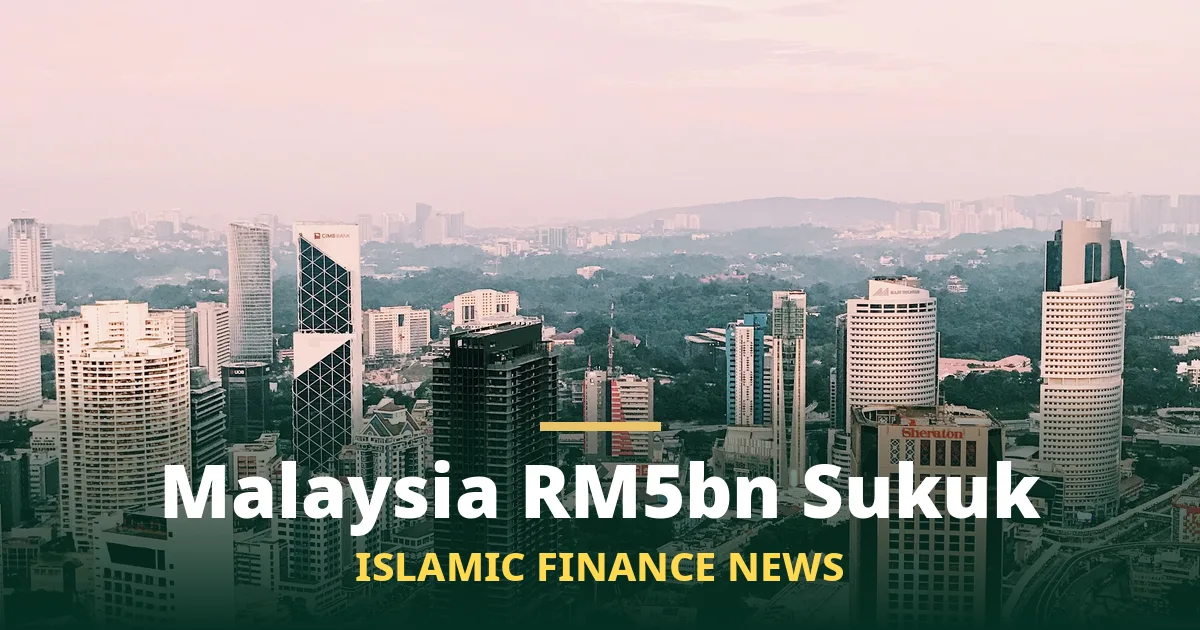
The Government of Malaysia has issued a Government Investment Issue (Murabahah) Sukuk worth RM5 billion — about US$1.21 billion — with a profit rate of 3.447 per cent and a maturity date of 15 July 2036. The Malaysia RM5 billion sukuk was issued on Friday, 27 November 2026, and the offering was fully subscribed, drawing 258 bids.
The issuance was reported by Islamic Finance News and confirmed by the official announcement record on BIX Malaysia, the Bond+Sukuk Information Exchange operated by Bursa Malaysia, which lists Bank Negara Malaysia as the facility agent for the issue.
What was issued?
The issue is a re-opening of the GII Murabahah 1/2021 series — a series first issued in 2021 — rather than a brand-new series. That is why the profit rate (3.447 per cent) and the maturity date (15 July 2036) are the same as the original series: a re-opening adds new supply of an existing instrument instead of creating a new one. The tender opened on 24 November 2026, closed on 26 November, and the sukuk was issued on 27 November 2026.
At RM5 billion, this is a substantial single issue — roughly US$1.21 billion — and its full subscription shows that demand for Malaysian government sukuk remains strong. The 258 bids received underline that breadth of demand: this was not a deal placed with a handful of buyers, but one that drew wide participation.
What is a Government Investment Issue, and what is Murabahah?
A Government Investment Issue (GII) is Malaysia’s Shariah-compliant government security — the Islamic equivalent of a conventional government bond. Instead of paying interest, which is prohibited, a GII gives investors a return linked to a real, Shariah-compliant transaction. Murabahah is one of the oldest and most widely used Islamic finance structures: a cost-plus sale, in which the seller discloses the cost of an asset and sells it at an agreed mark-up, with payment deferred. The 3.447 per cent figure is the profit rate on this structure for the life of the paper.
Malaysia is one of the world’s most established sukuk markets, and GII are its backbone: they give the government a steady, Shariah-compliant way to raise funds, and they give Islamic banks, funds and institutions a deep pool of government-backed paper to hold. Bank Negara Malaysia, the central bank, acts as facility agent — running the tenders through its Fully Automated System for Issuing/Tendering.
Why does this issue matter?
Three reasons. First, it shows the Malaysian government continuing to fund itself through sukuk at scale, in a regular, predictable rhythm — the market depends on that steady supply.
Second, full subscription with 258 bids shows that the demand side is healthy: Islamic banks and funds still want government sukuk, and they want them in size.
Third, it is part of a wider pattern across Muslim-majority economies this month: Pakistan’s government sukuk portfolio crossed Rs10 trillion, Saudi Arabia closed a SAR2.257 billion local issuance, Oman launched its first Islamic treasury bills, and Bangladesh Bank announced a Tk32,000 crore sukuk plan — so sovereign sukuk is becoming the normal way these governments borrow.
What is the difference between a re-opening and a new issue?
A new issue creates a fresh instrument with its own profit rate and maturity. A re-opening adds more of an instrument that already exists — same profit rate, same maturity date, same terms. Investors like re-openings because the paper is already trading, so its price is visible and the market is liquid. Governments like them because they build up the size of a single issue, which makes it easier to trade. That is what happened here: RM5 billion more of the 2021 series, maturing 15 July 2036.
What should readers do now?
This was an institutional tender — ordinary savers could not subscribe directly. What it tells them is the direction of the world’s most developed Islamic capital market: steady supply, transparent pricing, and strong demand. For savers in Malaysia, GII are the benchmark against which other Shariah-compliant investments are measured, and their yields shape the returns on Islamic deposits and funds. This article is information only, not investment advice. When the next GII tender is announced, we will report its size and profit rate in the same way.
Key Points
- The Government of Malaysia issued a Government Investment Issue (Murabahah) Sukuk worth RM5 billion (about US$1.21 billion) on 27 November 2026.
- The sukuk carries a profit rate of 3.447% and matures on 15 July 2036; the offering was fully subscribed, with 258 bids received.
- This is a re-opening of the GII Murabahah 1/2021 series, first issued in 2021 — not a brand-new series.
- The tender opened 24 November and closed 26 November 2026; Bank Negara Malaysia is the facility agent.
- GII are Malaysia’s Shariah-compliant government securities, the backbone of the world’s most established sukuk market.
How much did Malaysia raise in its 27 November sukuk?
RM5 billion (about US$1.21 billion), in a Government Investment Issue (Murabahah) Sukuk issued on 27 November 2026, with a profit rate of 3.447% and a maturity date of 15 July 2036.
Was the offering fully subscribed?
Yes. The offering was fully subscribed, drawing 258 bids. The tender opened on 24 November 2026 and closed on 26 November 2026.
What is a Government Investment Issue (GII)?
It is Malaysia’s Shariah-compliant government security — the Islamic equivalent of a conventional government bond. Instead of interest, it gives investors a return linked to a real Shariah-compliant transaction. Bank Negara Malaysia acts as facility agent.
What does Murabahah mean?
Murabahah is a cost-plus sale structure: the seller discloses the cost of an asset and sells it at an agreed mark-up, with payment deferred. It is one of the most widely used structures in Islamic finance.
Is this a new sukuk series?
No. This is a re-opening of the GII Murabahah 1/2021 series, first issued in 2021. A re-opening adds more supply of an existing instrument — same profit rate, same maturity — rather than creating a new one.
Can ordinary investors buy Malaysian government sukuk?
Not through this tender, which was for institutional investors. Ordinary savers in Malaysia can access GII indirectly through Islamic bank deposits, funds and other Shariah-compliant products. This article is information only, not investment advice.
Sources: Islamic Finance News; BIX Malaysia; AsianBondsOnline