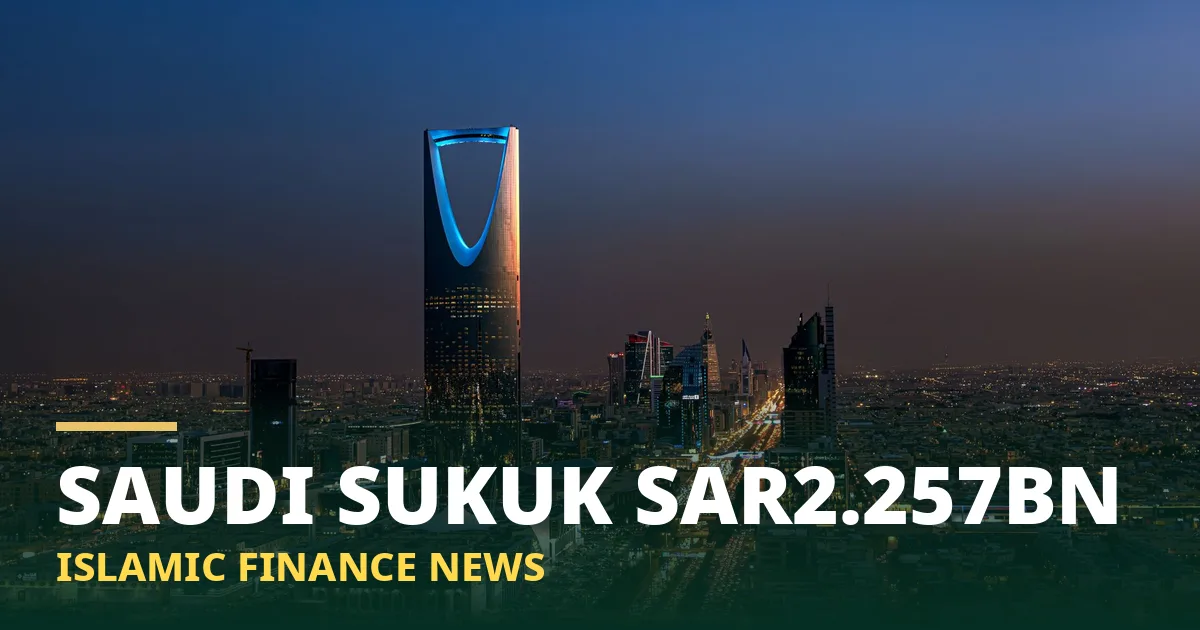
Saudi Arabia Closes November 2026 Sukuk Issuance at SAR2.257 Billion in Five Tranches
Saudi Arabia has closed its November 2026 local sukuk issuance, allocating SAR2.257 billion — about US$602 million — across five tranches maturing between 2031 and 2041. The National Debt Management Center announced the closure on Tuesday, 17 November 2026, under the Saudi Arabian Government’s SAR-denominated Sukuk Program.
The announcement was published by the Ministry of Finance and confirmed by Islamic Finance News and by Boards and Capital, which reported the yields on each tranche from the Center’s own figures.
How was the SAR2.257 billion split?
The issuance was divided into five tranches, each with its own size and maturity:
- SAR382 million maturing in 2031, at a yield of 5.82 per cent;
- SAR652 million maturing in 2033, at 5.91 per cent — the largest single tranche;
- SAR573 million maturing in 2036, at 6.01 per cent;
- SAR250 million maturing in 2039, at 6.09 per cent;
- SAR400 million maturing in 2041, at 6.15 per cent.
Each tranche was awarded at a single yield, and the yields rise steadily with maturity — the longer an investor lends for, the higher the return. The issues settled on 19 November 2026, and the Saudi Exchange (Tadawul) approved the listing of the additional tranches from the same day.
What is the Saudi SAR sukuk programme?
This is the Kingdom’s regular monthly local-currency sukuk programme, run by the National Debt Management Center. Every month the Center offers riyal-denominated government sukuk to domestic investors — mainly banks, funds and institutions — giving the government a steady, predictable way to raise funds in riyals while deepening the local debt market. It is the backbone of Saudi Arabia’s domestic sovereign financing: the October 2026 issuance under the same programme closed at SR6.749 billion, roughly three times the size of this November issue, which shows how much monthly volumes can vary with the government’s funding needs.
For readers in Pakistan and elsewhere, the programme matters because it is one of the largest and most regular sovereign sukuk programmes in the world — a reference point for how a government can fund itself entirely through Shariah-compliant instruments.
Why do the yields rise with maturity?
The pattern — 5.82 per cent for 2031 paper rising to 6.15 per cent for 2041 paper — is the normal shape of a yield curve: investors demand a higher return for locking their money away longer, because more can change over fifteen years than over five. The gap between the shortest and longest tranche here is only 0.33 percentage points, which is a relatively flat curve — a sign that investors see Saudi credit risk as low and stable across maturities.
Is this the same as Saudi Arabia’s dollar sukuk?
No — and the distinction matters. This November issuance is riyal-denominated, sold under the local programme to domestic investors. Saudi Arabia also sells dollar-denominated sukuk on the international market, where the amounts, the investors and the pricing are different. A separate dollar triple-tranche sale was reported to have launched on 26 November 2026, but it has not yet been confirmed by a second source, so it is not covered here. When its pricing is confirmed, we will report it separately.
What should readers do now?
This issuance was for institutional investors in the Saudi domestic market, not a retail offer — ordinary savers could not subscribe directly. What it tells the rest of us is the direction of the region’s biggest Islamic capital market: steady monthly supply, transparent pricing, and yields that reward longer commitments modestly rather than dramatically. This article is information only, not investment advice. When the December issuance is announced, we will report its size and yields in the same way.
Key Points
- Saudi Arabia’s National Debt Management Center closed its November 2026 local sukuk issuance on 17 November 2026, allocating SAR2.257 billion (about US$602 million).
- The issuance was split into five tranches: SAR382m due 2031, SAR652m due 2033, SAR573m due 2036, SAR250m due 2039 and SAR400m due 2041.
- Yields rise with maturity: 5.82% (2031), 5.91% (2033), 6.01% (2036), 6.09% (2039) and 6.15% (2041); each tranche was awarded at a single yield.
- The issues settled on 19 November 2026 and were listed on the Saudi Exchange (Tadawul).
- This is the monthly riyal-denominated programme — separate from Saudi Arabia’s dollar sukuk sales on the international market.
- The October 2026 issuance under the same programme closed at SR6.749 billion, about three times the November size.
How much did Saudi Arabia raise in its November 2026 sukuk issuance?
SAR2.257 billion (about US$602 million), allocated across five tranches. The National Debt Management Center announced the closure on 17 November 2026 under the Saudi Arabian Government’s SAR-denominated Sukuk Program.
What are the five tranches and their maturities?
SAR382 million maturing in 2031, SAR652 million in 2033, SAR573 million in 2036, SAR250 million in 2039 and SAR400 million in 2041. The 2033 tranche is the largest.
What yields did the November sukuk pay?
5.82% for the 2031 tranche, 5.91% for 2033, 6.01% for 2036, 6.09% for 2039 and 6.15% for 2041. Each tranche was awarded at a single yield, rising with maturity.
What is the Saudi SAR-denominated Sukuk Program?
It is the Kingdom’s regular monthly programme of riyal-denominated government sukuk, run by the National Debt Management Center for domestic institutional investors. It gives the government steady local-currency funding and deepens Saudi Arabia’s domestic debt market.
Is this the same as Saudi Arabia’s dollar sukuk?
No. This issuance is riyal-denominated and sold under the local programme. Saudi Arabia also issues dollar-denominated sukuk internationally, which are separate deals with different investors and pricing.
Can ordinary investors buy this sukuk?
Not directly — the November issuance was for institutional investors in the Saudi domestic market. Ordinary savers should watch for retail or listed sukuk in their own markets instead. This article is information only, not investment advice.
Sources: National Debt Management Center, Ministry of Finance (Saudi Arabia), Islamic Finance News, Boards and Capital