El-Sayed Plans to Swear His Senate Oath on a Quran
What Did El-Sayed Say About Swearing In on a Quran?
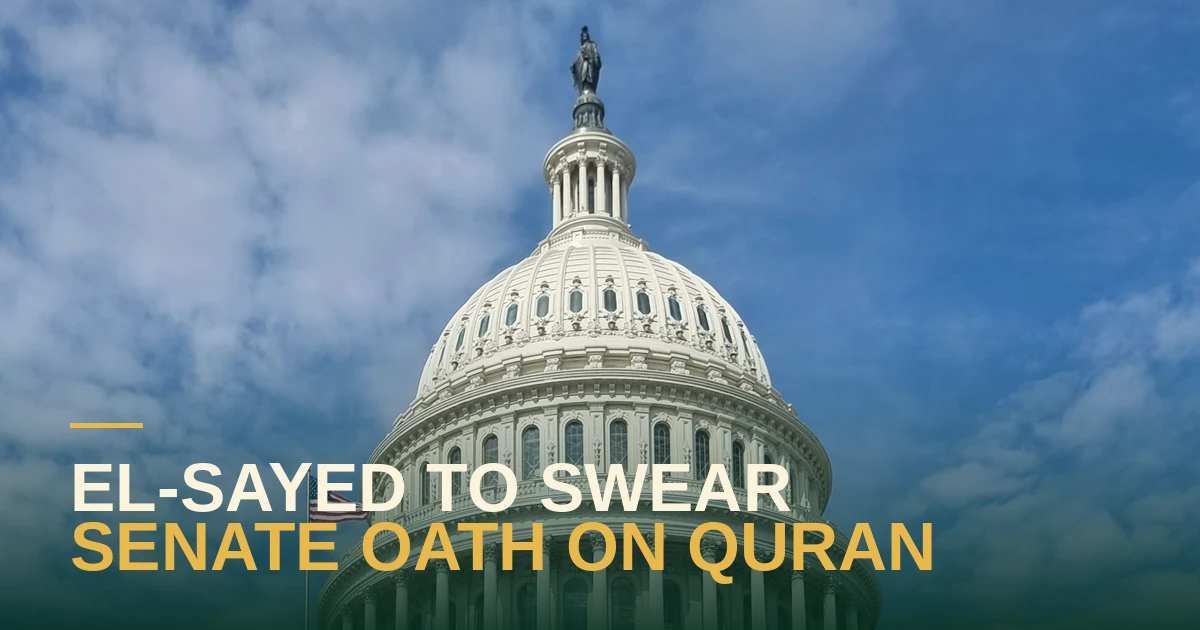
Michigan senator-elect Abdul El-Sayed says he will likely take his oath of office on a Quran when he joins the United States Senate in January 2027. Speaking to NPR host Leila Fadel on the network’s Newsmakers programme, in an interview published on 12 November 2026, El-Sayed said: “I will likely swear on a Quran. Which Quran, we’re not sure.” He added, “So I don’t know, but I’ll swear on the Quran.” If he follows through, he would be the first US senator reported to take the oath on a Quran — a historic first for the Senate, and the latest milestone in a midterm election that has already produced several firsts for Muslim Americans. The swearing-in itself is still to come: new senators take office on 3 January 2027, and Vice President JD Vance is expected to administer the oath.
Key Points
- Michigan senator-elect Abdul El-Sayed says he will likely swear his Senate oath on a Quran when he takes office in January 2027.
- He has not yet chosen which copy: Thomas Jefferson’s historic Quran, or a very old Quran held by the University of Michigan.
- If he does so, he would be the first US senator reported to take the oath on a Quran.
- El-Sayed, 42, defeated Republican Mike Rogers on 3 November 2026, becoming the first Muslim elected to the US Senate.
- The US Constitution bars any religious test for office, and the official Senate oath does not require a holy book — the Quran would be his personal choice for the ceremonial oath.
- He has not been sworn in yet: the swearing-in is scheduled for 3 January 2027.
Who Is Abdul El-Sayed?
Abdul El-Sayed, whose full name is Abdulrahman Mohamed El-Sayed, is a 42-year-old Democrat, an epidemiologist and a former public health official. On 3 November 2026 he defeated Republican candidate Mike Rogers in Michigan’s Senate race, becoming the first Muslim elected to the United States Senate. His victory drew national attention not only because of the history it made, but because of the way he has spoken openly about his name, his religion and his background during the campaign and since his election. In the same NPR interview, he said of the choice of book: “Whatever my name is, however I pray, it’s not the book that you swear on. It’s the book you swear allegiance to.” For El-Sayed, the point of the gesture is allegiance to the Constitution — the document he says is the reason he was able to run for office and be elected by the people of his state.
Which Quran Might He Use?
El-Sayed named two possibilities in the interview, and he has not decided between them. The first is a copy of the Quran once owned by Thomas Jefferson. Jefferson bought a two-volume English translation of the Quran — George Sale’s 1764 translation, titled “The Alcoran of Mohammed” — in 1765, when he was a 22-year-old law student. That copy is now held by the Library of Congress. It became famous in 2007, when Keith Ellison, the first Muslim elected to the US Congress, used it in his ceremonial swearing-in as a member of the House of Representatives. The second possibility is a very old Quran held by the University of Michigan, which El-Sayed described as the first Quran in the state of Michigan. That description has not been independently confirmed, and the University of Michigan’s library does hold early Qur’anic manuscripts — but whether one volume can be called the first Quran in the state is El-Sayed’s own characterisation, not an established fact. Either way, the choice is between two historic copies, and El-Sayed said he is still weighing them.
Has Any US Lawmaker Sworn In on a Quran Before?
Yes — in the House of Representatives, but never in the Senate. In January 2007, Keith Ellison became the first Muslim elected to the US Congress when he won a seat in the House from Minnesota. For his ceremonial swearing-in with then-Speaker Nancy Pelosi, he used Jefferson’s Quran. The official House oath, however, is taken by all members together, without any religious text — the Quran was used in the ceremonial re-enactment that followed, which is the part the cameras recorded. Ellison served in the House until 2019 and is now Minnesota’s attorney general. Earlier in 2026, New York City Mayor Zohran Mamdani — the city’s first Muslim mayor — also used the Quran during his inauguration in January. El-Sayed’s case would be different in one respect: the Senate has never had a Muslim member before, so if he uses a Quran at his swearing-in, he would be the first senator to do so. That is why the announcement, made two months before the ceremony, has drawn so much attention.
Does the Senate Oath Require a Holy Book?
No. The United States Constitution bars any religious test for federal office, and the official Senate oath does not require a Bible, a Quran, or any other holy book. Senators swear or affirm that they will support and defend the Constitution. What book, if any, a senator holds during the ceremonial part of the swearing-in is a personal choice. That is the context for El-Sayed’s remark that “it’s not the book that you swear on. It’s the book you swear allegiance to.” The oath binds him to the Constitution; the Quran, if he chooses it, is the book he personally holds while taking that oath. Readers should also keep the timeline straight: El-Sayed has announced his intention, but the ceremony itself takes place on 3 January 2027. Until then, the accurate way to describe it is that he PLANS to swear in on a Quran — not that he already has.
Why Does This Story Matter?
For many Muslim Americans, the story matters because representation at the highest levels of American government has been a long time coming. The first Muslim in Congress was elected in 2006; the first Muslim mayor of New York City took office in January 2026; and now, for the first time, a Muslim will sit in the United States Senate. Each of those firsts has involved the same question — what book does the office-holder swear on? — and each time the answer has been the Quran, chosen freely by the person taking the oath. For readers of this site, the story is also a reminder of how the Quran travels through history: a copy bought by a young law student in 1765, read by one of America’s founding fathers, now possibly carried into the Senate by its first Muslim member more than 260 years later. Whether El-Sayed chooses Jefferson’s copy or the Michigan manuscript, the ceremony on 3 January 2027 will be one to watch — and this article will be updated when it happens.
Frequently Asked Questions
Has El-Sayed already been sworn in on a Quran?
No. He has said he PLANS to swear his Senate oath on a Quran. The swearing-in is scheduled for 3 January 2027. He announced his intention in an NPR interview published on 12 November 2026.
Who is Abdul El-Sayed?
He is Michigan’s senator-elect: a 42-year-old Democrat, epidemiologist and former public health official who defeated Republican Mike Rogers on 3 November 2026, becoming the first Muslim elected to the US Senate.
Which Quran will El-Sayed use for his oath?
He has not decided. The two options he named are Thomas Jefferson’s historic copy of the Quran (now held by the Library of Congress) and a very old Quran held by the University of Michigan.
Has any US lawmaker sworn in on a Quran before?
Yes, in the House of Representatives. Keith Ellison, the first Muslim elected to Congress, used Jefferson’s Quran in his ceremonial swearing-in in January 2007. No senator has done so before — El-Sayed would be the first.
Does the Senate oath require a holy book?
No. The US Constitution bars any religious test for federal office, and the official oath does not require any book. Using a Quran would be El-Sayed’s personal choice for the ceremonial oath.
When does El-Sayed take office?
New senators are sworn in on 3 January 2027, and Vice President JD Vance is expected to administer the oath.
Sources
Sources: NPR; WION; WHRO