Dua Yunus: Arabic, Meaning, Benefits & Quran Reference
What is Dua Yunus? It is the supplication Prophet Yunus (peace be upon him) made from inside the belly of the great fish: “There is no deity except You; exalted are You. Indeed, I have been of the wrongdoers.” The Qur’an records it in Surah al-Anbiya (21:87), and the Prophet Muhammad (peace be upon him) said that no Muslim supplicates with it for anything except Allah responds to him (Jami’ at-Tirmidhi 3505, Sahih). This guide gives the dua in Arabic with full transliteration and meaning, tells the story behind it, and explains when and how to recite it.
Key Points
- Dua Yunus is the supplication of Prophet Yunus (peace be upon him) from inside the belly of the fish — “There is no deity except You; exalted are You. Indeed, I have been of the wrongdoers” (Qur’an 21:87).
- It combines three things in one short sentence: declaring Allah’s oneness, glorifying Him, and admitting one’s own wrongdoing.
- The Prophet (peace be upon him) said no Muslim supplicates with it for anything except Allah responds to him (Jami’ at-Tirmidhi 3505, Sahih).
- Allah answered Yunus and saved him from distress, and the Qur’an adds “And thus do We save the believers” (21:88).
- It is recited in hardship, distress, anxiety and need, and as a general supplication at any time.
- No fixed number of recitations is prescribed in the Qur’an or the Sunnah — recite it with presence of heart, not by a set count.
What Is Dua Yunus in Arabic?
The dua is a single short sentence from the Qur’an:
Arabic:
لَا إِلَٰهَ إِلَّا أَنتَ سُبْحَانَكَ إِنِّي كُنتُ مِنَ الظَّالِمِينَ
Transliteration: Laa ilaaha illaa anta, subhaanaka, innee kuntu minaz-zaalimeen.
Translation: “There is no deity except You; exalted are You. Indeed, I have been of the wrongdoers.” (Qur’an 21:87)
This short sentence contains three parts, and each one matters:
- “Laa ilaaha illaa anta” — tawhid. It declares that none deserves worship except Allah alone.
- “Subhaanaka” — tasbih. It glorifies Allah and declares Him free from every imperfection.
- “Innee kuntu minaz-zaalimeen” — repentance. It admits one’s own wrongdoing and need for Allah.
That is why the dua is so complete: it begins by affirming who Allah is, then praises Him, and only then turns to one’s own fault — the right order for a supplication.
The Story Behind the Dua
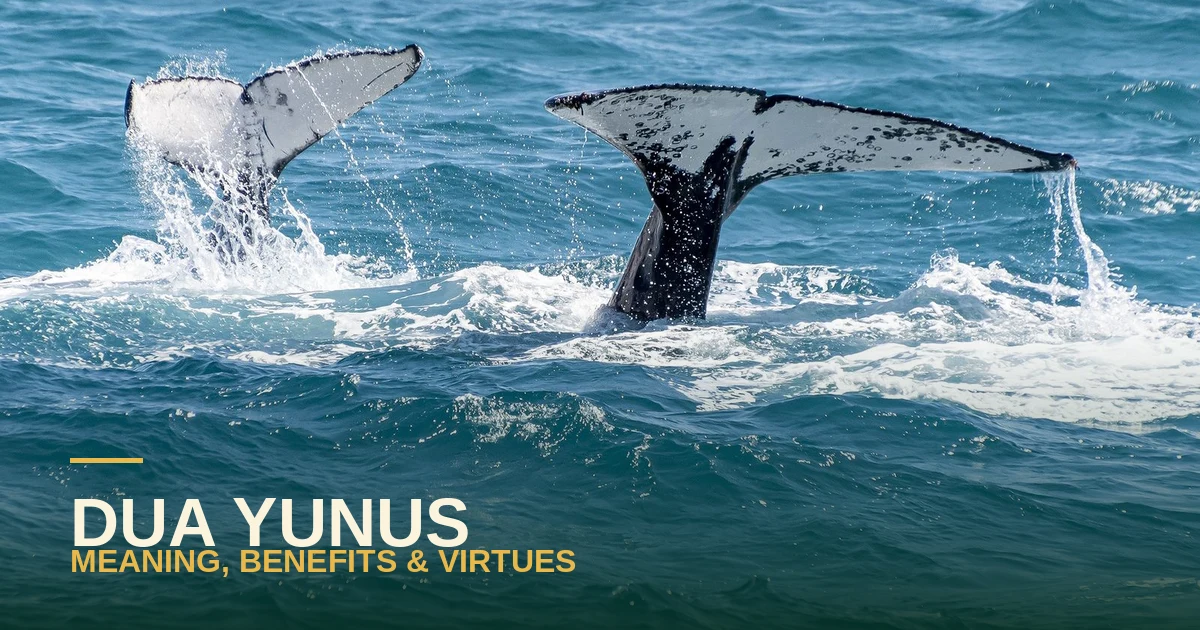
Prophet Yunus (peace be upon him) was sent to his people, and when they did not respond to his call, he left them in anger. He boarded a ship, and by Allah’s decree he was swallowed by the great fish. In the darkness — the darkness of the night, the darkness of the sea, and the darkness of the belly of the fish — he called out to Allah.
The Qur’an records his call in Surah al-Anbiya (21:87):
Arabic:
وَذَا النُّونِ إِذ ذَّهَبَ مُغَاضِبًا فَظَنَّ أَن لَّن نَّقْدِرَ عَلَيْهِ فَنَادَىٰ فِي الظُّلُمَاتِ أَن لَّا إِلَٰهَ إِلَّا أَنتَ سُبْحَانَكَ إِنِّي كُنتُ مِنَ الظَّالِمِينَ
Transliteration: Wa dhan-nooni idh dhahaba mughaadiban fa zanna an lan naqdira ‘alayhi fa naadaa fiz-zulumaati an laa ilaaha illaa anta subhaanaka innee kuntu minaz-zaalimeen.
Translation: “And [mention] the man of the fish, when he went off in anger and thought that We would not decree [anything] upon him. And he called out within the darknesses, ‘There is no deity except You; exalted are You. Indeed, I have been of the wrongdoers.’” (Saheeh International)
Allah answered him, as the next verse says:
Arabic:
فَاسْتَجَبْنَا لَهُ وَنَجَّيْنَاهُ مِنَ الْغَمِّ ۚ وَكَذَٰلِكَ نُنجِي الْمُؤْمِنِينَ
Transliteration: Fa-stajabnaa lahu wa najjaynaahu minal-ghamm, wa kadhaalika nunjee-l-mu’mineen.
Translation: “So We responded to him and saved him from the distress. And thus do We save the believers.” (Saheeh International)
The fuller story of Yunus (peace be upon him) is told in Surah as-Saffat (37:139–148), where Allah describes how he was cast ashore, a plant was made to grow over him, and he was sent again to his people.
What Is the Virtue of Dua Yunus?
The Prophet Muhammad (peace be upon him) described the virtue of this supplication in a hadith reported in Jami’ at-Tirmidhi (3505), graded Sahih:
Arabic:
دَعْوَةُ ذِي النُّونِ إِذْ دَعَا وَهُوَ فِي بَطْنِ الْحُوتِ لاَ إِلَهَ إِلاَّ أَنْتَ سُبْحَانَكَ إِنِّي كُنْتُ مِنَ الظَّالِمِينَ فَإِنَّهُ لَمْ يَدْعُ بِهَا رَجُلٌ مُسْلِمٌ فِي شَيْءٍ قَطُّ إِلاَّ اسْتَجَابَ اللَّهُ لَهُ
Transliteration: Da’watu dhin-nooni idh da’aa wa huwa fee batni-l-hooti: laa ilaaha illaa anta, subhaanaka, innee kuntu minaz-zaalimeen. Fa-innahu lam yad’u bihaa rajulun muslimun fee shay’in qattu illaa-stajaaba-llaahu lah.
Translation: “The supplication of Dhun-Nun (Prophet Yunus) when he supplicated, while in the belly of the whale was: ‘There is none worthy of worship except You, Glory to You, Indeed, I have been of the transgressors.’ So indeed, no Muslim man supplicates with it for anything, ever, except Allah responds to him.” (Jami’ at-Tirmidhi 3505; Sahih, Darussalam; al-Albani: Sahih.)
The promise in this hadith is general — the Prophet (peace be upon him) said “for anything” — so a Muslim may supplicate with it for any need, whether in hardship, illness, anxiety or any other matter.
At the same time, it is not a magic formula. Allah responds to the supplication in the way He knows is best, and the believer makes dua with sincerity, patience and trust in Allah.
When and How Should I Recite Dua Yunus?
There is no fixed time for reciting Dua Yunus. It can be recited in hardship, distress, anxiety and need, and as a general supplication at any time. Recite it with understanding — knowing what the words mean — and with presence of heart, and then ask Allah for what you need in your own words.
It is also a good dua to teach children, so that they learn to turn to Allah when they are afraid or in difficulty.
For supplications in times of illness and pain, see our guide to Dua for Shifa and our Dua for Pain. If you are struggling with low spirits, you may also find our powerful duas for depression helpful.
No fixed number of recitations is prescribed. Recite it as often as you like, with sincerity, rather than counting to a set number.
What Should I Avoid?
Do not treat Dua Yunus as a guaranteed transaction — as though reciting it a certain number of times forces a particular outcome. Allah responds as He wills, in His wisdom.
Do not add an invented fixed count or ritual to the dua. The Qur’an and the Sunnah prescribe no specific number of repetitions and no particular ceremony for it; adding one turns a simple, authentic supplication into something the Prophet (peace be upon him) did not teach.
Frequently Asked Questions
What is Dua Yunus?
Dua Yunus is the supplication Prophet Yunus (peace be upon him) made from inside the belly of the great fish: “There is no deity except You; exalted are You. Indeed, I have been of the wrongdoers.” It is recorded in the Qur’an in Surah al-Anbiya (21:87).
What is the Arabic of Dua Yunus?
The Arabic of Dua Yunus is: لَا إِلَٰهَ إِلَّا أَنتَ سُبْحَانَكَ إِنِّي كُنتُ مِنَ الظَّالِمِينَ. Its transliteration is: Laa ilaaha illaa anta, subhaanaka, innee kuntu minaz-zaalimeen.
What does Dua Yunus mean in English?
“There is no deity except You; exalted are You. Indeed, I have been of the wrongdoers.”
What is the virtue of Dua Yunus?
The Prophet Muhammad (peace be upon him) said that no Muslim supplicates with it for anything except Allah responds to him (Jami’ at-Tirmidhi 3505, Sahih).
When should I recite Dua Yunus?
In hardship, distress, anxiety and need — at any time. There is no fixed time for reciting it.
How many times should I recite Dua Yunus?
No fixed number is prescribed in the Qur’an or the Sunnah. Recite it with presence of heart, as often as you like, rather than by a set count.
Conclusion
Dua Yunus is one of the shortest duas in the Qur’an, and one of the most complete: in a single sentence it declares Allah’s oneness, glorifies Him, and admits our own wrongdoing. Learn it, understand it, and keep it close — it is a supplication for every difficulty, and Allah has promised that He saves the believers.
Sources: The Holy Qur’an; Jami’ at-Tirmidhi