Nisab in Dollars, Pounds, CAD & AUD (2026)
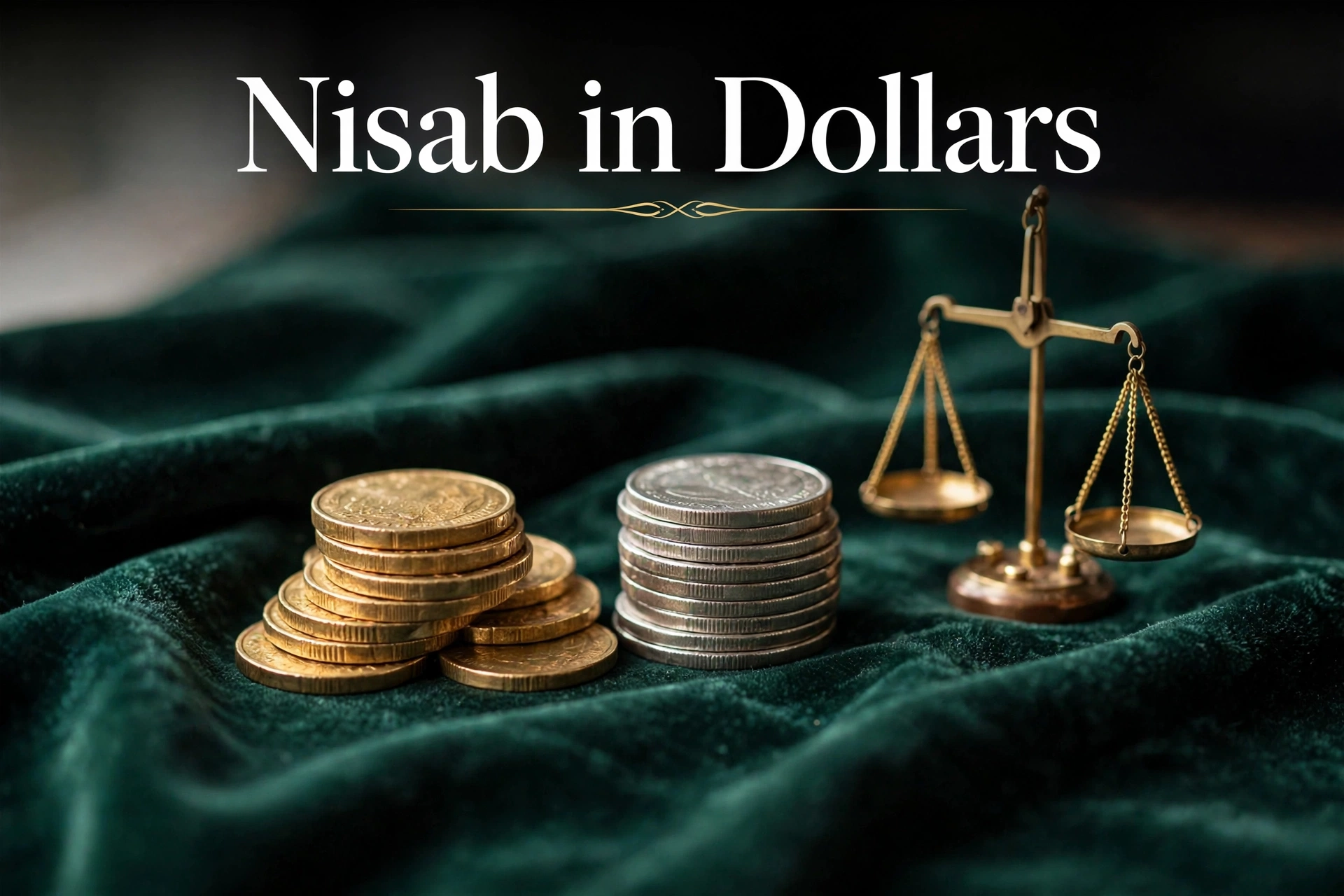
Nisab is the minimum amount of wealth a Muslim must own before zakat becomes due — and as of 10 November 2026 it is about US$1,045 if you use the silver standard (612.36 g of silver), or about US$11,250 if you use the gold standard (85 g of gold). The two figures differ because gold and silver prices have moved far apart; most scholars and zakat bodies today use the silver nisab because it is lower and brings more people into paying zakat. This guide explains both standards, shows the figures in dollars, pounds, Canadian dollars and Australian dollars, and works through examples so you can check your own position.
Key Points
- Nisab is the zakat threshold: own more than it for a full lunar year (hawl) and zakat of 2.5% is due.
- Silver nisab (612.36 g): about US$1,045 / £777 / CA$1,476 / A$1,510 as of 10 November 2026.
- Gold nisab (85 g): about US$11,250 / £8,362 / CA$15,876 / A$16,243 as of 10 November 2026.
- The silver standard is lower, so more people pay zakat under it; the gold standard is higher. Scholars differ — this guide presents both, attributed.
- Metal prices move daily: always re-check the nisab on the day you calculate your zakat.
What Is Nisab?
Nisab is the threshold of wealth above which zakat becomes obligatory. It comes from the amounts set in the Prophet’s (SAW) time: 20 gold dinars and 200 silver dirhams. In modern weights that is 85 grams of gold (some scholars use 87.48 grams) and 595 grams of silver (some scholars use 612.36 grams). Two conditions must be met before zakat is due: your zakatable wealth must reach the nisab, and it must stay at or above it for a full lunar year — the hawl. The Prophet (SAW) said, “There is no zakat on wealth until a year has passed over it” (Sunan Ibn Majah 1792; Sunan Abi Dawud 1573).
Zakat is then 2.5% of the zakatable wealth above the nisab — not 2.5% of everything you own. Your home, your car, your clothes and the furniture you use are not zakatable. What counts is cash, savings, gold and silver, trade goods, shares and similar liquid wealth, minus debts due.
Gold Nisab vs Silver Nisab: Why Are There Two Figures?
There are two nisab figures because the Prophet’s (SAW) time had two: gold and silver. In his day, 20 dinars of gold and 200 dirhams of silver were worth roughly the same amount. Today they are not — gold has risen far faster than silver, so the gold nisab is now more than ten times the silver nisab. That creates a real question: which one should a person use?
- The silver nisab (595 g, or 612.36 g in the Hanafi conversion) is the lower figure. Most contemporary scholars and zakat bodies recommend it, because it brings more people into paying zakat and therefore helps more poor people. The Fiqh Council of North America and most UK zakat charities use the silver nisab.
- The gold nisab (85 g, or 87.48 g in the Hanafi conversion) is the higher figure. Some scholars prefer it, arguing that gold is the more stable measure of wealth today and that the silver figure would make zakat due on people who are not genuinely well-off.
There is no single ruling all scholars agree on. This article does not issue a fatwa: it shows you both figures, and if you are unsure, ask a scholar you trust or follow the practice of your local zakat body. What matters is that you pick one standard and apply it consistently — do not switch between gold and silver to get the lower bill.
Nisab in Dollars, Pounds, CAD and AUD (as of 10 November 2026)
Metal prices move every day, so these figures are a snapshot. They use the spot prices on 10 November 2026 — gold about US$4,115 per troy ounce and silver about US$53.10 per troy ounce — and the exchange rates the same day (1 GBP = US$1.3448; 1 USD = CA$1.4118; 1 USD = A$1.4444).
| Standard | Weight | US dollars | British pounds | Canadian dollars | Australian dollars |
|---|---|---|---|---|---|
| Silver nisab (Hanafi) | 612.36 g | US$1,045 | £777 | CA$1,476 | A$1,510 |
| Silver nisab | 595 g | US$1,016 | £755 | CA$1,434 | A$1,467 |
| Gold nisab | 85 g | US$11,250 | £8,362 | CA$15,876 | A$16,243 |
| Gold nisab (Hanafi) | 87.48 g | US$11,574 | £8,606 | CA$16,340 | A$16,717 |
Two things to notice. First, the difference between the 595 g and 612.36 g silver figures is small — about US$29 — so either is fine in practice. Second, the gold and silver figures are far apart: about US$1,045 against about US$11,250. That gap is the whole debate, and it is why the choice of standard matters so much.
How to Calculate Your Nisab (Step by Step)
- Add up your zakatable wealth: cash in hand and in the bank, savings, gold and silver at today’s value, shares and investments, money owed to you that you expect to receive, and trade stock if you run a business.
- Subtract what you owe: debts and bills due now (not a long-term mortgage — scholars differ on how much of a mortgage to deduct; the common position is to deduct one year’s payments, or the amount due within the year).
- Compare the result with the nisab: if it is at or above the nisab on your chosen standard, and it has been there for a full lunar year, zakat is due.
- Pay 2.5% of the zakatable total — not just the amount above the nisab, but 2.5% of the whole zakatable amount.
Worked Examples
Example 1 — savings of US$5,000. Using the silver nisab (US$1,045), US$5,000 is well above the threshold, so zakat is due: 2.5% of US$5,000 = US$125. Using the gold nisab (US$11,250), US$5,000 is below the threshold, so no zakat is due. This is the practical difference between the two standards, in one number.
Example 2 — savings of US$800. Using the silver nisab, US$800 is below US$1,045, so no zakat is due this year. If your savings grow past the nisab later, the hawl (lunar year) starts from when you first held the nisab amount.
Example 3 — gold jewellery worth US$12,000. Using the gold nisab (US$11,250), the jewellery is above the threshold, so zakat is due: 2.5% of US$12,000 = US$300. (Scholars differ over whether jewellery worn regularly is zakatable; the majority of scholars outside the Hanafi school hold that it is not, while the Hanafi school holds that it is. Check with a scholar you follow.)
Example 4 — a UK reader with £2,000 in savings. Using the silver nisab (£777), £2,000 is above the threshold: zakat is 2.5% of £2,000 = £50. Using the gold nisab (£8,362), no zakat is due.
Common Questions About Nisab
Does the nisab change every year? Yes, in money terms it does — because it is fixed in grams of gold and silver, and metal prices move. The weight never changes (85 g of gold; 595 g or 612.36 g of silver), but the dollar figure changes with the market. Always check the price on the day you calculate.
Do I use the nisab on the day I pay, or the day my year started? Scholars differ. The common practical approach is to check the nisab on your zakat date (the anniversary of when you first held the nisab) and use the metal price on that day.
What if my wealth dips below the nisab during the year? If it falls below the nisab and stays below it, the hawl is broken and the year restarts when you reach the nisab again. Minor dips that recover are treated differently by different schools — ask a scholar if this applies to you.
Is nisab the same as the Qurbani nisab? Yes — the Qurbani (Udhiyah) threshold uses the same nisab of wealth. If you hold above the nisab on the days of sacrifice, Qurbani is wajib on you in the Hanafi school, and strongly emphasised Sunnah in the majority view.
Frequently Asked Questions
What is the nisab in dollars?
As of 10 November 2026, the silver nisab is about US$1,045 (612.36 g of silver) and the gold nisab is about US$11,250 (85 g of gold). Metal prices move daily, so re-check on the day you calculate your zakat.
What is the nisab in pounds?
As of 10 November 2026, the silver nisab is about £777 and the gold nisab is about £8,362.
What is the nisab in Canada and Australia?
As of 10 November 2026, the silver nisab is about CA$1,476 / A$1,510, and the gold nisab is about CA$15,876 / A$16,243.
Should I use the gold or silver nisab?
Scholars differ. Most contemporary scholars and zakat bodies recommend the silver nisab because it is lower and helps more poor people; some prefer gold as the more stable measure of wealth. Pick one standard and apply it consistently, and ask a scholar you trust if you are unsure.
How much zakat do I pay?
2.5% of your total zakatable wealth (cash, savings, gold, silver, shares, trade goods, minus debts due) — once it has been at or above the nisab for a full lunar year.
Does my house count towards nisab?
No. Your home, car, clothes and furniture you use are not zakatable. Only cash, savings, precious metals, investments and trade goods count.
Disclaimer: This article explains how nisab is calculated; it is not a fatwa and not personal financial advice. Zakat rulings have details that depend on your situation — for a ruling on your own wealth, consult a qualified scholar or your local zakat body.
Sources
Sources: The Holy Qur’an (Surah at-Tawbah 9); Sunan Ibn Majah; Sunan Abi Dawud; Fiqh Council of North America; National Zakat Foundation; Reuters (gold and silver spot prices, 10 November 2026); exchangerates.org.uk (exchange rates, 10 November 2026)